

Mezzanine Fire Sprinkler Requirements: NFPA 13 Guide
Review mezzanine sprinkler requirements, below-deck obstructions and open grating. Understand the design questions to resolve with your fire-protection team.
Editorial
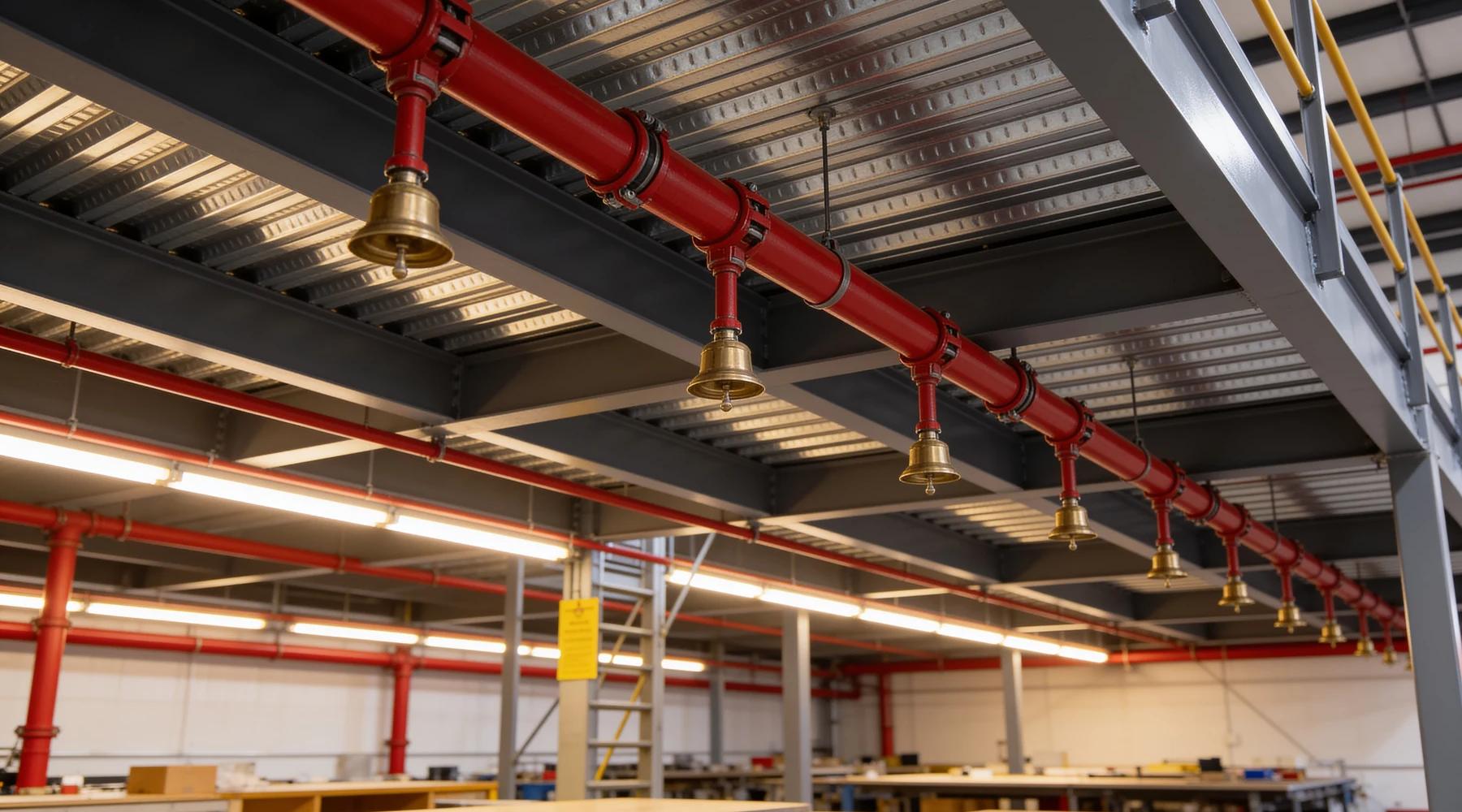
Fire protection is the most expensive surprise in mezzanine projects — it can reach 35–40% of total project cost when triggered. The trigger itself is simple: NFPA 13 (2019 edition, §9.5.5.3.1) requires sprinklers under fixed obstructions more than 4 feet wide — and it names open-grate flooring explicitly (QRFS). A mezzanine deck is a fixed obstruction. This guide walks the actual rules, the grating myth, the size bonus sprinklers buy you, and the published costs.
Section numbers below follow the NFPA 13 2019 edition; the 2022 and 2025 editions renumber some of these provisions — your fire-protection designer works from whichever edition your jurisdiction adopts.
Coordinate fire protection with the IBC mezzanine requirements, your permit application and the clear height above and below the deck.
Why does a mezzanine trigger sprinkler work at all?
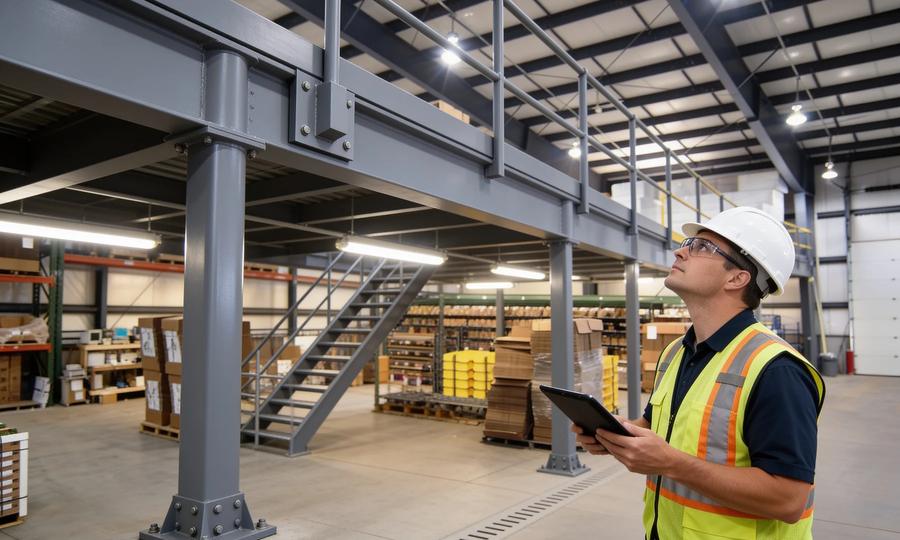
Because the deck blocks the ceiling sprinklers from protecting whatever is underneath it. Ceiling heads work by developing a spray pattern over the fire; put a solid floor in the way and everything below it is unprotected. NFPA 13's general obstruction principle (§9.5.5.1–9.5.5.2, 2019 ed.) says: position sprinklers to minimize obstruction, or add sprinklers below the obstruction. For anything wider than 4 feet — every mezzanine — the answer is heads below the deck, with deflectors within 12 inches of the obstruction's underside (QRFS).
Two design details worth knowing: heads below the deck must generally match the ceiling sprinkler type (NFSA TechNotes), and the 2025 edition newly allows supplemental heads under obstructions to be spaced for the hazard they're protecting rather than copying ceiling spacing — a modest cost saver on new designs.
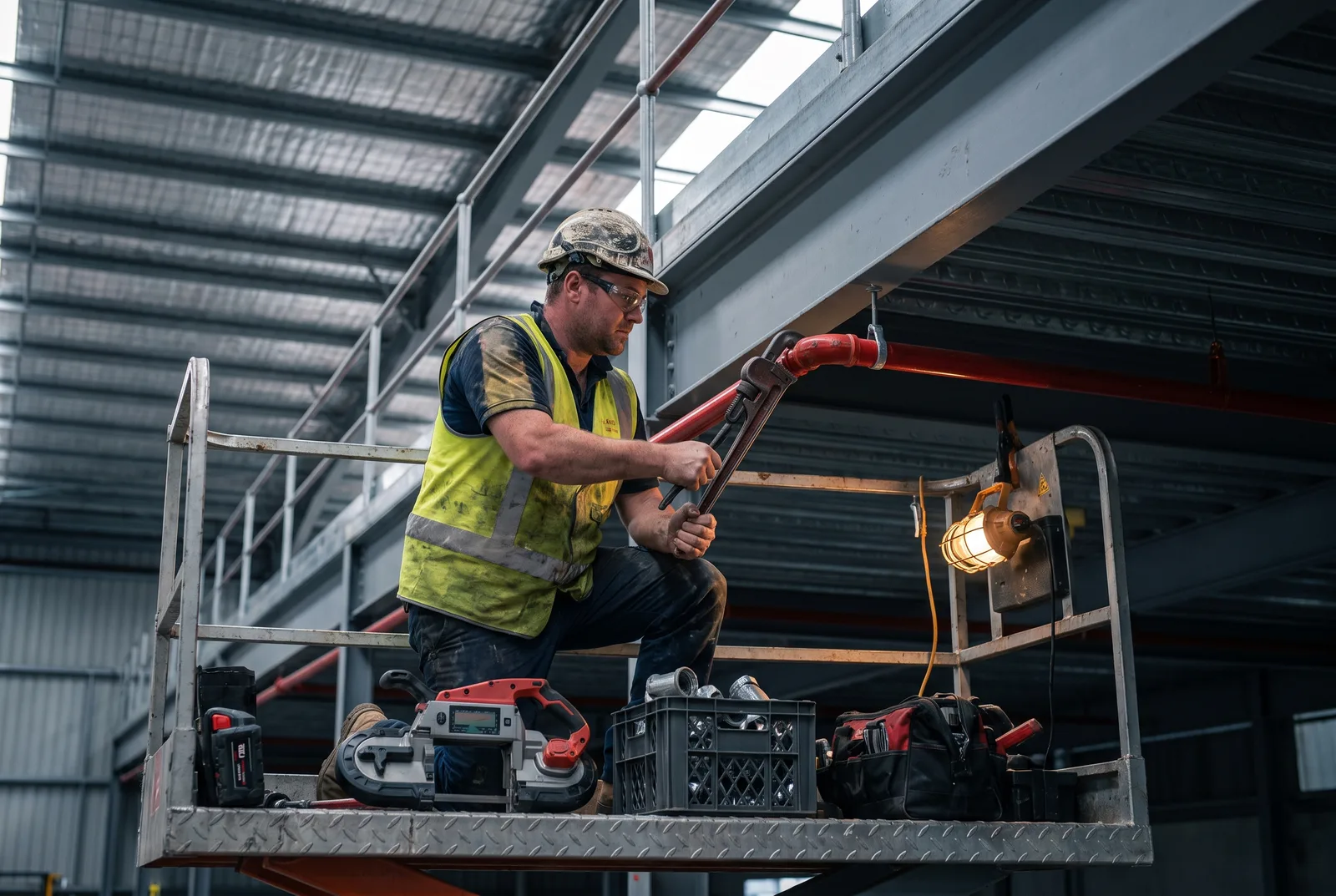
Does open bar grating get you out of it?
No — that's the most persistent myth in mezzanine fire protection. The published reality, from FM Global data sheets summarized by Risk Logic:
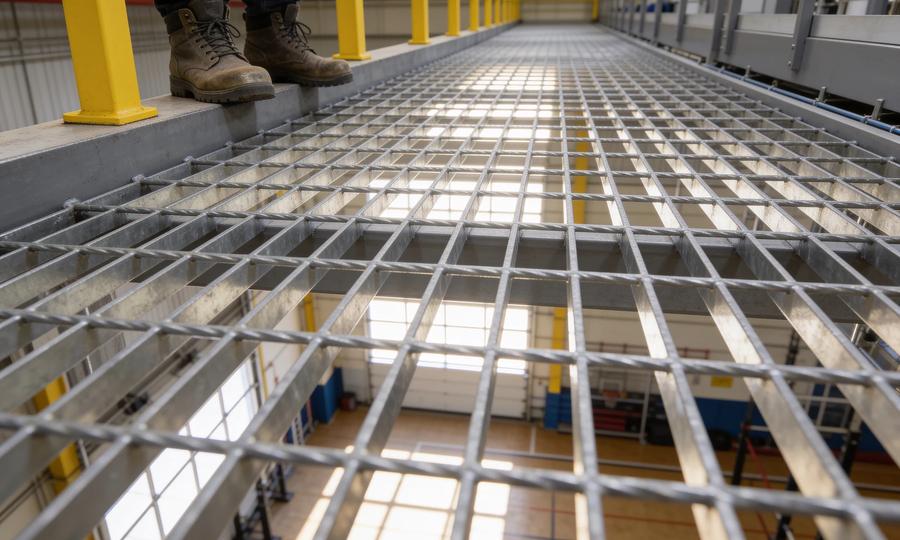
- Grating must be at least 70% open to be treated as "grated" at all; below that it's a solid floor.
- Even genuinely open grating: if storage sits above and below the deck at the same time, sprinklers below are required. Storage on only one side of the deck is the case where FM guidance may waive the heads below.
- FM's fire testing found that non-solid floors still obstruct ceiling-sprinkler water distribution — this is measured behavior, not caution. The NFPA Research Foundation runs a dedicated study on elevated walkways versus sprinkler protection.
- Where heads go under grating, they need water shields (rack-storage style) so overhead discharge doesn't cold-solder them, with at least 18 inches of clearance above storage tops.
If you're in a high-bay building with ESFR sprinklers, the rules get stricter, not looser: ESFR performance depends on unobstructed ceiling-to-fire delivery, and only obstructions 2 inches or narrower escape supplemental protection (Precision Fire Protection; PHCP Pros). Draft curtains can't be used within ESFR zones at all — only at boundaries between ESFR and control-mode systems (Smoke Guard).
What do sprinklers buy you? A bigger mezzanine.
Sprinklers raise the IBC size limit from one-third to one-half of the room. The exact conditions of IBC 505.2.1 Exception 2: buildings of Type I or II construction, protected throughout with an approved automatic sprinkler system, and equipped with an emergency voice/alarm communication system. The NFSA's worked example: a 60,000 sq ft building can gain up to 40,000 sq ft of total elevated area within the same footprint when mezzanines and equipment platforms (which get two-thirds) are combined.
One thing sprinklers never change: the mezzanine still counts toward the fire area (IBC 505.2) — which is precisely why the sprinkler review happens during permitting.
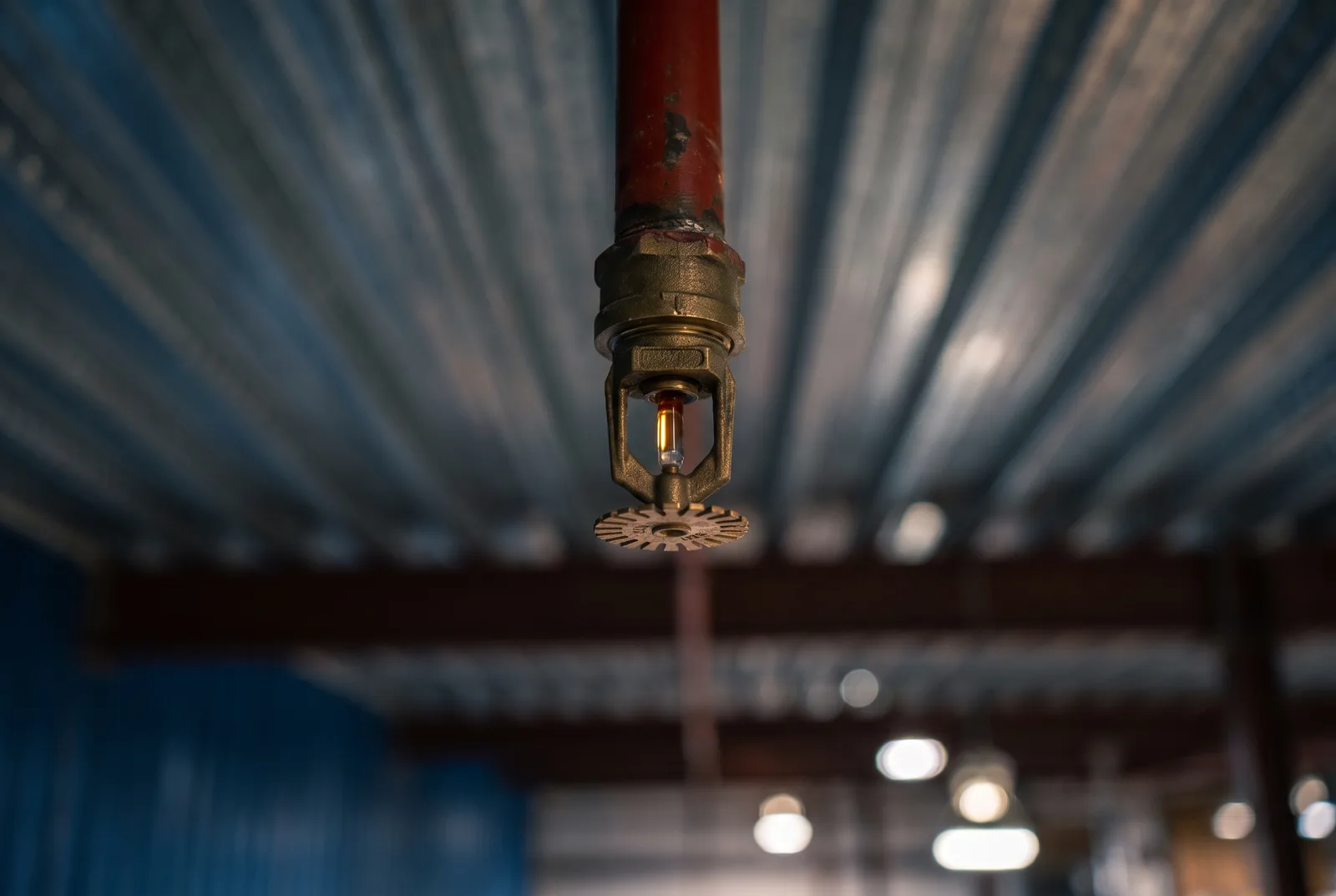
What does the sprinkler work cost?
Published retrofit rates: $2–7 per square foot in existing buildings, with warehouses typically $3.50–7.00 (Get Safe and Sound, 2026). Structural complications push toward $4–10. On top of the piping work, the permit itself is a real line: San Diego publishes $706 plan check + $883 inspection for the first 50 heads on new commercial systems; Philadelphia charges $12.40 per head with a $155 minimum.
For a 2,000 sq ft mezzanine, that pencils to roughly $7,000–14,000 of sprinkler work plus permit fees when heads below the deck are required — consistent with the 35–40%-of-project figure at typical project sizes. Our cost calculator includes a sprinkler toggle for exactly this reason.
Who designs and approves it?
A licensed PE owns the engineering; NICET-certified technicians do layout in most states; your AHJ approves. The joint position of the engineering and certification bodies (SFPE/NSPE/NICET/NCEES) puts design responsibility with a licensed professional engineer, with NICET Level III/IV technicians performing layout drawings and calculations. States vary — Vermont requires NICET Level III or an FPE license for system design. Practically: use your mezzanine vendor's fire-protection partner or your building's sprinkler contractor, and get them involved before the permit submission, not after the correction letter.
What to read next
- Do you need a permit for a mezzanine? — where the sprinkler review happens
- The IBC 2024 mezzanine requirements explained in plain English — the one-third rule the sprinklers stretch
- Storage mezzanines — how Group S-1 classification and the high-piled storage chapter add their own sprinkler triggers
- Mezzanine fire rating: what the IBC actually requires — where a rating comes from when Section 505 sets none
Put this guide into practice
Frequently asked questions
- Do you need sprinklers under a mezzanine?
- In a sprinklered building, generally yes. NFPA 13 (2019 edition, §9.5.5.3.1) requires sprinklers under fixed obstructions more than 4 feet wide — and a mezzanine deck is exactly that. The rule explicitly includes open-grate flooring, so grating alone does not exempt you.
- Does open bar grating eliminate the need for sprinklers below a mezzanine?
- Not automatically. Grating must be at least 70% open to be treated as grated at all under FM Global guidance, and even then, storage above and below the deck at the same time triggers sprinklers underneath. Fire testing showed non-solid floors still obstruct ceiling sprinkler discharge.
- How big can a mezzanine be if the building has sprinklers?
- Sprinklers buy size. The base IBC limit is one-third of the room, but IBC 505.2.1 Exception 2 allows up to one-half in buildings of Type I or II construction fully sprinklered and equipped with an emergency voice/alarm system.
- How much does adding sprinklers under a mezzanine cost?
- Published retrofit rates run $2–7 per square foot in existing buildings, with warehouse occupancies typically $3.50–7.00. On a whole-project basis, fire-protection changes can reach 35–40% of total mezzanine project cost when they apply.
- Who is allowed to design mezzanine sprinkler changes?
- A licensed professional engineer is responsible for the engineering design, with NICET Level III/IV certified technicians performing layout in many states — Vermont, for example, requires NICET Level III or a fire protection engineering license for system design. Your AHJ decides what it accepts.
Continue planning your mezzanine
All Code & Permits guides →
Engineering
Mezzanine Ceiling Height Requirements & Clearance
Work through mezzanine ceiling height requirements, clear headroom and framing depth. Check sprinkler obstructions and forklift clearance before planning.
Code & Permits
IBC 2024 Mezzanine Requirements: Area, Height & Egress
Review IBC mezzanine area, height, openness and egress requirements. Find the related OSHA, sprinkler and permit guides, plus a project planning checklist.
Engineering
Mezzanine Decking Options: Grating, Panels & Concrete
Compare mezzanine decking options for storage and equipment: bar grating, floor panels, steel plate and concrete. Review trade-offs and use the decking selector.