

Mezzanine installation cost breakdown: what the labor really costs (2026)
Mezzanine installation is billed at 30–50% of material cost. Here's the 2026 breakdown — crew time, lift rentals, anchoring, and the regional labor multipliers that swing the number.
Editorial
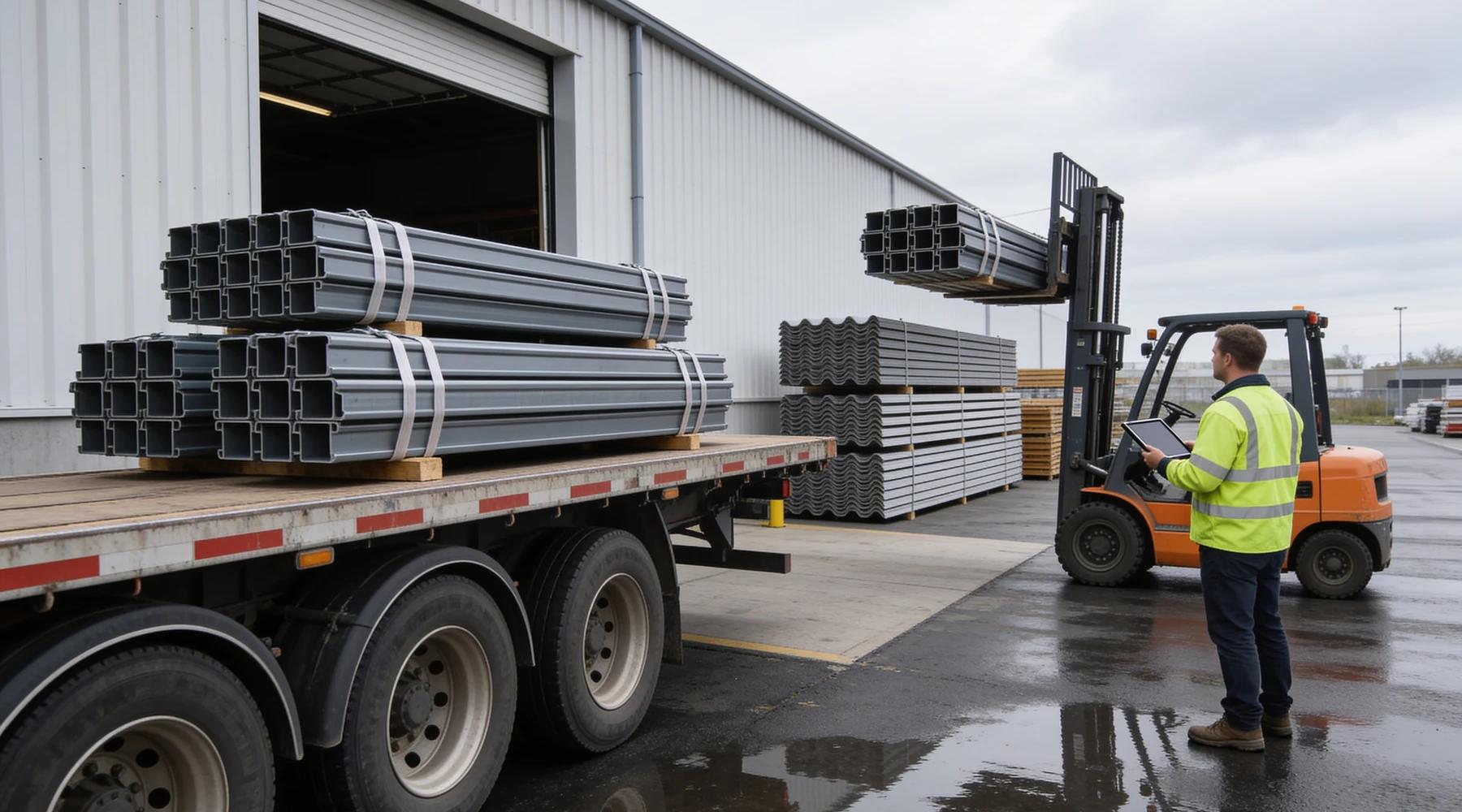
Every mezzanine quote has a line the buyer can't easily check: installation. The published rule: installation is billed at 30–50% of material cost, plus roughly 10% for freight (Allied Modular, 2025). This article breaks down what's inside that 30–50% — crew time, lift equipment, anchoring — and the regional factors that decide which end of the range you pay.
How is mezzanine installation priced?
Two models dominate: a percentage of materials (30–50%), or an all-in per-square-foot rate that bundles it. Allied Modular publishes the 30–50%-of-materials convention. Mezzanine Distributors instead quoted $60–70 per square foot all-in — materials, freight, and installation together — for a standard 125–150 psf deck (2023 baseline; construction indices have risen 4.87%–6.77% in the last year alone).
Neither model is wrong. The percentage model surfaces the labor line; the all-in model hides it. When comparing quotes, normalize them: ask each vendor to split materials, freight, and installation.
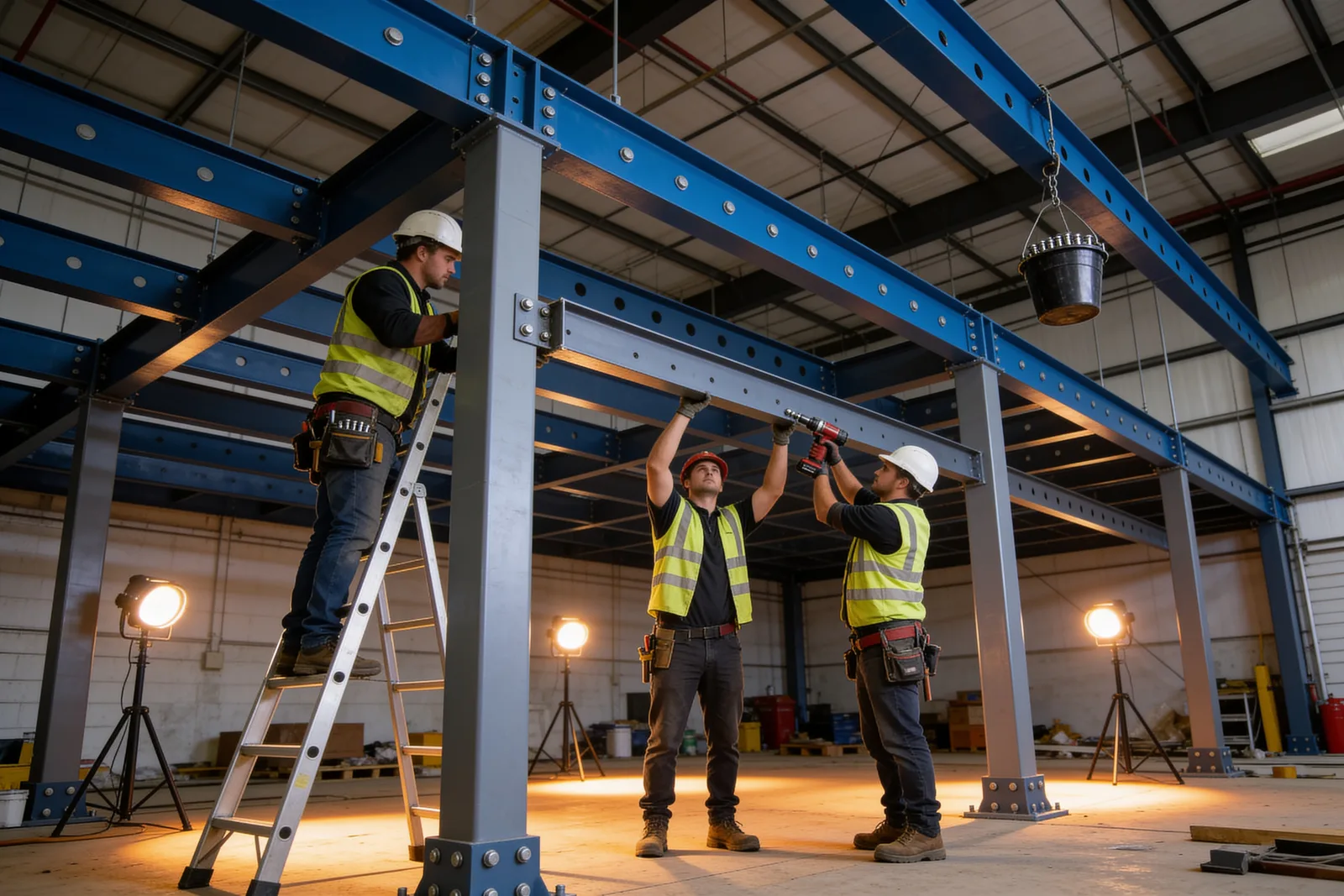
How long does the crew actually work?
Published erection times: 3–5 days for a 1,000–2,000 sq ft single-level mezzanine. The size curve from HEDA's published install guide:
| Project | Erection time |
|---|---|
| Small storage platform | 1–2 days |
| 1,000–2,000 sq ft, single level | 3–5 days |
| 3,000–4,000 sq ft, two level | 1–2 weeks |
| 5,000+ sq ft, multi-level | 2–4+ weeks |
Manufacturer-published figures agree: Cogan — our publisher, disclosed on our about page — puts standard installation at 2–5 days within a 2–6 week engineering-to-install cycle. The install itself is the short part; the full project timeline is dominated by permits and fabrication, running 6 to 36+ weeks depending on complexity.
What does the installation equipment cost?
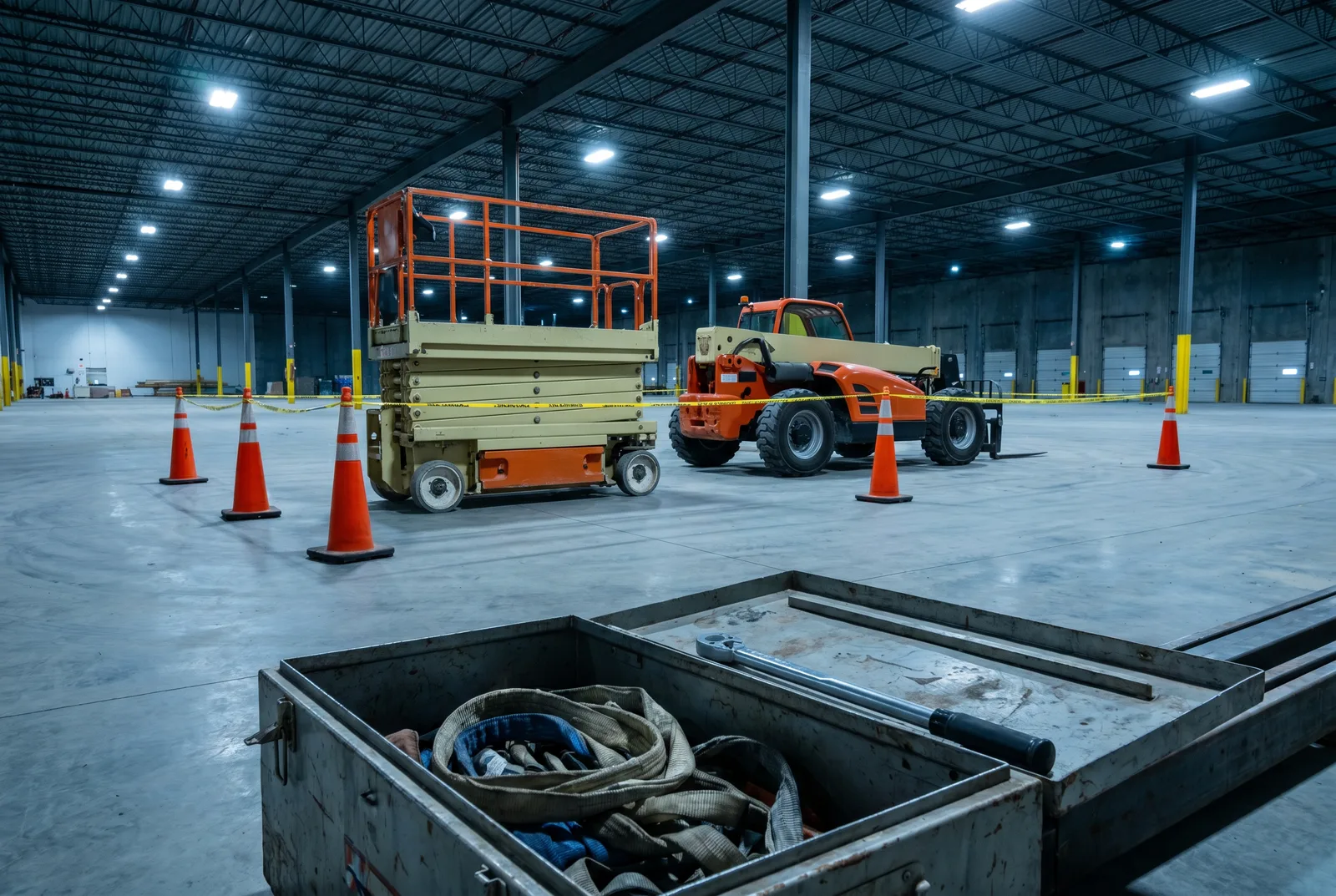
Lift equipment for a typical install runs a few hundred to a couple thousand dollars per week. Published national marketplace rates (BigRentz, current 2026):
| Equipment | Published weekly rate |
|---|---|
| 19-ft electric scissor lift | from $230 |
| 26-ft electric scissor lift | from $338 |
| 40-ft electric scissor lift | $620–700 |
| 5,000 lb telehandler | ~$676 (or ~$245/day) |
| 10,000 lb telehandler | ~$1,144 (or ~$419/day) |
A standard 2,000 sq ft install needs a scissor lift and often a telehandler for a week: budget roughly $900–1,900 in rentals if your installer passes them through. Larger national rental chains price by quote rather than published rates.
What about anchoring and consumables?
Anchoring is cheap per point but adds up across a column grid. Published hardware pricing: wedge anchors run about $1 per anchor (Simpson Strong-Bolt 2, ~$24 per box of 25), and where slab conditions require adhesive anchoring, epoxy cartridges run $35–142 each depending on size. With four bolts per base plate across a dozen columns, hardware is a rounding error — the cost is the drilling, setting, and torquing labor, which is why base-plate count (column grid density) matters more than anchor price.
Why does the same mezzanine cost more in New York than Memphis?
Because construction labor varies by up to a third across US metros. The RSMeans City Cost Index — the standard construction cost-adjustment tool — puts New York City at 131.2 against a national average of 100, and published comparisons show a project costing 25–35% more in San Francisco than in Memphis. Broad strokes: Northeast +8–14%, West +5–12%, South 3–8% below the national average.
On union labor specifically, the data cuts against intuition: union construction wages run about 42% higher, but a 20-year Independent Project Analysis study of 1,550 capital projects found union mechanical contractors 15% more productive — netting ~4% lower total labor cost.
How do you keep installation cost down?
Four legitimate levers, drawn from the published economics above:
- Normalize quotes. Force the materials / freight / installation split so you can compare the 30–50% line across vendors.
- Prep the site yourself. Clearing the area, marking columns, and verifying power access reduces billable crew days (site prep detail here).
- Choose bolted, pre-engineered systems. Nut-and-bolt field assembly with pre-punched components is what makes the 3–5 day install possible; field welding turns days into weeks.
- Schedule around your operation, not through it. The install disrupts everything within reach of the lift; a shutdown-window install avoids paying for your own lost productivity.
Estimate your full project — structure, install, access, sprinklers — with our mezzanine cost calculator.
What to read next
- How much does a 2,000 sq ft mezzanine cost in 2026? — the full budget for the most common size class
- The mezzanine installation timeline: week-by-week — where those crew days fit in the 8–20 week project
- Mezzanine cost per square foot in 2026 — the complete driver breakdown
Put this guide into practice
Frequently asked questions
- How much does mezzanine installation cost?
- Installation is typically billed at 30–50% of the mezzanine's material cost, with freight adding roughly another 10%. On a project with $80,000 in materials, expect $24,000–$40,000 for professional installation, more in high-cost labor markets.
- How long does it take to install a mezzanine?
- Published installer figures put a 1,000–2,000 sq ft single-level mezzanine at three to five days of erection time. Larger two-level projects run one to two weeks, and 5,000+ sq ft multi-level systems take two to four weeks or more.
- How much does it cost to rent a scissor lift for an installation?
- Published national marketplace rates start around $230 per week for a 19-foot electric scissor lift, rising to roughly $700 per week for 40-foot models. Telehandlers run about $676 per week for a 5,000 lb unit and $1,144 for a 10,000 lb unit.
- Does location change mezzanine installation cost?
- Significantly. RSMeans city cost index data puts New York City construction at roughly 31% above the national average, and comparisons show the same project costing 25–35% more in San Francisco than in Memphis. The Northeast runs 8–14% above average, the South 3–8% below.
- Is union installation labor more expensive?
- Union wages are higher — around 42% above non-union in construction — but a 20-year study of 1,550 capital projects found union mechanical crews 15% more productive, producing roughly 4% lower total labor cost despite the higher wages.
Continue planning your mezzanine
All Cost & ROI guides →
Cost & ROI
2,000 Sq Ft Mezzanine Cost: Budget & Worked Example
Work through a 2,000 sq ft mezzanine budget in USD. See calculator assumptions, itemized costs, exclusions and how a contractor allowance changes the total.
Cost & ROI
Mezzanine Cost per Square Foot: Budget & Quote Scope
Compare mezzanine cost per square foot by quote scope. See a transparent budget example, identify unpriced site work and prepare comparable supplier proposals.
Cost & ROI
Industrial mezzanine ROI: when does it actually pay back?
An industrial mezzanine costs $50–150 per square foot installed and competes with options that range from $4/sqft/year (lease) to $250/sqft (new construction). Here's how to run the ROI honestly.