

Mezzanine Lifts & Vertical Reciprocating Conveyors
Compare mezzanine lifts and vertical reciprocating conveyors. Learn what to specify for material loads, landings, workflow, installed scope and local approvals.
Editorial
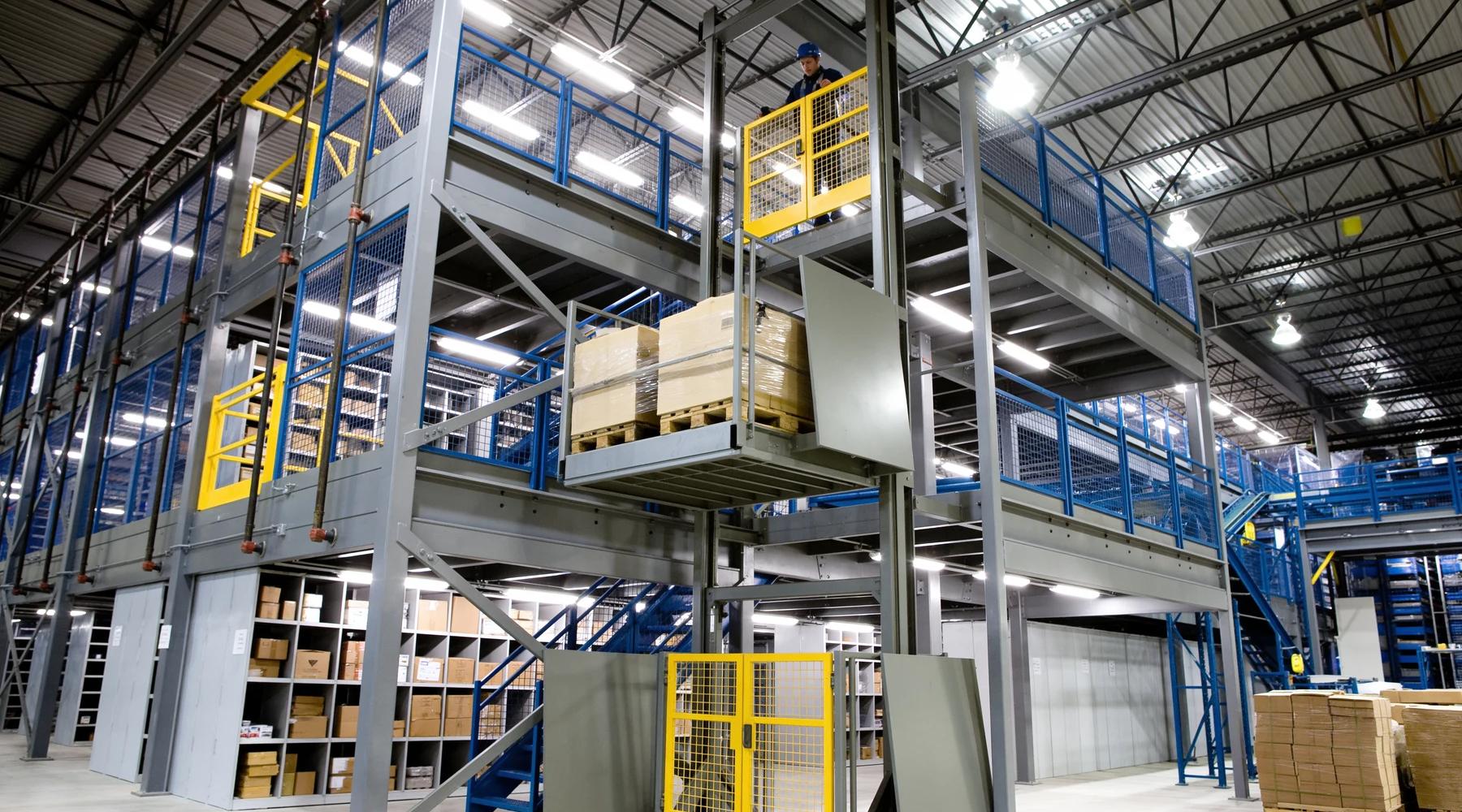
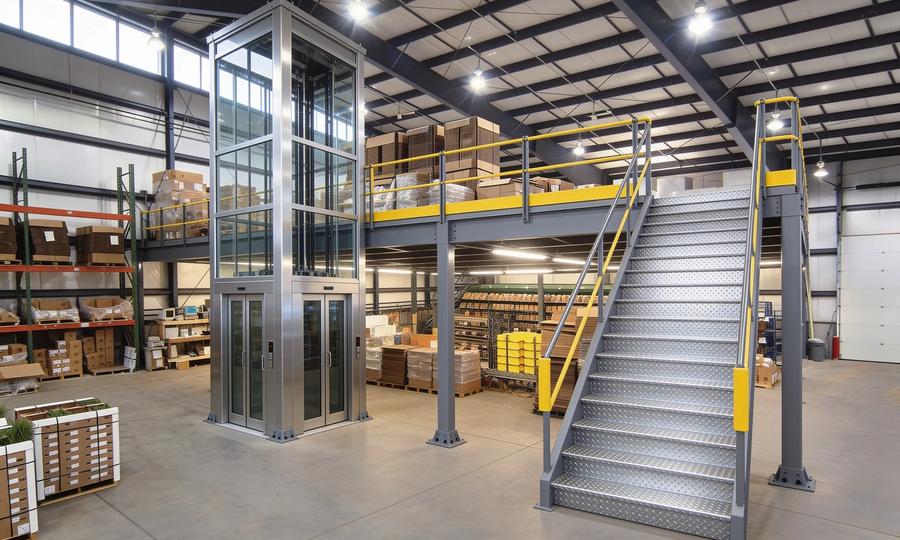
A mezzanine lift moves goods between the ground floor and an elevated warehouse level. One common solution is a vertical reciprocating conveyor (VRC): a guided carriage that travels between landings. MHI describes VRCs as equipment for transferring material from one level to another.
Choose the handling method while planning the warehouse mezzanine, so the landing, floor layout and storage operation fit together. This guide covers material-only VRCs, the specification questions that affect selection, and the alternatives to compare.
What is a vertical reciprocating conveyor?
A VRC is a material-handling conveyor with a carriage that moves vertically between levels. People must not ride a material-only VRC. PFlow's comparison of VRCs and freight elevators explains the distinction between these equipment categories. A product described as a material lift still needs its exact classification confirmed.
The equipment's application matters more than its marketing name. If the project requires people to travel between floors, give that requirement to the designer explicitly. A materials-only machine cannot provide that service or substitute for an accessible route. See the mezzanine accessibility guide for the separate access-planning questions.
How do you specify a mezzanine material lift?
Describe the complete load and its route, then ask suppliers to select a compatible system. Wildeck lists load capacity, load size, travel pattern, lifting height and speed among its design inputs. Those are useful headings for a request for quotation.
| Information to provide | What to record in the project brief |
|---|---|
| Load | Goods plus the pallet, container or handling equipment that travels with them |
| Envelope | Overall length, width and height, including overhang and packaging |
| Travel | Landing elevations, number of stops and the route into and out of the carriage |
| Operation | Expected transfers, peak periods and how loads are staged at each landing |
| Interface | Nearby aisles, conveyors, doors and the mezzanine edge or floor opening |
| Environment | Indoor or outdoor conditions, cleaning requirements and other site constraints |
Attach a sketch showing where the load arrives, where it waits, and who removes it upstairs. This can reveal a handling bottleneck that a lift-capacity number alone would miss. The mezzanine floor plan guide helps place the interface within the wider layout.
Hydraulic vs mechanical VRC: what should you compare?
Compare the actual models against the required load, travel and duty. Manufacturers offer both hydraulic and mechanical systems with different published limits. Wildeck's product comparison is one example; its specifications are model-specific rather than universal limits for each technology.
Ask both suppliers to answer the same questions:
- Does the proposed machine support the full load and carriage size?
- Is it rated for the proposed travel, stops and operating frequency?
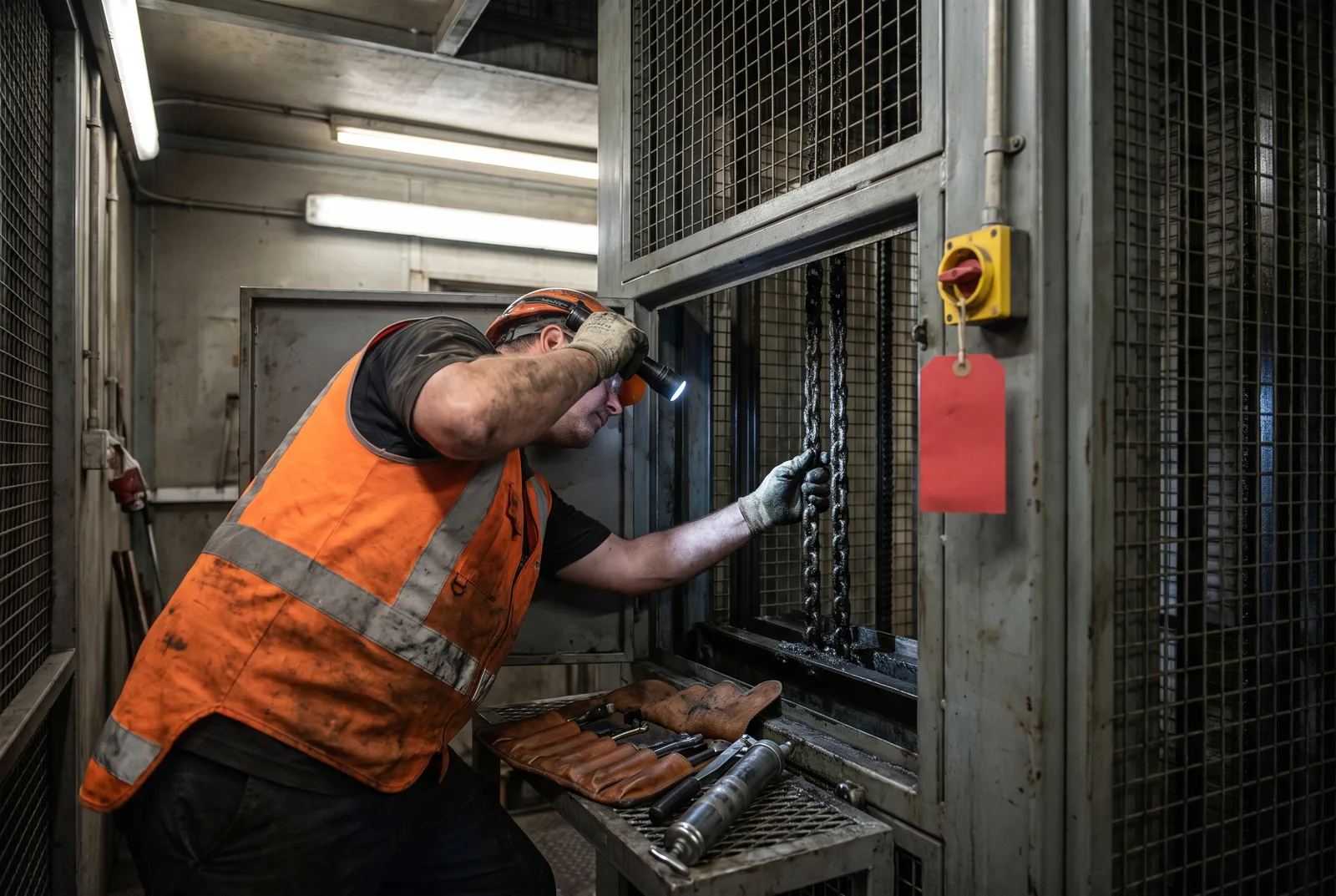
- What space, power and installation provisions does it require?
- Which maintenance tasks and service access must the layout accommodate?
- What controls are included, especially if the lift connects to conveyors?
An entry-level specification and a customized high-duty specification should not be compared solely by purchase price. Record the model, stated limits, included controls and installation scope alongside the quote.
How does a VRC fit against the mezzanine?
The loading pattern and the landing interface should be designed together. MHI's VRC application guidelines describe installations at a mezzanine edge or through a floor opening. PFlow's design considerations discuss configuration choices for the carriage and structure.
On the drawing, distinguish the lift enclosure from the clear area needed to approach, load and unload it. Show the landing gates, staging positions and neighboring traffic. Ask the lift supplier and mezzanine engineer to agree on loads, attachment details and responsibilities at the interface. Review the slab and column layout as part of that coordination.
VRC, forklift loading area or spiral conveyor?
Start with the goods and workflow rather than assuming every mezzanine needs the same lifting equipment. A comparison brief can look like this:
| Option to evaluate | Questions to resolve |
|---|---|
| Material-only VRC | Will goods move in batches? What carriage and landing arrangement does the load need? |
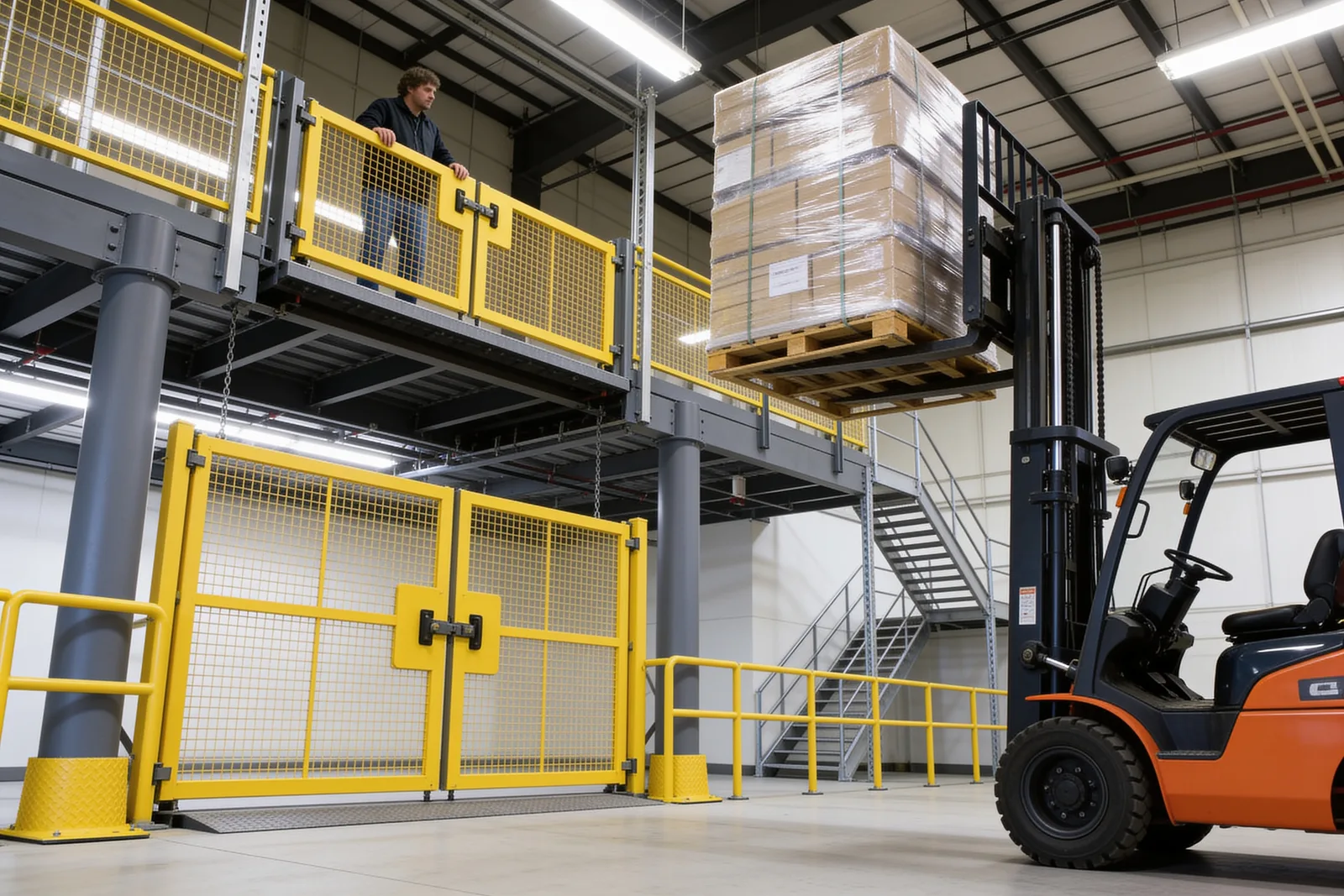
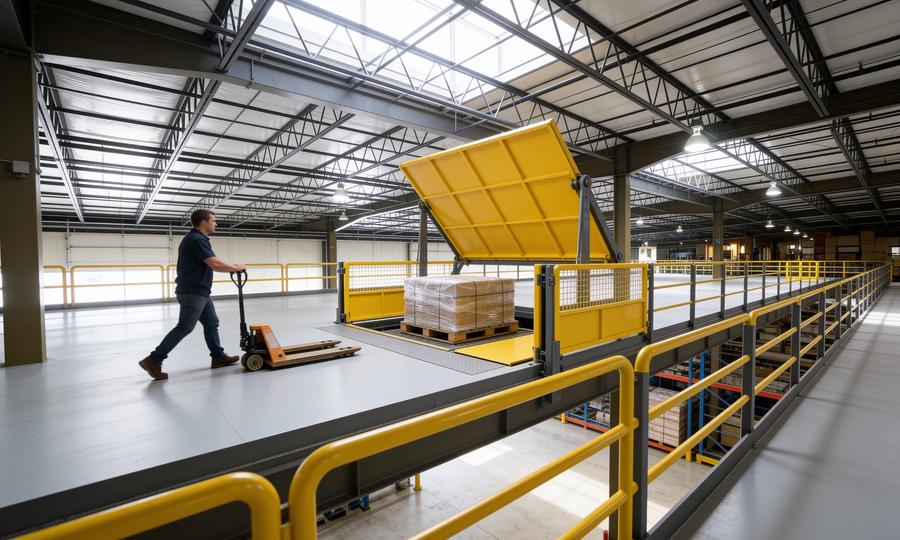
| Forklift serving a loading area | Can the truck approach safely? How will the opening remain protected during the transfer? |
| Carton or tote conveyor | Are products suited to the conveyor? How should accumulation and routing work between levels? |
Ryson describes spiral conveyors as a way to move products vertically in continuous flow. A reciprocating carriage works differently, so compare the whole transfer cycle rather than comparing travel-speed figures in isolation.
For a forklift-fed opening, the pallet-gate guide addresses the guarding side of the layout. For order fulfillment, the pick-module guide connects storage, picking and conveyors. Equipment selection and safe operating procedures should be resolved with the suppliers and project designers.
What determines mezzanine lift cost?
Compare an installed scope, with exclusions listed beside the equipment price. Load, dimensions, travel and site requirements should be specified before requesting comparable proposals. Use an itemized schedule rather than treating a generic online starting price as a finished-project budget.
Request separate entries for the machine, enclosure and gates, controls, freight, installation, electrical work, any slab or opening work, testing and required approvals. Mark which party supplies each item. A blank line in one proposal is a question to resolve, not evidence that the item is included for free.
Keep the lift allowance separate from the structural mezzanine budget. The mezzanine cost guide and buying guide explain how to compare scope across the wider project. This article does not prescribe a universal installed VRC price.
Which standards and permits apply to a VRC?
The project team needs to establish both the equipment standard and local approval requirements. ASME publishes B20.1, Safety Standard for Conveyors and Related Equipment. VRC manufacturers reference it for material conveyors, while local authorities determine the requirements applicable to a specific installation.
PFlow maintains a state-code directory showing that permitting, inspection and installer requirements differ by jurisdiction. Treat that directory as a starting point and confirm the current requirements with the relevant authority. Coordinate those approvals with the mezzanine permit process before installation is scheduled.
What to read next
-
Mezzanine conveyor integration: openings, loads and guarding — coordinate the transfer between the equipment and elevated platform
Put this guide into practice
Frequently asked questions
- What is a mezzanine lift?
- A mezzanine lift moves goods between the ground floor and an elevated level. A vertical reciprocating conveyor, or VRC, is one common material-only solution, using a guided carriage between landings.
- Can a person ride a vertical reciprocating conveyor?
- People must not ride a material-only VRC. If a project needs people to travel between levels, specify that requirement to the designer and select equipment approved for that purpose.
- Is a VRC the same as a freight elevator?
- VRCs and freight elevators are different equipment categories. Confirm the exact classification, applicable standard and local approval requirements rather than relying only on terms such as material lift or freight lift.
- What information does a mezzanine lift supplier need?
- Provide the complete load weight and dimensions, landing elevations, number of stops, loading direction, expected transfers, staging layout, site conditions and any conveyor interfaces.
- How much does a mezzanine material lift cost?
- This guide does not prescribe a universal installed price. Compare itemized proposals for the same load, dimensions, travel, controls and site-work scope, including installation, electrical work and approvals.
- Does a VRC need a permit?
- Requirements differ by jurisdiction. Confirm the equipment standard, permitting, inspections and installer requirements with the relevant authority and coordinate them with the mezzanine project.
Last substantive revision —
Continue planning your mezzanine
All Engineering guides →
Complete Guide
Warehouse Mezzanine Floors: Storage, Layout & Costs
Plan a warehouse mezzanine floor for storage, picking, packing or offices. Compare layouts, material flow, project examples and the scope of supplier quotes.
Code & Permits
Mezzanine ADA requirements: when an accessible route, ramp or lift is required
The ADA and the IBC run separate accessibility tests on a mezzanine and can disagree. The exemptions, work-area rules, ramps, lifts and alteration triggers.
Code & Permits
Mezzanine safety gates: types, requirements, and what they cost
OSHA requires fall protection at every mezzanine edge, and the pallet-drop opening is where it fails most. Gate types compared — swing, sliding, lift-out, pivot — with the ANSI rule that disqualifies half of them, and real prices.