

Industrial mezzanine ROI: when does it actually pay back?
An industrial mezzanine costs $50–150 per square foot installed and competes with options that range from $4/sqft/year (lease) to $250/sqft (new construction). Here's how to run the ROI honestly.
Editorial
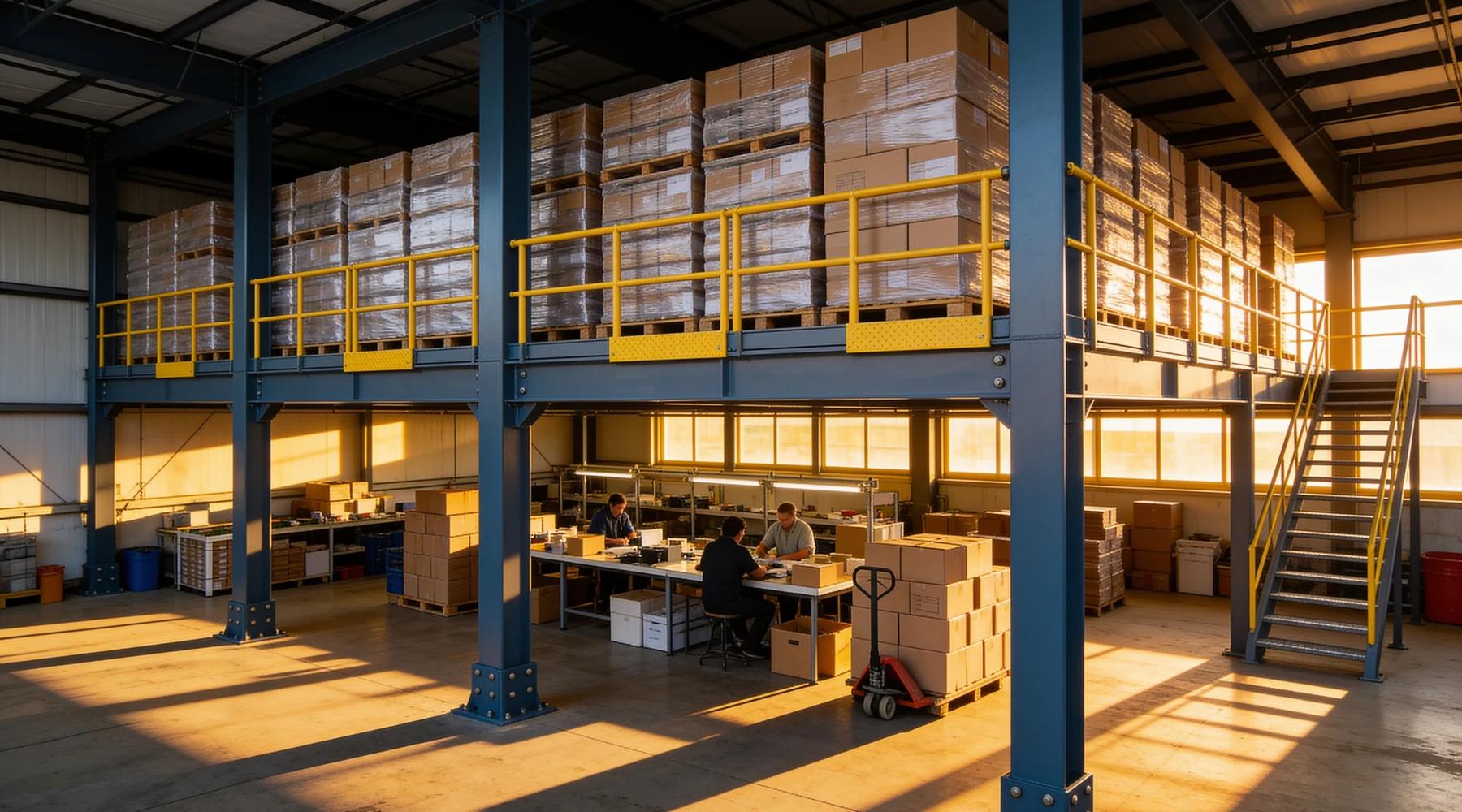
A mezzanine pays back when the value of the floor area it adds exceeds the alternatives — lease expansion, vertical racking, automation, or new construction — over the same time horizon. The math is straightforward but the inputs vary hugely by facility, so most generic "ROI calculators" produce numbers that don't match real decisions.
This is the honest framework. It includes the variables that actually drive payback, the alternatives a mezzanine competes against, and a worked example with realistic 2026 numbers.
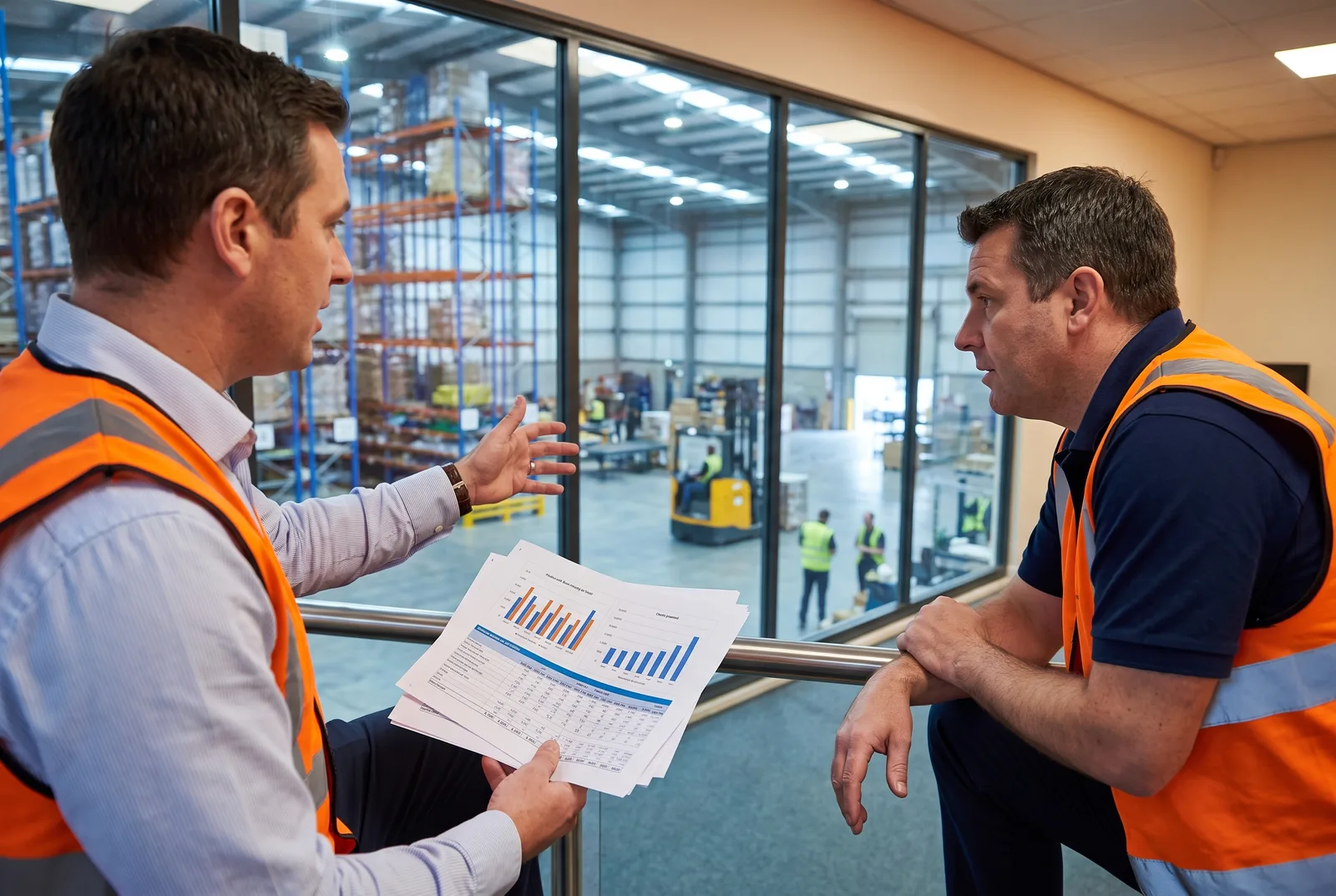
How do you calculate mezzanine ROI?
Divide the total mezzanine cost — installed cost plus permits, sprinklers, slab work, and electrical — by the annual value of the added floor area. The mezzanine wins when that payback period is shorter than how long you'll occupy the building.
Payback (years) = Total mezzanine cost ÷ Annual value of the added floor area
Where:
- Total mezzanine cost = installed cost + permits + sprinklers + slab work + electrical + any disruption costs
- Annual value of the added floor area = (alternative cost of equivalent space) – (mezzanine operating cost)
The mezzanine wins when the payback period is shorter than how long you'll occupy the building (or, more rigorously, when the net present value at your cost of capital is positive).
What are the alternatives to building a mezzanine?
Three real alternatives compete with a mezzanine for the same floor-area problem: leasing additional space ($4–28 per sqft per year depending on market), new construction ($150–300+ per square foot), and vertical racking ($20–60 per sqft of equivalent floor area added).
Alternative 1: Lease additional space
In most North American industrial markets in 2026:
- Tier-2 cities (Memphis, Indianapolis, San Antonio): $4–8 per sqft per year industrial lease
- Tier-1 cities (Chicago, Atlanta, Dallas): $7–14 per sqft per year
- Major metros (LA, NJ port markets, Seattle, Toronto): $14–28 per sqft per year
- Plus common-area maintenance and taxes (typically +20–30%)
A new 5,000 sqft lease at $10/sqft NNN with $3/sqft CAM costs $65,000/year ongoing, plus a 5-year lease commitment, plus moving and setup costs.
Alternative 2: New construction
Industrial new construction in 2026 runs $150–300+ per square foot depending on region, building specs, and site work. Plus 12–24 months to permit and build. Plus the carrying cost of split operations during construction.
Alternative 3: Vertical racking + denser layout
Often the cheapest alternative — but caps out at storage-only uses. Doesn't address office, work area, or equipment platform needs. Typical cost: $20–60 per sqft of equivalent floor area added through height utilization.
How fast does a mezzanine pay for itself?
Roughly 7 years against leasing in a representative case: a 5,000 sqft mezzanine at $90/sqft costs $450,000 one-time versus $65,000/year for equivalent leased space — and past 10 years the mezzanine is significantly cheaper.
A mezzanine adds floor area at $50–150/sqft installed (Safety Source LLC, 2026), one-time capital cost, with minimal operating cost (annual inspection ~$500–2,000, occasional minor maintenance).
Compared to lease: a 5,000 sqft mezzanine at $90/sqft costs $450,000 one-time. The equivalent leased space at $10/sqft NNN + $3 CAM costs $65,000/year. Payback period: ~7 years, ignoring time value of money.
If you discount lease cash flows at 8% cost of capital, the present value of 10 years of lease payments is ~$436,000 — roughly equal to the mezzanine cost. Past 10 years, the mezzanine is significantly cheaper.
Compared to new construction: mezzanine wins on cost by 2–4x and on timeline by 10–24x (12 weeks vs 12–24 months).
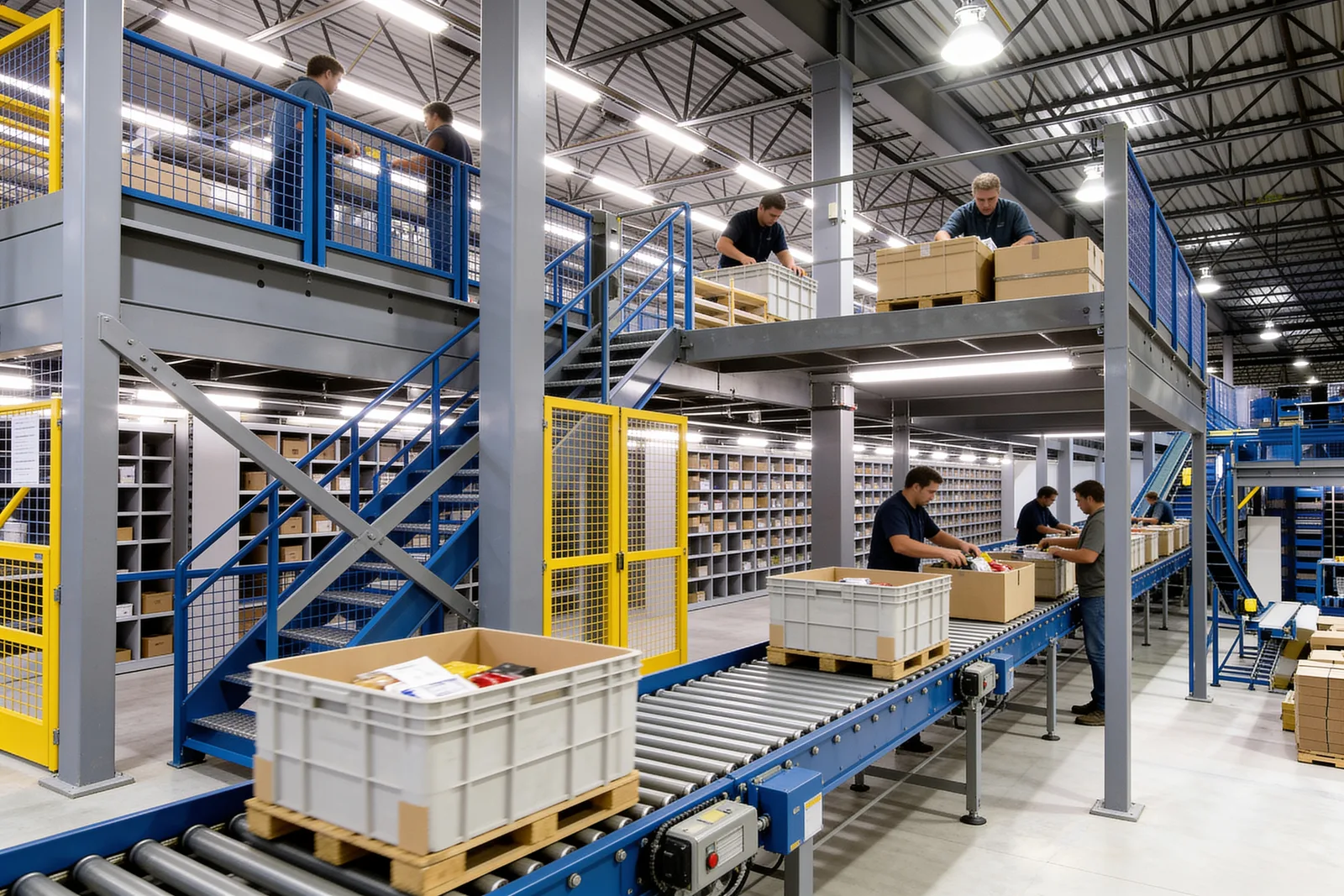
A worked example with real 2026 numbers
A distribution center in suburban Chicago needs to add 4,000 sqft of pick-module work area within 6 months. Three options:
Option A: Free-standing mezzanine
| Line item | Cost |
|---|---|
| 4,000 sqft mezzanine @ $70/sqft (median 2026) | $280,000 |
| Sprinkler additions (estimated +35%) | $98,000 |
| Permit + engineering | $8,000 |
| 2 weeks operational disruption during install (~$15,000 in productivity) | $15,000 |
| Total project cost | ~$401,000 |
| Timeline to operational | ~14 weeks |
| Ongoing annual cost | ~$1,500 (inspection + minor maintenance) |
Option B: Lease expansion (5,000 sqft suite next door)
| Line item | Cost |
|---|---|
| Base rent (5,000 sqft @ $11/sqft NNN) | $55,000/year |
| CAM (estimated 25% of base) | $13,750/year |
| Moving + outfitting (one-time) | $40,000 |
| Lease commitment | 5-year minimum |
| Total Year 1 cost | ~$108,750 |
| Total over 5 years | ~$384,000 |
| Total over 10 years | ~$724,000 (accounting for ~3%/year rent escalation) |
Option C: New construction (10,000 sqft addition)
| Line item | Cost |
|---|---|
| Building shell @ $180/sqft | $1,800,000 |
| Site work, utilities, finishes | $300,000 |
| Permits + engineering | $80,000 |
| Total project cost | ~$2,180,000 |
| Timeline to operational | ~18 months |
| Ongoing annual cost | ~$25,000 (property tax + insurance increment) |
Payback comparison
| Option | 5-year total cost | 10-year total cost |
|---|---|---|
| Mezzanine | ~$408,500 | ~$416,000 |
| Lease | ~$384,000 | ~$724,000 |
| New construction | ~$2,305,000 | ~$2,430,000 |
The mezzanine wins on horizon over 6 years. Under 6 years it ties with lease. New construction never wins on cost — it only makes sense if you also need utilities, dock doors, or capacity the existing building can't provide.
What factors change the mezzanine payback math?
Three variables shift the calculation materially: occupancy horizon (the mezzanine wins at 5+ years in most markets), what the mezzanine is used for, and whether the operation prefers capex or smooth opex.
1. How long you'll occupy the building
If you're leaving in 3 years, lease almost always beats mezzanine. If you'll be there 7+ years, mezzanine almost always beats lease.
A useful rule of thumb: mezzanine wins at 5+ years of occupancy in most markets. Tier-2 markets (lower lease rates) push that to 7–8 years.
2. What's on the mezzanine
- Storage only: mezzanine and racking compete closely. Calculate honestly.
- Office or assembly: mezzanine often dominates lease for the use case — leasing partial industrial space for office work doesn't pencil.
- Equipment platform: mezzanine is often the only practical option — leasing doesn't solve the proximity-to-equipment problem.
3. Capex vs opex preference
If your operation prefers smooth opex (consistent monthly cost) over a capex hit, lease has structural appeal even when total cost is higher. Many leaders run the IRR comparison anyway — capex-funded mezzanine usually clears 12–18% IRR vs lease, well above most companies' cost of capital.
What are the hidden benefits of a mezzanine?
Three real but harder-to-quantify benefits favor mezzanines: operational density from keeping operations in one building, resale value of typically 40–60% of original cost within 5–7 years for free-standing units, and speed — 14 weeks versus 18 months to operational.
-
Operational density. Keeping operations in one building beats split operations across two buildings — supervision, inventory management, equipment moves, labor flexibility all improve. Hard to put a dollar on but real.
-
Asset value. A mezzanine is essentially a portable asset (especially free-standing). Resale value typically 40–60% of original cost within 5–7 years if you relocate. Lease commitments are pure expense.
-
Speed. 14 weeks vs 18 months to operational. For a growing operation, the timing alone often justifies the choice.
What to read next
- Mezzanine cost per square foot in 2026: a complete breakdown — input #1 for the ROI math
- Mezzanine vs warehouse expansion vs relocation: the 2026 cost comparison — the alternatives, priced with current data
- Free-standing vs rack-supported vs structural: a buyer's decision framework — type choice affects resale and flexibility
- Mezzanine depreciation: building or equipment? — the IRS rules that decide the after-tax side of this math
Put this guide into practice
Frequently asked questions
- How much does an industrial mezzanine cost?
- A mezzanine adds floor area at $50 to $150 per square foot installed, one-time. Total project cost also includes permits, sprinkler additions, slab work, electrical, and disruption. In a worked 2026 example, a 4,000 sqft mezzanine at $70 per square foot totaled about $401,000 once sprinklers, permits, and disruption were added.
- How long does it take for a mezzanine to pay for itself?
- Roughly 7 years against leasing in a representative case: a 5,000 sqft mezzanine at $90 per square foot costs $450,000 one-time versus $65,000 per year for equivalent leased space. Discounted at 8 percent, ten years of lease payments roughly equal the mezzanine cost; past 10 years the mezzanine is significantly cheaper.
- Is a mezzanine cheaper than leasing more warehouse space?
- It depends on occupancy horizon. If you are leaving in 3 years, lease almost always wins; at 7+ years, the mezzanine almost always wins. A useful rule of thumb: the mezzanine wins at 5+ years of occupancy in most markets, or 7 to 8 years in lower-rate tier-2 markets.
- Is a mezzanine cheaper than building an addition?
- Yes — by 2 to 4 times on cost and 10 to 24 times on timeline (about 12 weeks versus 12 to 24 months). Industrial new construction runs $150 to $300+ per square foot. New construction only makes sense if you also need utilities, dock doors, or capacity the existing building can't provide.
- Do mezzanines have resale value?
- Yes. A mezzanine — especially free-standing — is essentially a portable asset, with resale value typically 40 to 60 percent of original cost within 5 to 7 years if you relocate. Lease commitments are pure expense. Ongoing costs are minimal: annual inspection runs about $500 to $2,000.
Last substantive revision —
Continue planning your mezzanine
All Cost & ROI guides →
Cost & ROI
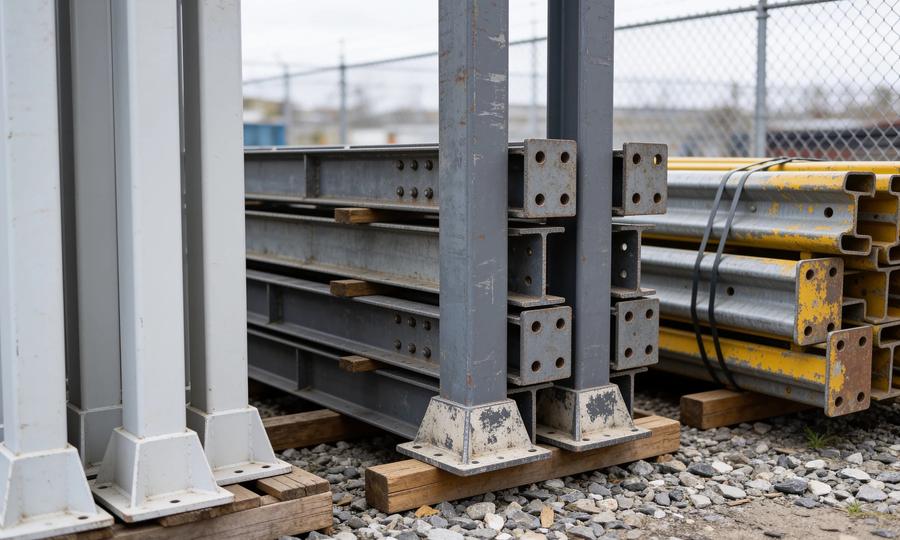
Mezzanine Cost per Square Foot: Budget & Quote Scope
Compare mezzanine cost per square foot by quote scope. See a transparent budget example, identify unpriced site work and prepare comparable supplier proposals.
Cost & ROI
New vs used mezzanines: an honest buyer's comparison
Used mezzanines sell for 40–60% off retail — sometimes more — but arrive without engineering, without warranty, and sized for someone else's building. When used genuinely wins, and when it costs more than new.
Cost & ROI
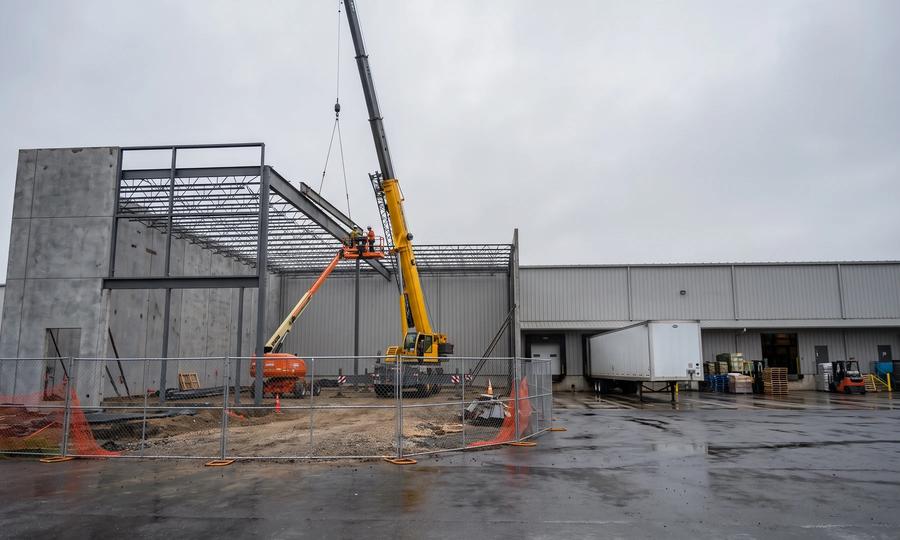
Mezzanine vs warehouse expansion vs relocation: the 2026 cost comparison
New warehouse construction runs $85–200/sq ft in 2026; a mezzanine adds floor space for $50–150/sq ft in weeks, not months. The honest three-way comparison with sourced numbers.