

Free-standing vs rack-supported vs structural mezzanines: a buyer's decision framework
The three structural types of industrial mezzanine — free-standing, rack-supported, and structural — solve different problems. Here's how to pick the right one based on use case, flexibility, cost, and code path.
Editorial
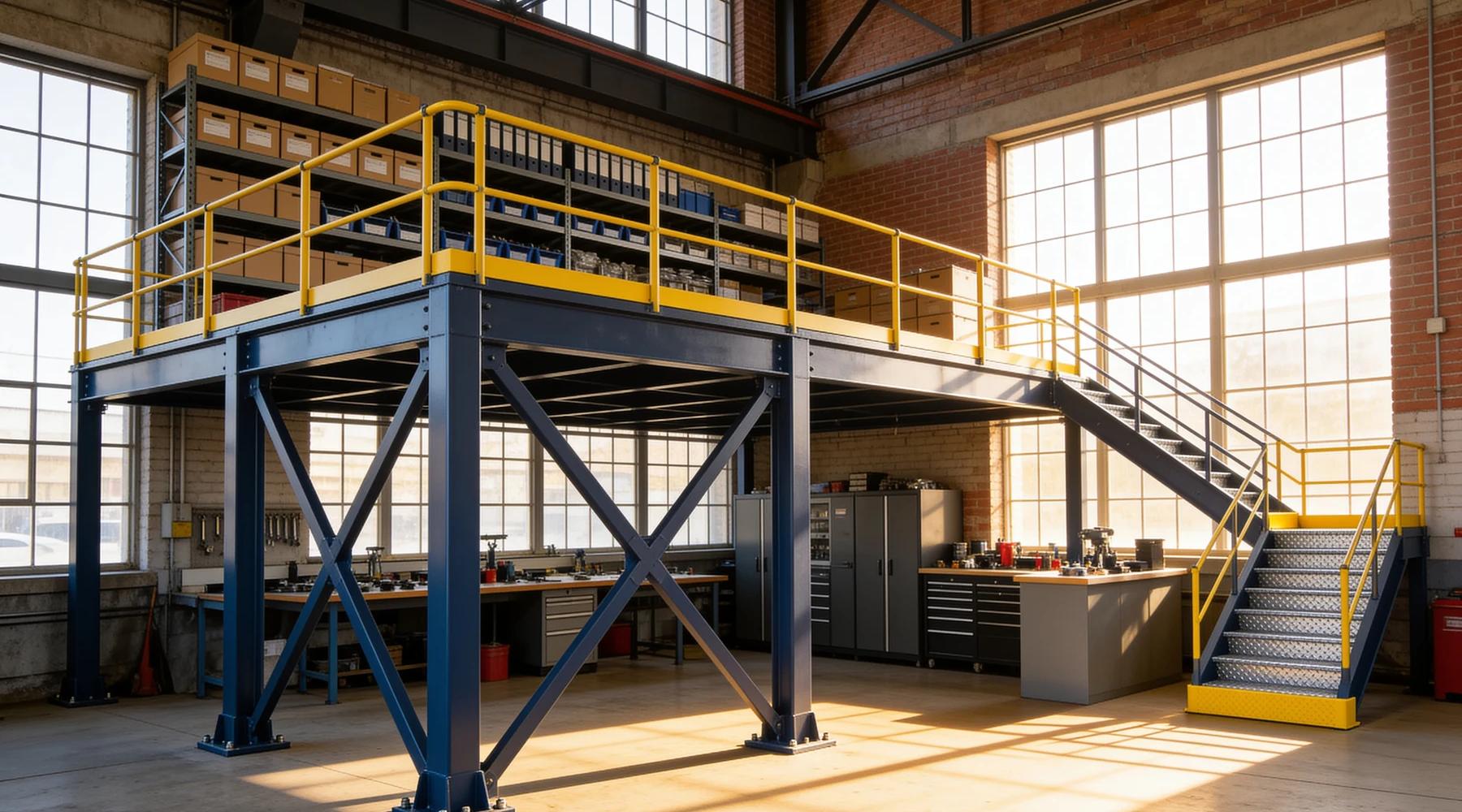
Every industrial mezzanine falls into one of three structural categories: free-standing, rack-supported, or structural (fully integrated into the building). Picking the right one is the most consequential decision you'll make for the project. It drives cost by 50–100%, permits by weeks, and future flexibility by years.
This framework walks through each type honestly — including where each is the wrong choice.
What is a free-standing mezzanine?
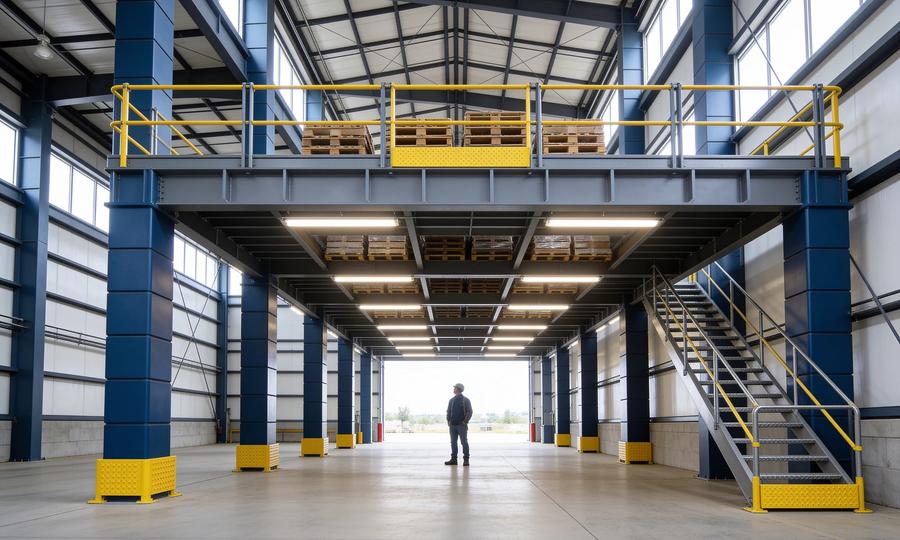
A free-standing mezzanine is a self-supporting steel structure on its own columns, anchored to the existing slab and independent of both pallet racking and the host building's structure. It's the most popular type for new installations, typically $40–70 per square foot installed.
How they're built
Free-standing mezzanines use four core elements:
- Columns — vertical structural posts anchored to the slab on epoxy-set anchors or surface bolts (depending on slab condition and load)
- Primary beams — horizontal members spanning between columns, carrying the joist load
- Joists — secondary members spanning across the primary beams, supporting the deck
- Decking — the floor surface (bar grating, B-deck, plywood, etc.)
Column spacing typically runs 10–30 feet depending on load rating. Larger spans reduce column count but increase steel weight, and economics usually favor 12–20 foot spans for general-purpose installations.
Where they win
- Flexibility. You can put anything on top — storage, offices, equipment platforms, conveyors. You can reconfigure what's below without touching the mezzanine.
- Removability. Free-standing units can be disassembled and moved (or sold) if you relocate. Resale value is meaningful — 40–60% of original cost for well-maintained units sold within 5–7 years.
- Code clarity. They're the cleanest case under IBC §505 and easier to permit than fully integrated structural mezzanines.
Where they lose
- Cost vs rack-supported. For pure pallet storage operations, rack-supported can be 30–40% cheaper.
- Footprint. Columns occupy ground-level floor space (~1 sqft per column, but their footings can require larger keep-out zones).
Typical cost in 2026
$40–70 per square foot installed for a standard 125 PSF live-load configuration with bar grating decking (East Coast Storage Equipment, Speedrack West).
What is a rack-supported mezzanine?
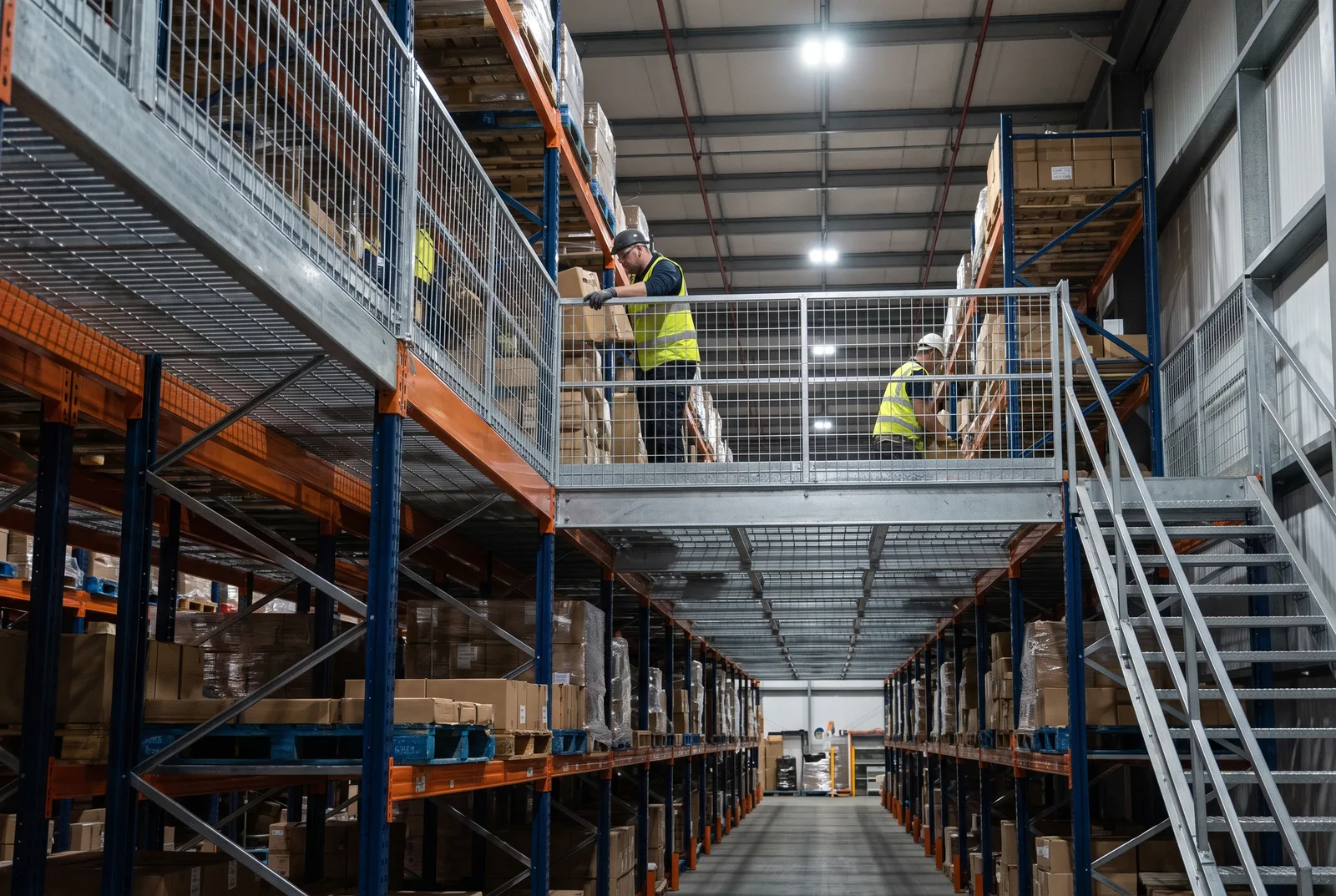
A rack-supported mezzanine — often called a pallet rack mezzanine — uses the pallet racking itself as the structural support: joists and decking sit on top of rack upright frames, and pallet positions continue below the mezzanine using the same rack structure — typically $30–55 per square foot installed.
How they're built
Standard pallet rack uprights (typically heavier-gauge than storage-only racks) form the columns. Mezzanine joists span across the rack beams or attach directly to the uprights. Decking covers everything.
The rack system and mezzanine are designed together by the rack manufacturer or a structural engineer — you can't add a mezzanine to existing racking that wasn't designed for the additional load.
Where they win
- Cost. Cheapest per square foot — typically $30–55/sqft because the racks serve double duty.
- Storage density. Pallet positions below + pick area or storage above. Maximum cube utilization.
- Best fit for warehousing. Distribution centers, fulfillment, replenishment operations.
Where they lose
- Inflexibility. The rack layout IS the mezzanine layout. Changing rack configuration means redesigning the mezzanine. If your storage mix changes, you're locked in.
- Not for non-storage uses. Putting offices, equipment platforms, or assembly stations on a rack-supported mezzanine usually doesn't pencil — the structure is sized for distributed pallet load, not point loads from people and machines.
- Code treatment can be complex. Some AHJs require the rack-supported mezzanine to be permitted as a structural mezzanine rather than as equipment, which changes the design and inspection requirements.
Typical cost in 2026
$30–55 per square foot installed for a standard pallet-storage configuration (Mezzanine Distributors, Speedrack West).

What is a structural (fully integrated) mezzanine?
A structural mezzanine is built as a permanent extension of the building's primary structure — beams tie into the existing columns, or new columns match the building's lateral system — essentially adding a partial second story, at $100–200+ per square foot installed.
How they're built
A structural engineer reviews the existing building's load capacity (columns, foundations, lateral system), then designs new mezzanine elements that integrate with — and may reinforce — the existing structure. Often involves welded steel connections rather than bolted, concrete-encased columns, and full slab construction (typically B-deck with 3–6 inches of concrete fill rather than bar grating).
Where they win
- Highest live-load capacity — easily 250+ PSF, suitable for forklift traffic, machinery, vehicle storage.
- Permanent improvement — adds to building's appraised value and resale price.
- Closes the openness exception cleanly — the integrated structure makes "treat the mezzanine as a story" possible if that's preferred for occupancy reasons.
Where they lose
- Cost — can match or exceed new floor construction, $100–200+/sqft installed.
- Permit complexity — full structural engineering on the existing building, often a longer permit timeline (6+ months in dense jurisdictions).
- Disruption during construction — usually 6–12 weeks of partial facility shutdown, vs 1–4 weeks for free-standing.
- Not removable. It's a building modification, not equipment.
Typical cost in 2026
$100–200+ per square foot installed, often approaching the cost of comparable new construction.
Which mezzanine type should you choose?
Choose free-standing for maximum flexibility, removability, and the fastest permit and install; rack-supported for the cheapest cost per square foot in pallet storage; and structural for permanence, building value, and heavy point loads like machinery or forklift traffic.
| If your priority is... | Pick |
|---|---|
| Maximum flexibility for changing operations | Free-standing |
| Cheapest cost per sqft for pallet storage | Rack-supported |
| Long-term permanence + building value | Structural |
| Removability / portable asset | Free-standing |
| Heavy point loads (machinery, forklift) | Structural, or heavy-duty free-standing |
| Fastest permit and install | Free-standing |
| Cleanest treatment as "equipment" not building | Rack-supported (in some jurisdictions) |
| Lowest total project cost (small footprint) | Rack-supported, then free-standing |
A common mistake: choosing on price alone
A buyer with a pallet-storage operation often picks rack-supported because it's cheapest. Two years later the operation shifts to e-commerce fulfillment with pick stations on the elevated level. The rack-supported mezzanine can't carry the new use — and the cost to rebuild is now triple what choosing free-standing would have cost upfront.
Pick for the use case 5 years from now, not just today. If you have any uncertainty about future operations, the free-standing premium is usually worth it.
What to read next
- What is an industrial mezzanine? Types, uses, and when you need one — the foundational overview
- Pick modules: how multi-level order-picking structures work — what rack-supported steel looks like when picking drives the design
- Shelving-supported mezzanines: the load path that decides whether yours works — the fourth, lightest option, where shelving itself carries the deck
- Mezzanine load capacity explained: live, dead, and point loads — engineering the right capacity
Put this guide into practice
Frequently asked questions
- What is the difference between a free-standing and a rack-supported mezzanine?
- A free-standing mezzanine is a self-supporting steel structure on its own columns, independent of pallet racking, so you can reconfigure what's below without touching it. A rack-supported mezzanine uses the pallet racking itself as support, with pallet positions continuing below — typically 30–40% cheaper for pure pallet storage but locked to the rack layout.
- How much does a free-standing mezzanine cost per square foot?
- Typically $40–70 per square foot installed in 2026 for a standard 125 PSF live-load configuration with bar grating decking. Rack-supported mezzanines run $30–55 per square foot, and fully integrated structural mezzanines run $100–200+ per square foot, often approaching the cost of comparable new construction.
- Can a free-standing mezzanine be moved or resold?
- Yes. Free-standing units can be disassembled and moved or sold if you relocate, and resale value is meaningful — 40–60% of original cost for well-maintained units sold within 5–7 years. Structural mezzanines are permanent building modifications and are not removable.
- Can you add a mezzanine on top of existing pallet racking?
- No — the rack system and mezzanine must be designed together by the rack manufacturer or a structural engineer. You can't add a mezzanine to existing racking that wasn't designed for the additional load, and rack uprights used as mezzanine columns are typically heavier-gauge than storage-only racks.
- Which mezzanine type is best for forklifts and heavy machinery?
- Structural mezzanines: they offer the highest live-load capacity — easily 250+ PSF — suitable for forklift traffic, machinery, and vehicle storage. A heavy-duty free-standing design is the alternative. Rack-supported mezzanines are sized for distributed pallet load, not point loads from people and machines.
Last substantive revision —
Continue planning your mezzanine
All Engineering guides →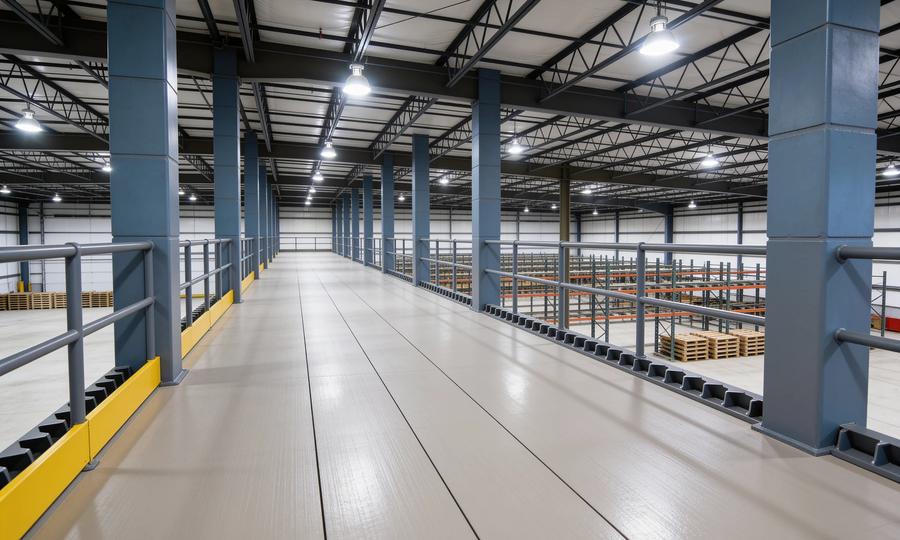
Engineering
Mezzanine Flooring: Structural Decks & Surface Finishes
Choose mezzanine flooring for storage, pallet jacks or automation. Review the structural deck, surface finish, rolling loads and the specifications to compare.
Engineering
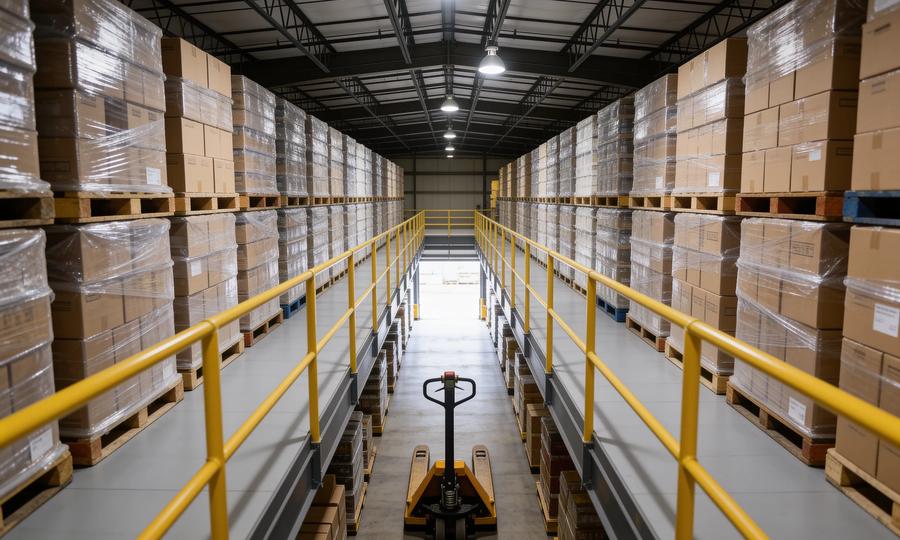
Mezzanine Load Capacity: PSF Ratings & Point Loads
Understand mezzanine PSF ratings, uniform live loads and point loads. Use documented ratings, prepare a load brief and avoid unsupported capacity assumptions.
Engineering
Mezzanine Ceiling Height Requirements & Clearance
Work through mezzanine ceiling height requirements, clear headroom and framing depth. Check sprinkler obstructions and forklift clearance before planning.