

Mezzanine total cost of ownership: a 10-year planning model
Build a mezzanine ownership budget that includes acquisition, upkeep, changes and exit costs, with a transparent example and clear limits on the assumptions.
Editorial

Mezzanine total cost of ownership is the cost of acquiring, operating, maintaining and eventually changing or exiting the asset over a defined period. A supplier’s installed price is one input. A useful decision record also shows when later costs occur, who estimated them and which uncertainties could change the outcome.
This guide covers the ownership ledger. The cost-per-square-foot guide covers the initial budget, hidden project costs covers scope omissions, and the ROI guide discusses benefits and alternatives. Here, ten years is a chosen example horizon, not a claim about structural life.
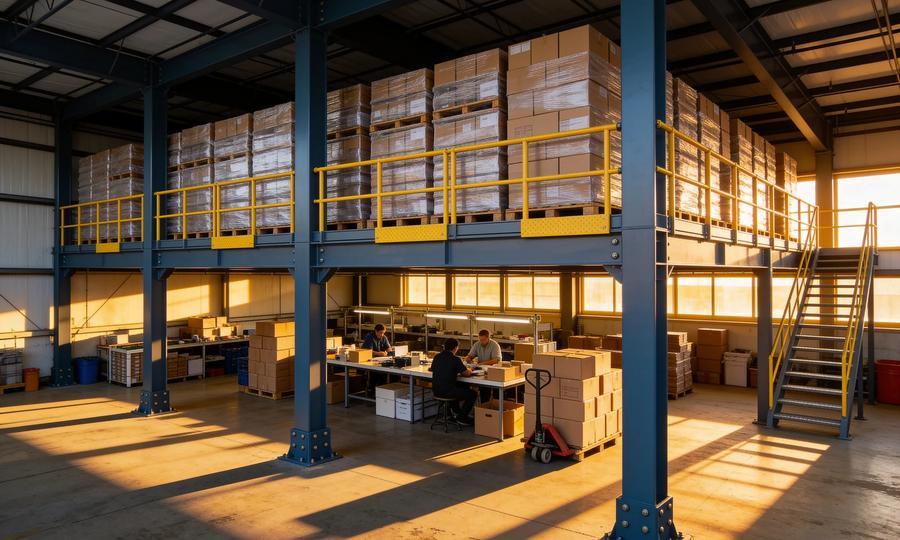
All three images are AI-generated concept illustrations, not project photographs, approved connection details or dismantling plans. This Cogan-affiliated editorial guide uses published methods and an invented arithmetic example; no named technical review is claimed. Project pricing, engineering and financial decisions need the appropriate professionals.
What should the ownership budget include?
Start with a complete list of relevant costs, then place each in its expected year. Separate the initial investment from recurring expenses, one-time changes and the ending position. Mark an unpriced item as unknown so that an apparently precise total does not hide missing scope.
The Whole Building Design Guide’s lifecycle-cost guidance identifies acquisition, operation, maintenance, replacement and residual-value categories for facilities. It also distinguishes costs relevant to the decision from expenditures common to every alternative. Apply that framework to the actual platform and its associated systems.
| Ledger section | Questions for the project team | Evidence to attach |
|---|---|---|
| Initial project | Does the budget include the structure, installation and agreed work by others? | Quotes, scope matrix and exclusions |
| Recurring ownership | Who inspects, cleans and maintains the installed systems? | Maintenance scope, records and service proposals |
| Planned changes | Are process, layout or equipment changes expected? | Scenario description and priced change scope |
| Operating disruption | What work affects access or normal operations? | Operations estimate with stated assumptions |
| End of period | Does the platform stay, move, sell or require removal? | Occupancy plan and separate exit/recovery estimates |
Give each line an owner and an evidence date. If a supplier’s package already includes an item, do not add it again under “extras.” Use the cost calculator for initial-budget organization, then carry the reconciled amount into the ownership ledger.
How do you choose the period and the comparison?
Use the same decision horizon and required function for every alternative. A platform for a temporary operation and one supporting a continuing facility are different scenarios. State the occupancy assumption before comparing their totals, and explain what happens to each asset at the horizon’s end.
NIST Handbook 135, written for federal energy-management projects, explains the need for a common study period when evaluating mutually exclusive alternatives. Its method is useful here; its federal program rules are not a universal prescription for a private warehouse.
Write a short comparison brief: required usable space, intended activities, operating hours, access needs and occupancy period. Confirm feasibility with the project team. The warehouse-expansion comparison helps frame alternative uses of space, but different options should not be treated as equivalent merely because their gross areas match.
How should you allow for inspection and maintenance?
Price the actual work and responsibilities rather than assuming a universal annual percentage. Distinguish routine tasks from corrective work and planned replacements. Identify which systems belong to the platform package and which remain separate facility-service obligations.
For US workplaces within its scope, 29 CFR 1910.22(d) requires regular and necessary inspection, safe maintenance, correction or guarding of hazardous conditions, and qualified-person involvement where repairs affect structural integrity. It does not provide a universal annual maintenance price.
Canadian CCOHS inspection guidance describes schedules shaped by jurisdictional requirements, incident history, operations, equipment and shifts. It is guidance, not a replacement for the applicable provincial or territorial rules. The inspection and maintenance guide provides further context.
Ask facilities staff to list tasks, service providers, expected access requirements and known condition issues. Obtain quotes where possible. Keep a planning allowance clearly labeled when scope is unresolved; a budget allowance does not establish that the maintenance program is adequate.
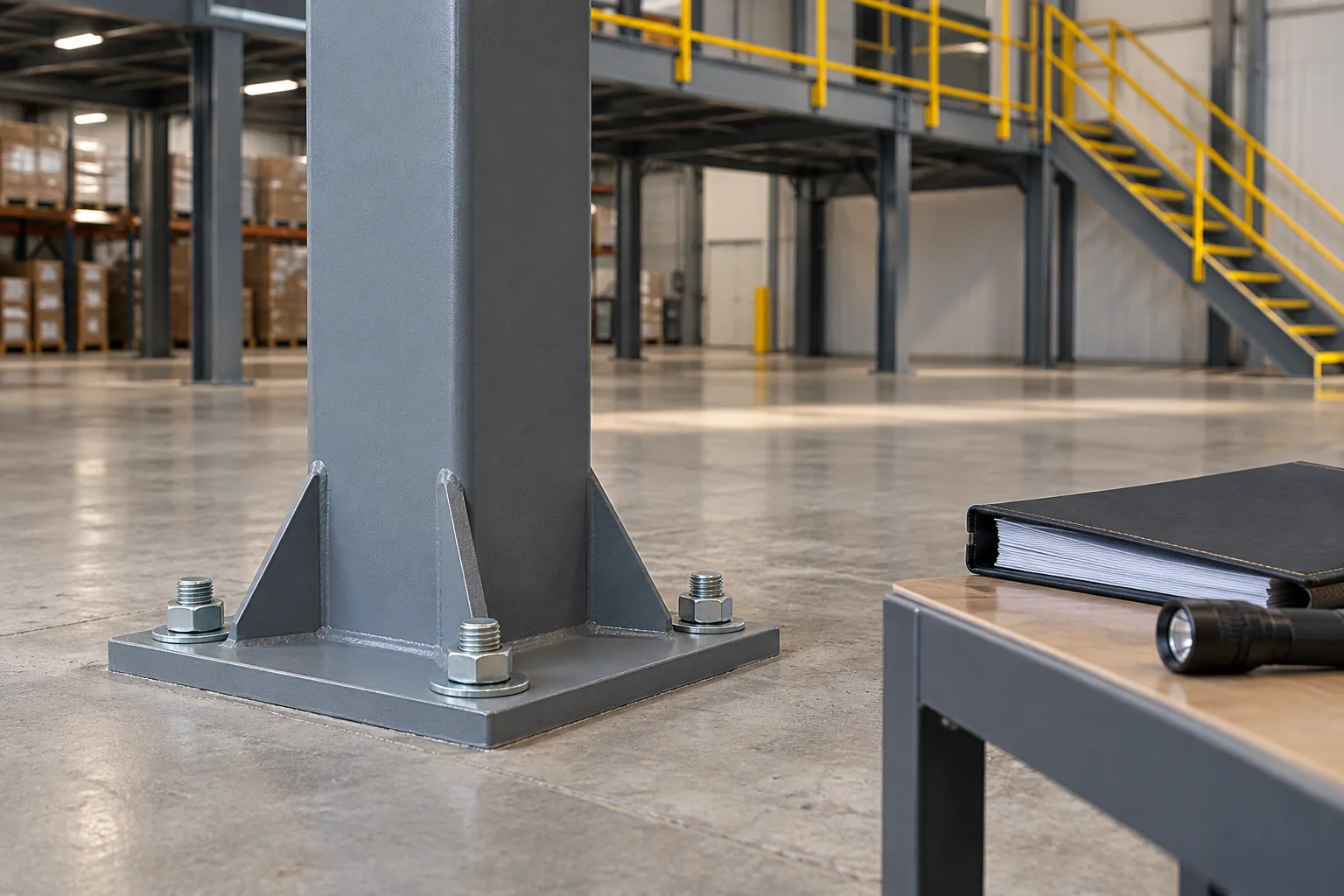
An illustrative 10-year ledger
The following invented inputs demonstrate arithmetic only. They are not market prices, quotations, measured project results or recommended maintenance amounts. Amounts are in constant USD purchasing power. The example assumes an initial payment now, annual upkeep at each year-end, one change in year six and removal/recovery at the end of year ten.
| Illustrative entry | Timing | Modeled amount |
|---|---|---|
| Initial installed project | Start | $100,000 |
| Upkeep allowance | $2,000 at each of ten year-ends | $20,000 total |
| Planned refurbishment | End of year six | $8,000 |
| Removal and reinstatement allowance | End of year ten | $12,000 |
| Gross recovery assumption | End of year ten | −$4,000 |
| Undiscounted modeled subtotal | Entire period | $136,000 |
The calculation is $100,000 + $20,000 + $8,000 + $12,000 − $4,000 = $136,000. The annual line and refurbishment line are separate scopes. The recovery is gross because removal is already entered separately; subtracting a second net-of-removal recovery would double-count that cost.
This subtotal excludes financing, taxes, utilities and operational disruption. Those exclusions are not claims that the costs are zero. Add the relevant priced items before using the ledger for an actual approval. Benefits such as avoided rent or improved throughput also require separate evidence; they are not embedded savings in this example.
Should you discount future costs?
Use a consistent present-value method when the timing of costs matters to the comparison. Keep the cash-budget view as well: a discounted result is an economic comparison, not the amount that will appear on future invoices. Have the finance team select the appropriate assumptions.
NIST’s discounting and inflation discussion pairs constant-dollar amounts with a real discount rate and current-dollar amounts with a nominal rate. Do not mix those bases or copy a federal-program rate into a private decision without establishing its relevance.
For illustration only, use a 5% real rate on the constant-dollar example. Divide each year’s net cost by 1.05 raised to that year, then add the initial investment. The present value of the same modeled entries is approximately $126,324. That rate is an assumption, not a recommendation or a claimed current cost of capital.
The site’s ROI calculator provides a simpler cumulative comparison, with editable capital, upkeep and lease inputs. It does not discount cash flows or include financing, income taxes, moving or residual value. Its building-addition output is capital only. Record those limits before reusing its export in a fuller financial analysis.
What happens at removal, resale or relocation?
Choose an explicit ending scenario and price its components separately. Ask what stays in place, what must be removed, who owns the material and which site conditions must be restored. A possible resale receipt is not the same thing as net recovery after all exit work.
For the illustrative ledger, setting gross recovery to zero increases the modeled subtotal from $136,000 to $140,000. This is a sensitivity check, not a resale forecast. If continued use is the intended scenario instead, replace the removal assumption and document the basis for any remaining value.
Use the removal and relocation guide to identify coordination questions. Obtain the actual contract and project review for a move; the illustration below is not a safe-work sequence or confirmation that a particular structure can be reused.
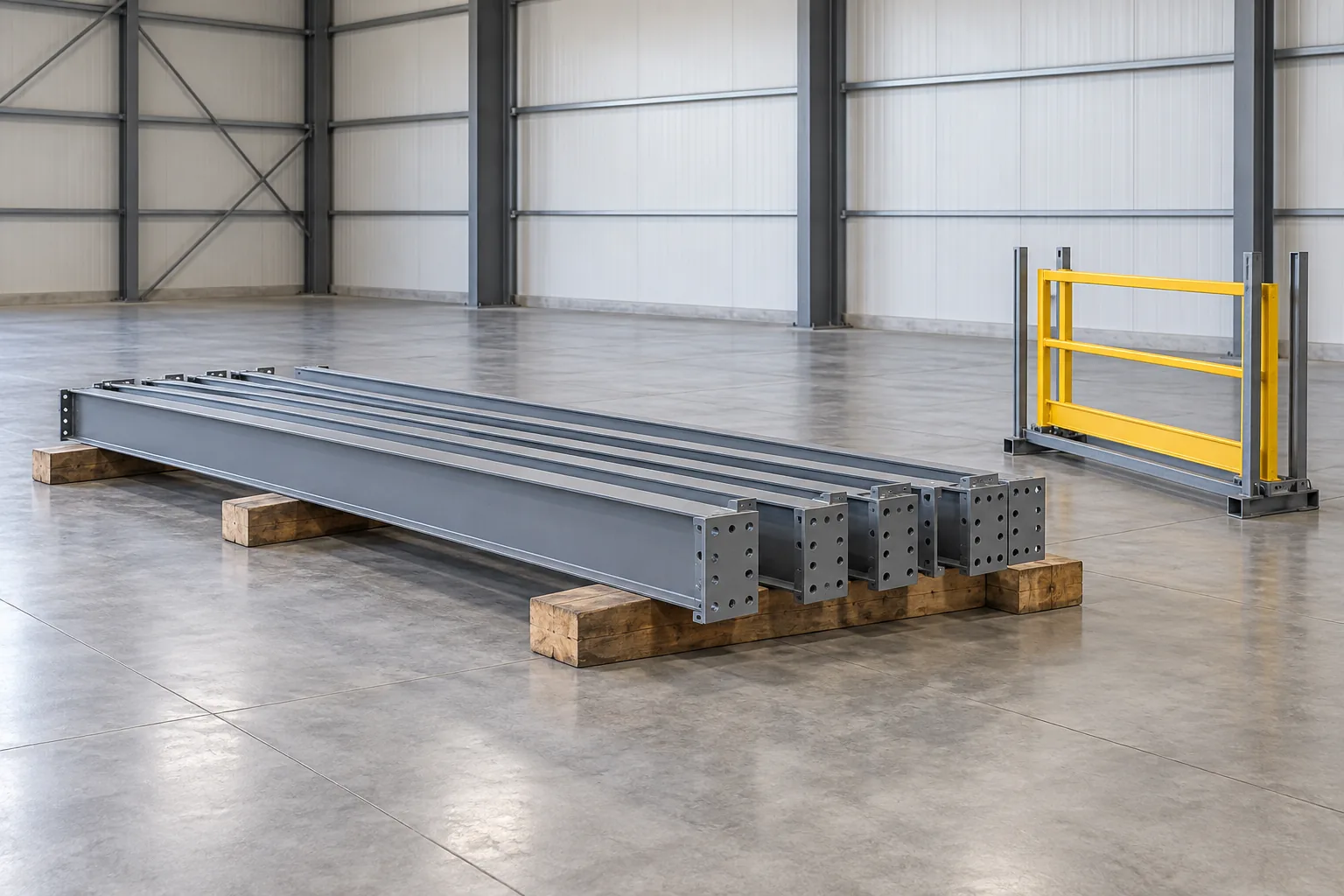
Review the assumptions before approval
Keep a base case and a downside case. In this example, another $1,000 per year adds $10,000 to the undiscounted ten-year subtotal; that arithmetic can help identify which missing estimate deserves attention first. Also test occupancy changes and one-time work instead of changing every assumption simultaneously.
Ask a reviewer to trace each total back to a quote, record or explicitly labeled assumption. Record exclusions, unresolved items, currency, timing and responsibility for updating the model. A transparent incomplete estimate is more useful than a complete-looking number with undocumented inputs.
What to read next
- Hidden mezzanine project costs — reconcile the initial scope.
- Mezzanine inspection and maintenance — identify ongoing responsibilities.
- Mezzanine removal and relocation — plan the ending scenario.
Put this guide into practice
Frequently asked questions
- What belongs in mezzanine total cost of ownership?
- Define the analysis period and include the relevant initial project costs, recurring operating and maintenance costs, planned changes or replacements, and the net cost or value at the end. Record the timing, evidence and exclusions for each item rather than treating the steel quote as the complete budget.
- Does a 10-year cost model mean a mezzanine lasts 10 years?
- No. Ten years is the illustrative decision horizon used here, not a service-life claim, warranty period or inspection interval. Choose a horizon suited to the actual occupancy and business decision, and treat remaining value or exit obligations explicitly.
- Is there a standard annual maintenance cost for every mezzanine?
- This guide does not establish one. Obtain a site-specific scope and allowance based on the installed systems, use, exposure, records and applicable requirements. The worked example's annual amount is an invented arithmetic input, not a market average or maintenance prescription.
- Should resale value be deducted from ownership cost?
- Only with a clearly stated basis and consistent treatment of removal, selling and other exit costs. Run a no-recovery case when resale is uncertain. Do not assume that owning a reusable-looking structure guarantees a buyer or a net cash recovery.
- Does the ROI calculator calculate full discounted ownership cost?
- No. It compares cumulative mezzanine capital and annual upkeep with cumulative lease costs, and shows building-addition capital separately. It excludes discounting, financing, income taxes, moving, residual value and building-addition operating costs. Use a fuller model when those items affect the decision.
Continue planning your mezzanine
All Cost & ROI guides →
Cost & ROI
2,000 Sq Ft Mezzanine Cost: Budget & Worked Example
Work through a 2,000 sq ft mezzanine budget in USD. See calculator assumptions, itemized costs, exclusions and how a contractor allowance changes the total.
Cost & ROI
Mezzanine Cost per Square Foot: Budget & Quote Scope
Compare mezzanine cost per square foot by quote scope. See a transparent budget example, identify unpriced site work and prepare comparable supplier proposals.
Cost & ROI
Industrial mezzanine ROI: when does it actually pay back?
An industrial mezzanine costs $50–150 per square foot installed and competes with options that range from $4/sqft/year (lease) to $250/sqft (new construction). Here's how to run the ROI honestly.