

Steel mezzanines: the material, the framing systems, and why steel won
Nearly every industrial mezzanine is steel — but 'steel' spans two different framing systems with different spans, loads, and prices. Cold-formed vs structural, the actual steel grades, finishes, fire rules, and sustainability numbers.
Editorial
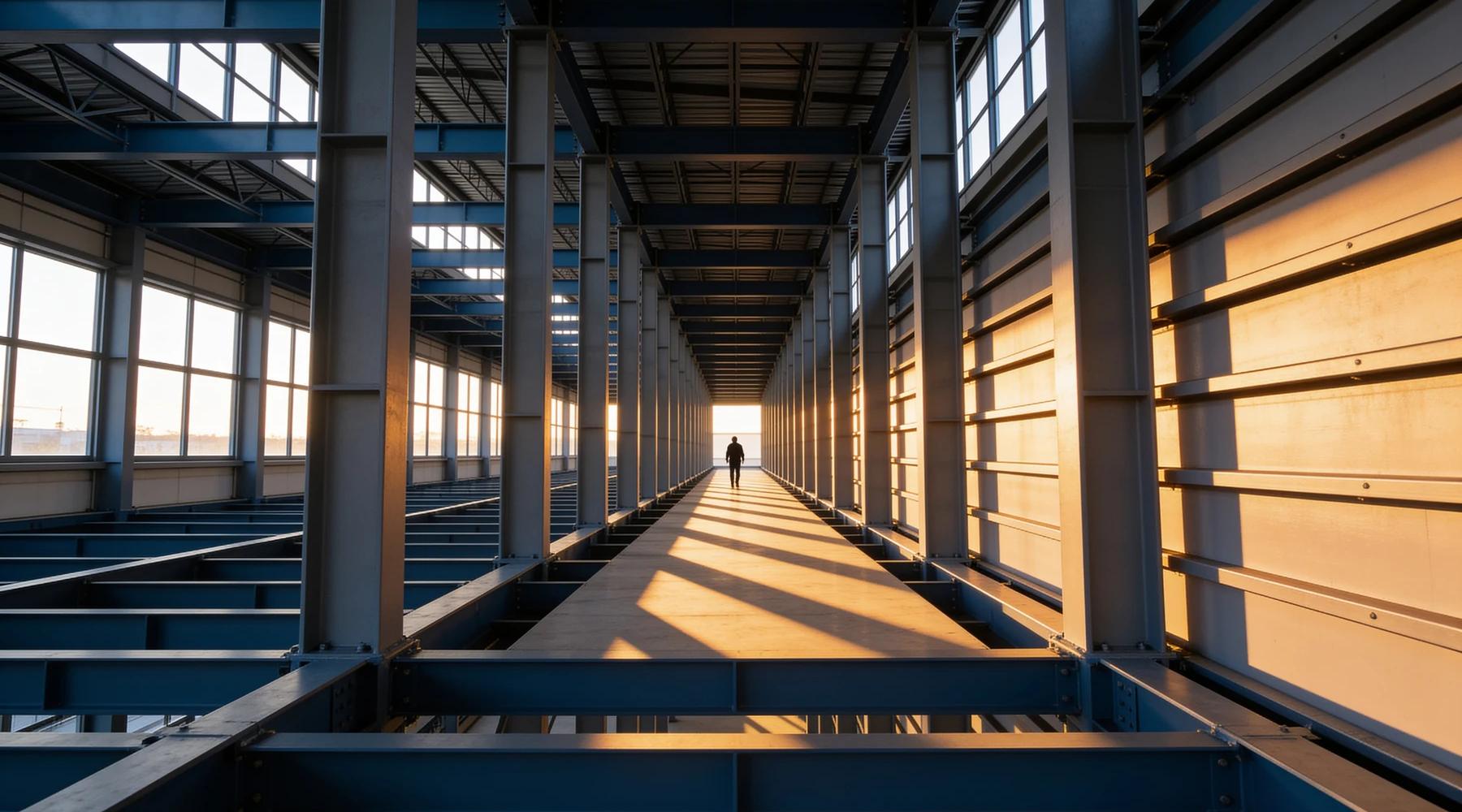
Ask why virtually every industrial mezzanine is steel and you get a one-word answer — strength — that hides the real decision: "steel mezzanine" covers two different framing systems, two finish families, and a fire-code interaction most buyers never hear about. Here's the material story behind the structure, with the actual grades, numbers, and trade-offs.
Cold-formed or hot-rolled structural — which steel system?
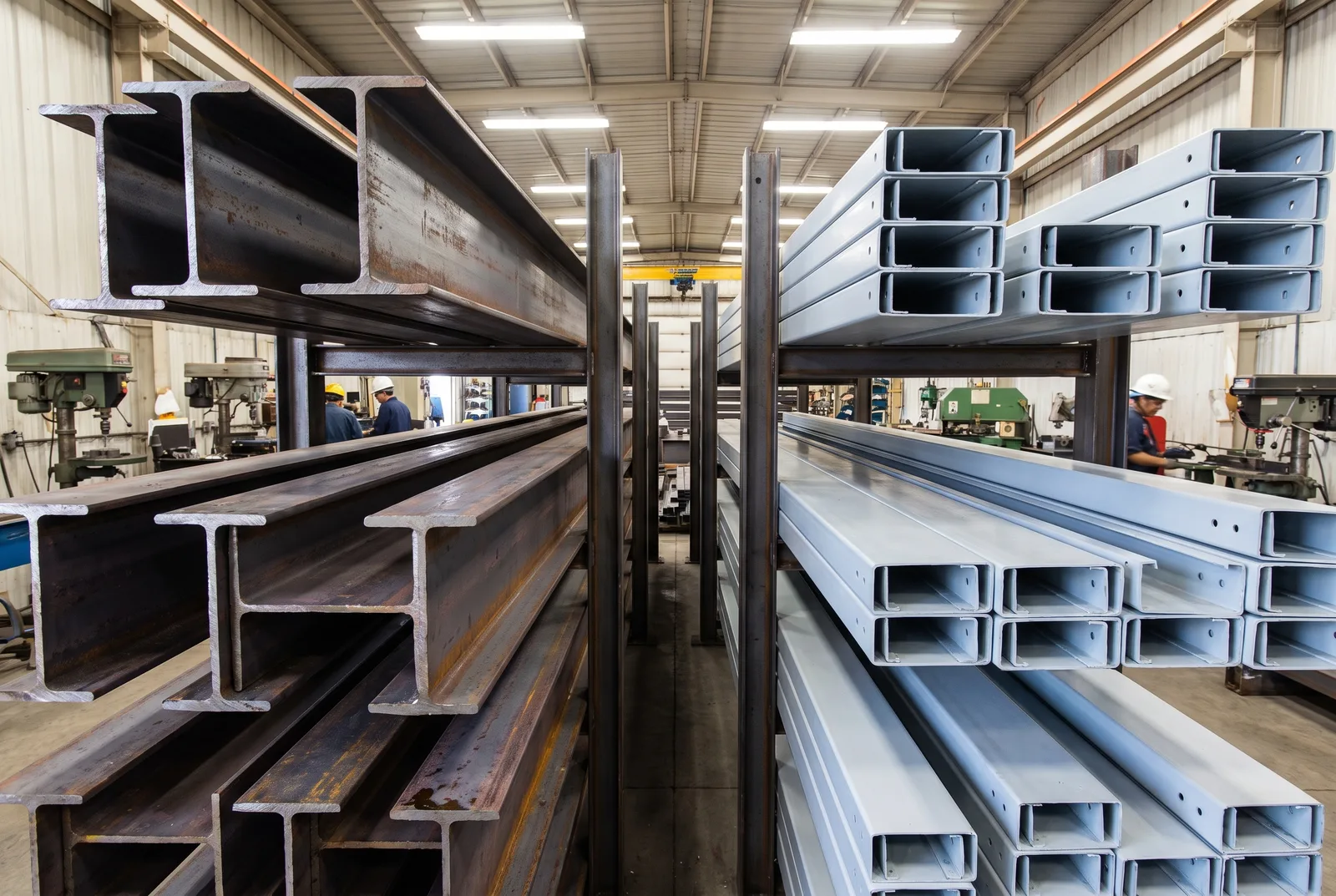
This is the biggest fork in the product category. The two systems, per the manufacturers' own published pages:
| Cold-formed (roll-formed) | Hot-rolled structural | |
|---|---|---|
| Members | Bent-sheet C-channels, pre-punched | Wide-flange I-beams, HSS columns |
| Load rating | to ~125 psf | Well above 125 psf |
| Column spacing | typically 10–15 ft | 25 ft+ spans |
| Weight & freight | Lighter, cheaper to ship and erect | Heavier everything |
| Best for | Light-duty storage, standard grids | Heavy loads, long spans, pick modules |
Most real product lines blend the two — the published Cogan specification (our publisher's, and the most detailed public spec in the category) uses cold-formed C-section beams and joists in ASTM A1011 Grade 55 with pre-punched holes, square HSS columns in A500 Grade 50, and steps up to wide-flange A572 Grade 50 members where the design demands, all on A36 base plates with A325 bolts, snug-tight. That hybrid logic — light C-sections where they're efficient, hot-rolled where spans require — is what the column-spacing trade-off looks like in metal.
Why steel instead of concrete or wood?
Because industrial mezzanines have to be strong, fire-acceptable, fast to build, and movable — and steel is the only material that does all four. Concrete offers washdown durability and mass but is heavy (cascading into bigger columns and slab loads) and permanent — concrete mezzanines are not designed for relocation. Wood doesn't carry industrial ratings. Steel bolts together in days, unbolts for relocation, and — the underrated part — plays cleanly with fire code: in Type IIB construction (unprotected noncombustible — the standard warehouse), the required structural fire rating is zero hours, so bare steel needs no applied fireproofing. The governing rule, per fire-protection consultancy Code Red: the mezzanine must use materials consistent with the building's construction type, rated for structural stability per IBC Table 601 — which for most warehouses means unprotected steel is exactly what the code expects. (Sprinklers are a separate question.)
Even the "steel" deck is usually a sandwich: corrugated steel B-deck under a wood or resin walking surface is the most common system, with bar grating and plank options where light or washdown matters — the full decking comparison here.
Powder coat or galvanized?
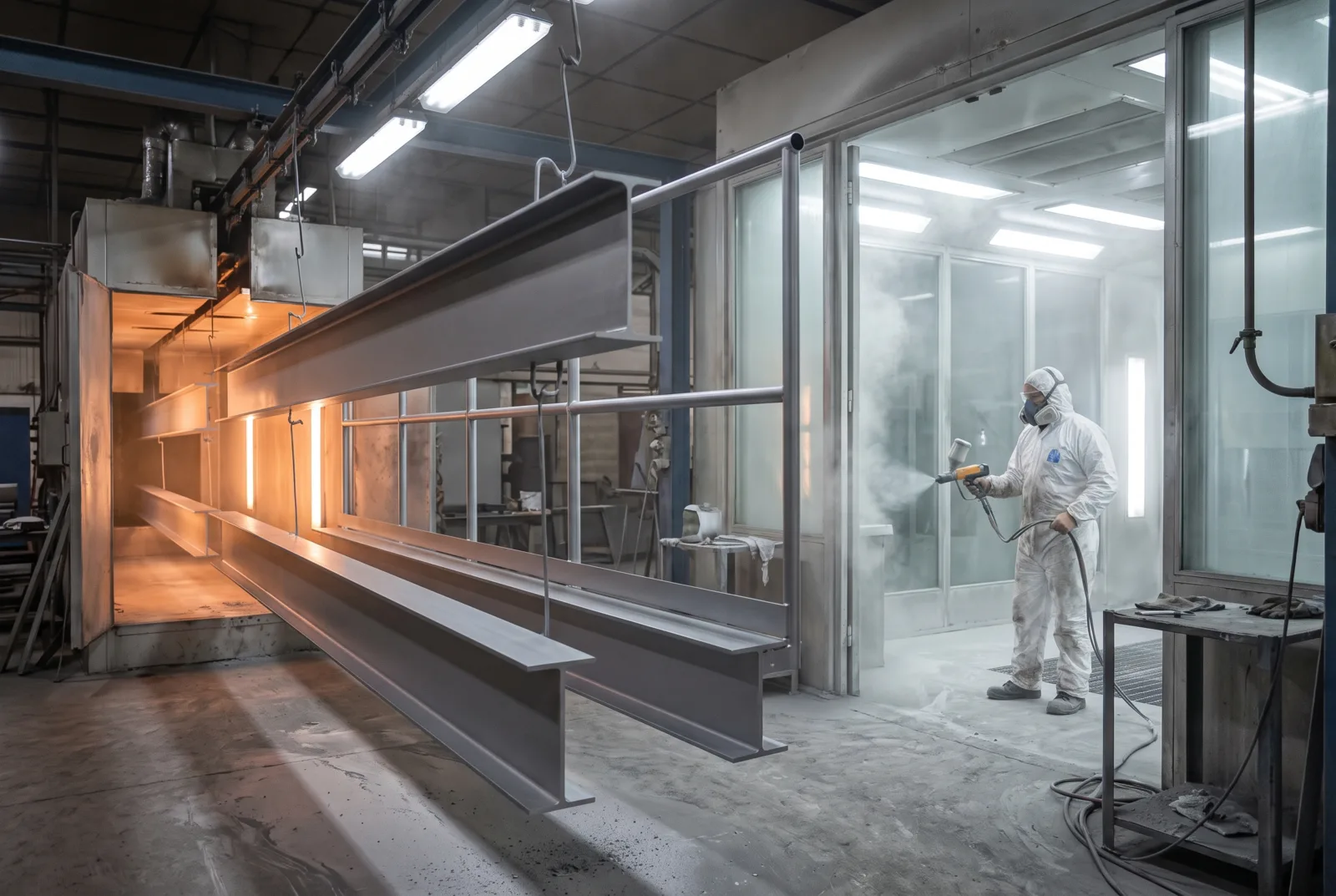
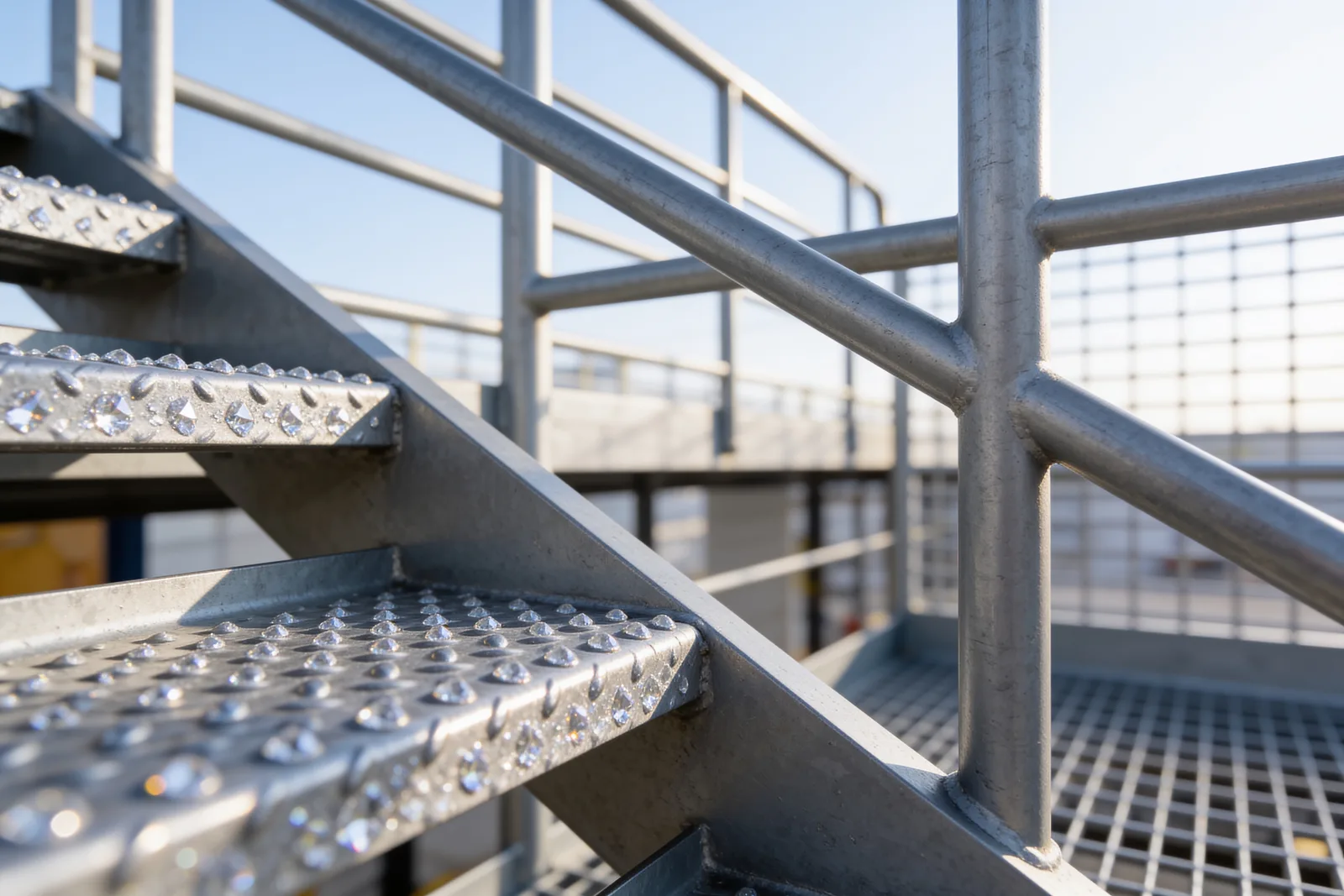
Both — on different parts, which is exactly how manufacturers spec it. The published practice in the Cogan spec: powder-coated frames (columns, beams, joists), galvanized guard rails, kick plates, and stair treads — the parts that take boots and impacts. The logic is the coatings' published behavior: galvanizing protects sacrificially, so scratches self-defend, while damaged powder coat can let corrosion creep beneath the film; industry comparisons put hot-dip galvanizing at decades of service where exterior powder coat typically wants refinishing in 7–15 years (Keystone Koating). Indoors — where most mezzanines live — powder coat's finish quality and color win the visible steel, and galvanizing wins the wear surfaces.
What does steel cost right now — and is it sustainable?
The 2026 steel market is elevated: hot-rolled coil sat at $1,130–1,160 per ton in early July after a $380/ton run-up over 23 straight weeks (Steel Market Update). At the project level the verified benchmark holds: $60–70 per square foot installed for a basic storage mezzanine (2023 baseline), inside the $50–150 published range — the cost calculator applies current figures.
On sustainability, steel's numbers are genuinely strong: electric-arc-furnace production — how most North American structural steel is made — averages 93% recycled content, the AISC states most structural steel here contains 90%+ recycled material and is 100% recyclable at end of life, with 60–80 million tons of scrap recycled annually in the US. And a bolt-together mezzanine adds a layer no material stat captures: the whole structure can be unbolted and redeployed instead of demolished.
What to read next
- Modular mezzanines: prefab, bolt-together, and ready-to-ship — what the steel system means for assembly and relocation
- Mezzanine decking options compared — the surface on top of the steel
- Mezzanine load capacity explained — what the grades and sections actually buy you
- Mezzanine fire rating: what the IBC actually requires — Table 601 hours by construction type, and why Type IIB steel goes bare
Put this guide into practice
Frequently asked questions
- What steel is used in mezzanines?
- Published manufacturer specifications call for cold-formed C-sections in ASTM A1011 Grade 55 for beams and joists, square HSS columns in ASTM A500 Grade 50, wide-flange beams in ASTM A572 Grade 50 where designs require, A36 base plates, and A325 structural bolts.
- Do steel mezzanines need fireproofing?
- Usually not. In Type IIB buildings — unprotected noncombustible, the most common warehouse type — the required fire rating for structural steel is zero hours, so bare steel is permitted. The rule is that the mezzanine must use materials consistent with the building's construction type.
- What's the difference between cold-rolled and structural steel mezzanines?
- Cold-formed (roll-formed) systems use bent-sheet C-channels — lighter, cheaper to ship and erect, rated to about 125 psf with column spacing typically 10–15 feet. Hot-rolled structural systems are heavier, span 25 feet and more, and carry ratings well above 125 psf.
- How much does a steel mezzanine cost?
- The verified installed benchmark is $60–70 per square foot for a basic storage mezzanine including materials, freight, and installation (2023 baseline), inside the broader published $50–150 range for 2026 projects.
- Are steel mezzanines sustainable?
- Steel is the most recycled structural material: electric-arc-furnace steel averages 93% recycled content, most North American structural steel contains 90%+ recycled material, and steel is 100% recyclable at end of life without losing properties — plus a bolt-together mezzanine can be relocated instead of scrapped.
Continue planning your mezzanine
All Engineering guides →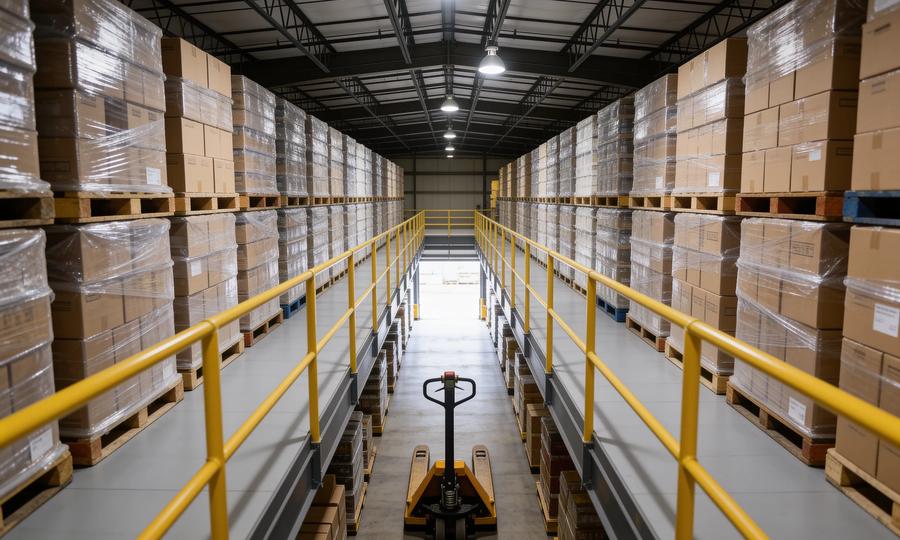
Engineering
Mezzanine Load Capacity: PSF Ratings & Point Loads
Understand mezzanine PSF ratings, uniform live loads and point loads. Use documented ratings, prepare a load brief and avoid unsupported capacity assumptions.
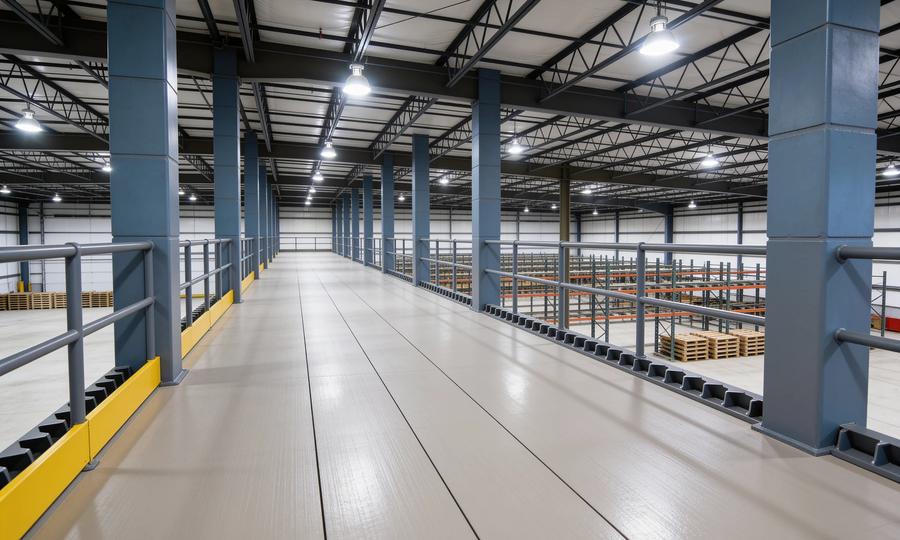
Engineering
Mezzanine Flooring: Structural Decks & Surface Finishes
Choose mezzanine flooring for storage, pallet jacks or automation. Review the structural deck, surface finish, rolling loads and the specifications to compare.
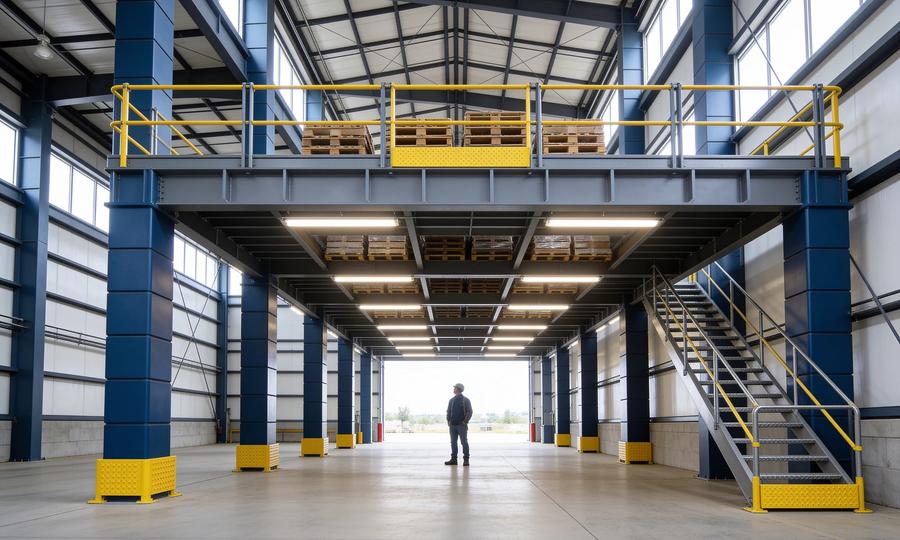
Engineering
Mezzanine Ceiling Height Requirements & Clearance
Work through mezzanine ceiling height requirements, clear headroom and framing depth. Check sprinkler obstructions and forklift clearance before planning.