

What Is a Mezzanine Floor? Meaning, Types & Uses
What is a mezzanine floor? Learn its meaning, industrial types and warehouse uses, then compare flooring, material lifts and the questions to ask before buying.
Editorial
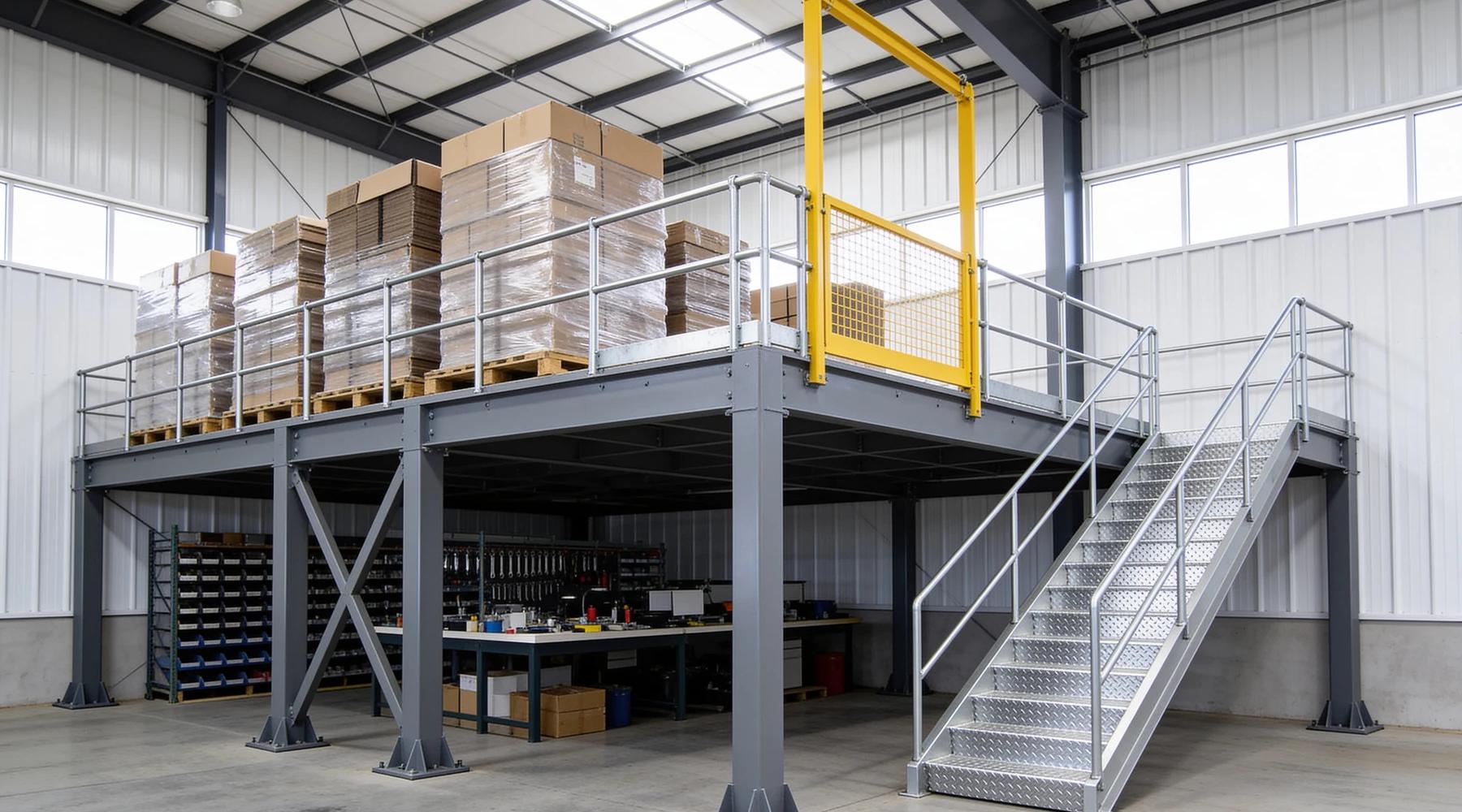
A mezzanine floor is an intermediate level within a building, between the floor and ceiling of a story. In a warehouse or factory, it creates elevated space for storage, picking, workstations or offices. The International Code Council's definition connects that intermediate level to the building-code provisions for mezzanines.
This guide explains the meaning of mezzanine, the main industrial structural systems, and the questions to resolve before adding a floor to an existing facility. For an operations-focused layout, continue to the warehouse mezzanine guide.
What is a mezzanine floor or mezzanine level?
Mezzanine floor and mezzanine level describe the intermediate space itself. Industrial mezzanine describes its warehouse, manufacturing or material-handling application. Mezzanine flooring usually means the deck and walking surface installed on the structure. Keeping those meanings separate makes supplier discussions much easier.
| Term in a project brief | What the reader is usually asking about | Where to continue |
|---|---|---|
| Mezzanine floor / mezzanine level | The elevated space and its relationship to the building | This definition and planning guide |
| Warehouse mezzanine | Storage, picking, packing and movement between levels | Warehouse applications |
| Mezzanine flooring | The structural deck, surface finish and traffic requirements | Flooring assemblies and finishes |
| Pallet rack mezzanine | A platform supported by a designed rack structure | Rack-supported systems |
| Mezzanine lift | Equipment moving goods to and from the platform | Material lifts and VRCs |
For example, a request for a “mezzanine floor for picking” should describe the elevated picking area, the floor surface needed by the carts, and how orders reach the packing operation. Those are connected decisions, but they are different parts of the specification.
What makes a mezzanine different from a full second floor?
The code classification depends on the design and the rules adopted locally. Under IBC 2024 Section 505.2, a compliant mezzanine is treated as part of the story below. That treatment comes with conditions; calling a structure a mezzanine does not establish compliance.
The classification review should address floor area, clear height, openness, exits and intended occupancy. Use the IBC mezzanine requirements guide for that discussion, then confirm the applicable edition and amendments through the permit resources by state. An equipment platform or catwalk can follow a different path: see mezzanine vs work platform vs catwalk.
What types of industrial mezzanine floors are available?
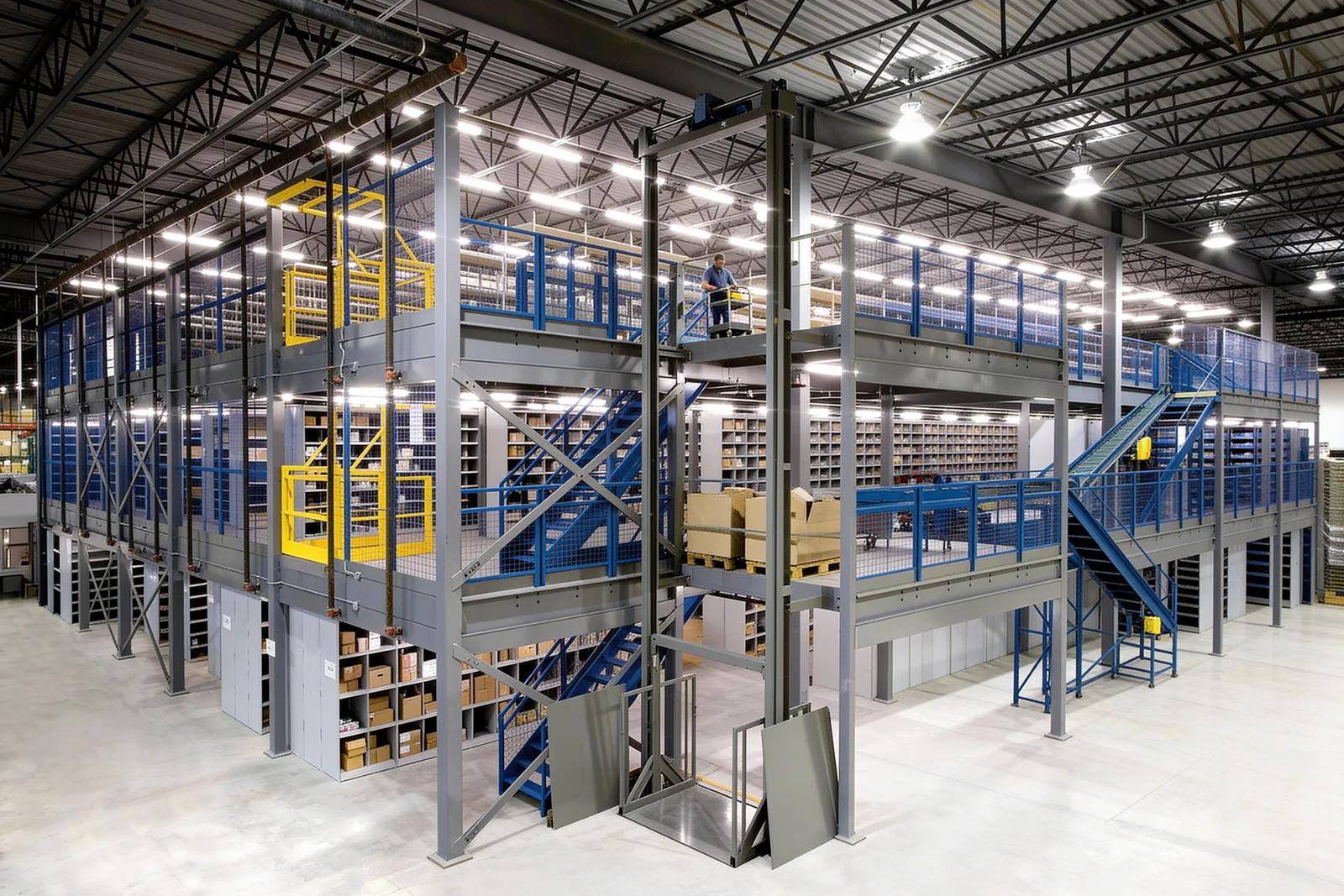
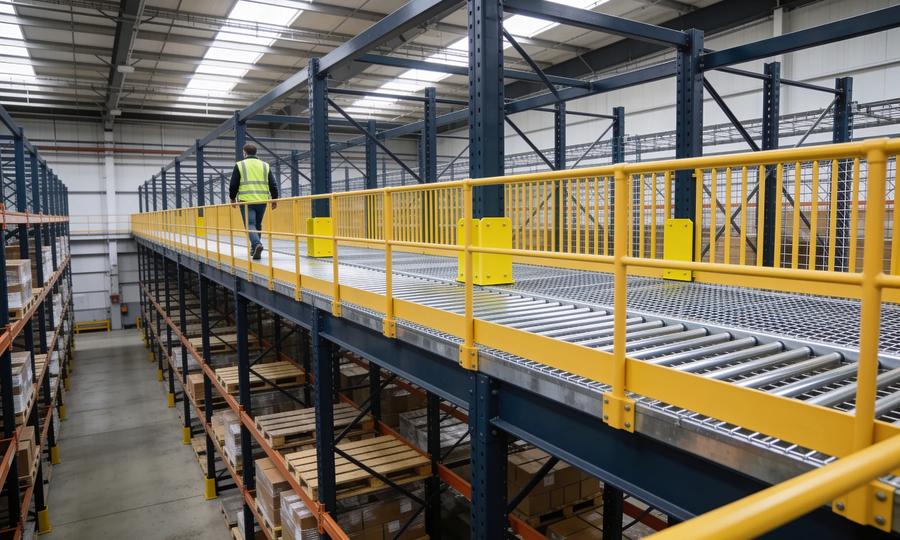
Start with what supports the floor: its own frame, pallet racking, shelving or the building structure. MHI's material-handling equipment guidelines distinguish free-standing systems from floors supported by storage equipment. These labels describe structural arrangements, rather than a guaranteed price or load capacity.
| Structural arrangement | What supports the elevated floor | Main planning question |
|---|---|---|
| Free-standing steel mezzanine | A dedicated frame of columns, beams and joists | Where can columns fit without disrupting the operation below? |
| Rack-supported mezzanine | Rack uprights and framing designed for the platform | How closely should the floor layout follow the storage layout? |
| Shelving-supported mezzanine | A designed shelving system and associated floor structure | How will staff access the small-parts storage on each level? |
| Building-supported arrangement | Connections to the host building's structural system | What existing-building assessment and strengthening are needed? |
In supplier terminology, structural mezzanine often refers to a free-standing steel system. It should not automatically be interpreted as a floor attached to the building. Ask for a drawing showing the support arrangement.
Compare free-standing and rack-supported mezzanines before selecting a system. For picking operations, a pick module is a broader arrangement of storage and handling equipment; RMI distinguishes it from a rack-supported platform by the order-fulfillment workflow it serves.
What are warehouse mezzanines used for?
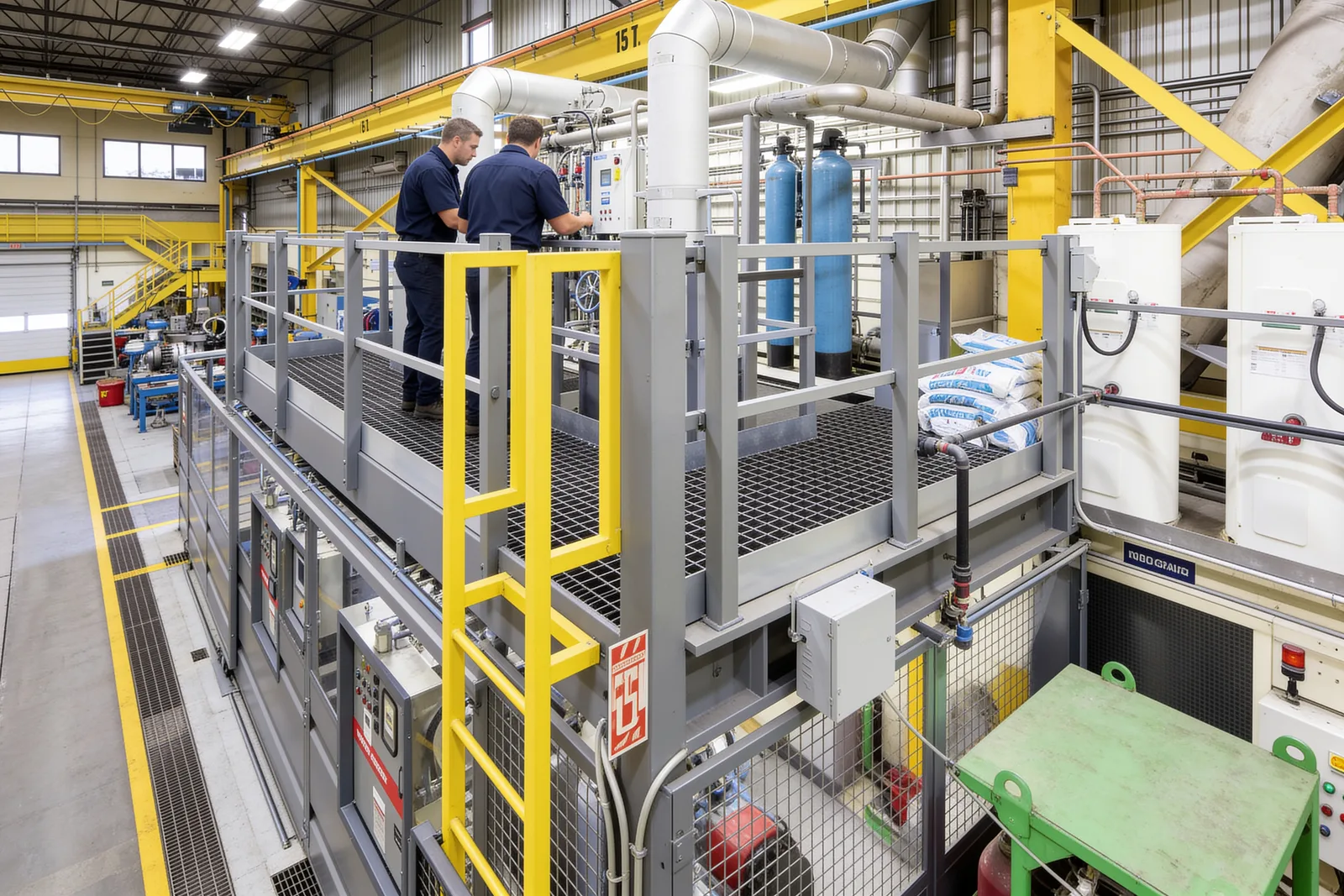
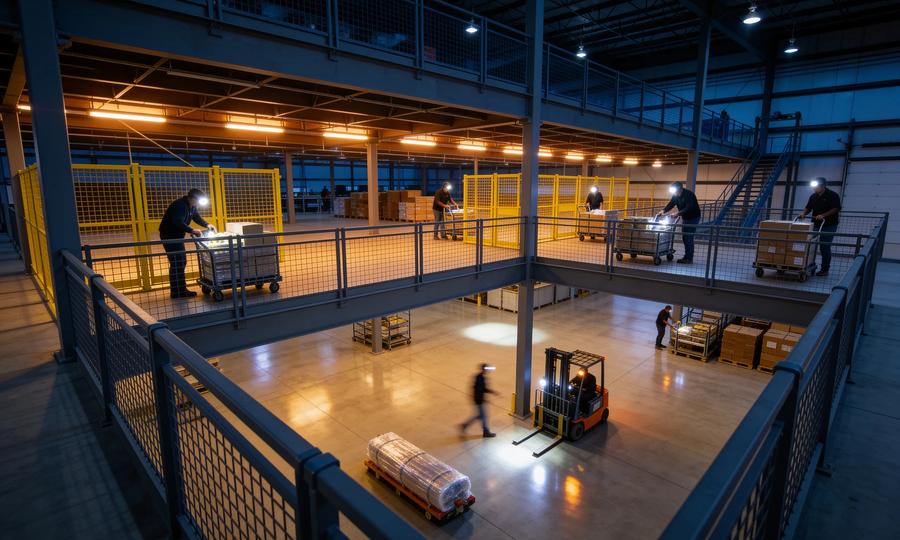
Mezzanine storage, picking, packing, offices and production support are different applications of elevated space. Wildeck's industrial application examples include storage decks, work platforms, conveyor support and in-plant offices. Choose the application before choosing the floor system.
- Storage: identify the goods, storage equipment and replenishment method. Start with the storage mezzanine guide.
- Picking and packing: map orders from their storage position to dispatch, including travel between levels. Use the pick-module guide.
- Offices: identify the rooms, occupants and access requirements. See mezzanine offices.
- Manufacturing: list machines, workstations, maintenance access and material movement. See manufacturing mezzanines.
Write the proposed activity in one sentence: “Reserve cartons above packing, replenished by a material lift,” for example. Then test every layout choice against that sentence. A larger deck is not necessarily a better layout if products spend more time waiting to move between levels.
What should you check before planning a mezzanine floor?
Document the building, the loads and the movement of people and goods before comparing quotes. The list below is a project brief to take to suppliers and qualified designers, rather than a structural design calculation.
- Usable height. Record the height to the lowest relevant obstructions, together with the clear space needed above and below the deck. The height-planning guide explains the separate layers. Framing depth also occupies vertical space; adding two clear-height dimensions alone leaves it out.
- Loads and floor traffic. List stored goods, rack posts, equipment legs, carts and wheels. OSHA requires walking-working surfaces to support their maximum intended load. The load-capacity guide explains why a uniform PSF number does not describe every loading condition.
- Existing slab and foundations. Gather available drawings and identify proposed column positions for the structural review. See mezzanine slab requirements.
- People and goods access. Draw the stair routes and the handling route separately. Review stairs, material lifts and pallet gates as a coordinated layout.
- Approval and fire protection. Identify the reviewing authorities and required information before ordering. Use the permit guide and sprinkler guide to prepare questions for the project team.
How much does a mezzanine floor cost?
A useful budget separates the structure from the work needed to make the whole project usable. A price per square foot is difficult to compare until the load, decking, height, access equipment, installation and exclusions match. Allied Modular's pricing guide explicitly notes that lower figures can describe bare materials and discusses installation, freight and compliance as additional considerations.
Ask each supplier to mark whether its price includes stairs, guards, gates, design, freight and installation. Keep separate allowances for work assigned to other contractors. The mezzanine buying guide explains scope comparisons; the cost-per-square-foot guide explores cost drivers. Our cost calculator is a planning model with its assumptions displayed, not a project quote.
What is the best next step for your facility?
Prepare a one-page brief with the intended activity, approximate footprint, measured building heights, equipment list and a sketch of access routes. Ask suppliers to identify their design assumptions and exclusions against that same brief. This makes the next conversation about the operation you need, rather than comparing unlike structures by floor area alone.
If the main constraint is existing storage layout, review warehouse space optimization alongside the mezzanine option. If additional floor area is the objective, compare the alternatives in the mezzanine ROI guide.
What to read next
Put this guide into practice
Frequently asked questions
- What is a mezzanine floor?
- A mezzanine floor is an intermediate level within a building, between the floor and ceiling of a story. In industrial facilities it provides elevated space for activities such as storage, picking, workstations or offices.
- What does mezzanine level mean?
- Mezzanine level describes the intermediate space. Mezzanine flooring usually refers to the deck and surface installed on the structure. A project brief should distinguish the space, its supporting structure and its floor assembly.
- What types of industrial mezzanine floors are available?
- Common arrangements include free-standing steel frames, rack-supported platforms and shelving-supported systems. Some designs connect to the host building. Confirm the actual support arrangement from the supplier drawing.
- Is a mezzanine a full second floor?
- Under IBC Section 505.2, a mezzanine that meets the applicable conditions is treated as part of the story below. The design and locally adopted rules determine classification; the supplier label alone does not.
- How much height does a mezzanine floor need?
- Account separately for required clear space above and below the floor, the depth of the floor structure, and obstructions or equipment clearance. Two clear-height dimensions alone leave out the structure between them. Confirm the complete layout with the project designer.
- How do you compare mezzanine floor costs?
- Compare proposals for the same area, load, decking, height and access arrangement. Ask whether design, stairs, guards, gates, freight and installation are included, and identify separate site-work allowances.
Last substantive revision —
Continue planning your mezzanine
All Complete Guide guides →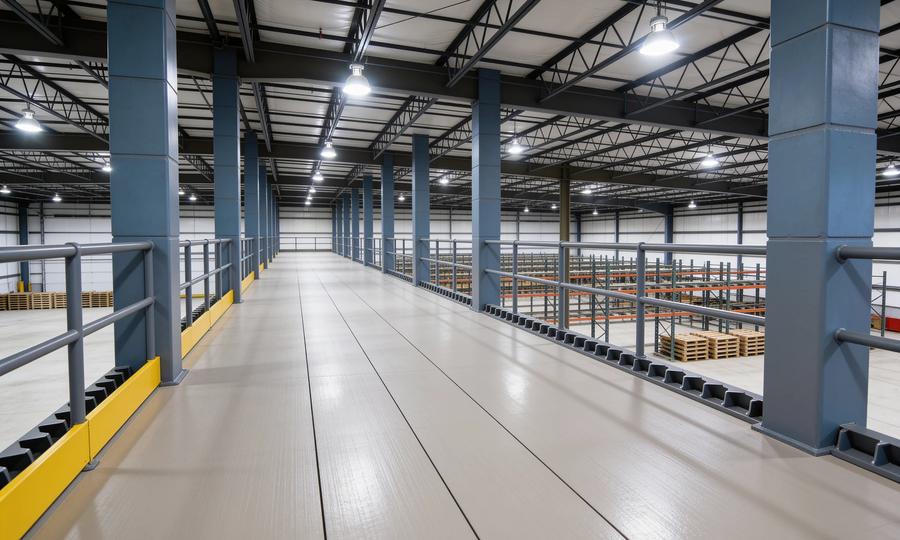
Engineering
Mezzanine Flooring: Structural Decks & Surface Finishes
Choose mezzanine flooring for storage, pallet jacks or automation. Review the structural deck, surface finish, rolling loads and the specifications to compare.
Complete Guide
Pallet Rack Mezzanines: Rack-Supported Platform Guide
Understand pallet rack mezzanines and mezzanine racking: platform construction, existing-rack review, code considerations and how to compare supplier proposals.
Complete Guide
Warehouse Mezzanine Floors: Storage, Layout & Costs
Plan a warehouse mezzanine floor for storage, picking, packing or offices. Compare layouts, material flow, project examples and the scope of supplier quotes.