

Mezzanine load testing and commissioning: what to verify
Separate mezzanine design evidence, installation inspections and load testing. Check the approved test scope, unresolved defects and handover records before use.
Editorial
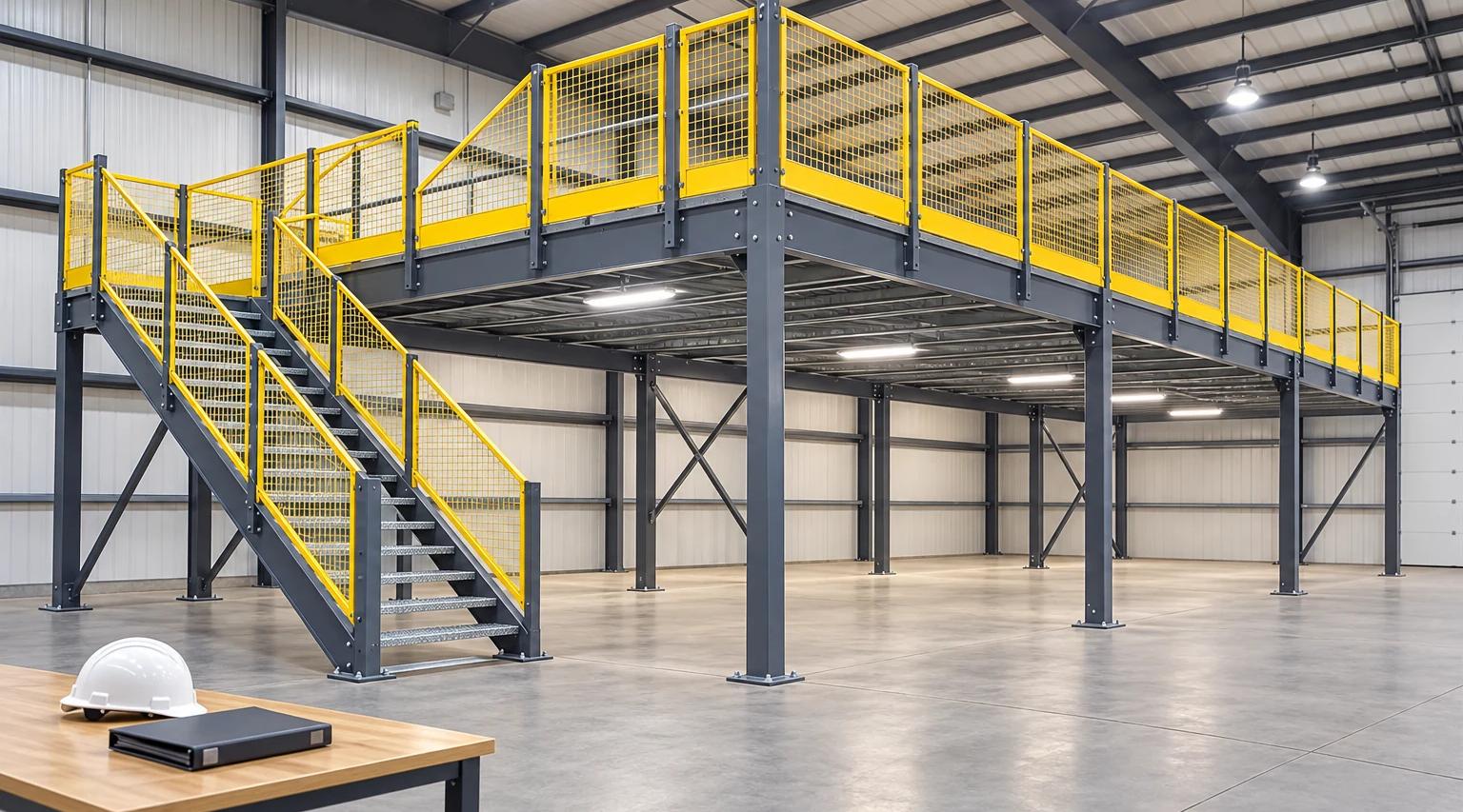
Mezzanine commissioning is the handover of a documented, usable system; a load test is one possible part of an assessment. A deck that looks complete, a supplier's design package and an installed structure's test report answer different questions. The owner needs the required evidence to agree before the intended operation begins.
This guide covers that handover and the scope of load testing. The construction guide follows erection, while inspection and maintenance covers ongoing care. The load-capacity guide explains the difference between uniform ratings and concentrated loads.
All three images are AI-generated concepts, not photographs of inspections, approved connection details or evidence of a passed test. This Cogan-affiliated editorial article is not a test procedure or a named engineer's review.
What actually demonstrates that a mezzanine is ready for use?
A coordinated record of the approved design, completed work, required inspections and resolved conditions is more informative than a single “passed” label. Ask the project team to identify the required acceptance documents and the person responsible for each one before erection finishes.
As a manufacturer example, FCP's guide specification separates design submittals, field quality control and closeout documents. It calls for inspection reports, correction of nonconforming work and maintenance instructions. That structure illustrates why the handover should cover both what was designed and what was installed. Your contract and governing requirements establish the actual deliverables.
Our recommended evidence map is:
| Record | Question it should answer |
|---|---|
| Approved design and revisions | What configuration and intended loads were evaluated? |
| Installation and inspection records | Does the work examined match the approved documents? |
| Discrepancy closeout | What changed, who accepted the resolution, and where is it recorded? |
| Test report, if required | What was tested, under which criteria, and what conclusion was reached? |
| Use and maintenance information | What limits and responsibilities transfer to the operator? |
Keep an unresolved item visible. A completed checklist box should point to supporting evidence, rather than replace it.
Does every new mezzanine need a field load test?
Determine the requirement from the adopted code, approved design and project specification. Do not assume that every installation needs the same field loading exercise, or that a product standard's title specifies how to accept your completed structure.
One concrete example is 2021 Seattle Building Code Section 1708. When there is reasonable doubt about a completed structure's stability or capacity for expected loads, it requires an engineering assessment. That assessment can involve structural analysis, an in-situ load test, or both. It is an assessment provision, not a blanket instruction to overload every newly installed mezzanine.
The same chapter treats preconstruction load testing separately in Section 1709, including circumstances where proposed construction cannot be designed by approved engineering analysis. A test of a proposed system and an assessment of a completed installation therefore should not be described as the same event.
These are explicitly Seattle's 2021 provisions. Have the responsible professional establish the edition and requirements applicable at your site. They do not establish the rules for every US jurisdiction or a Canadian province or territory. Use the permit guide to organize the approval questions.
Who defines and supervises a load test?
The test must follow the applicable professional procedure and acceptance requirements; this article is not a loading recipe. Agree on the reason for testing and the decision it is intended to support before discussing weights or equipment.
Seattle Section 1708.2 requires supervision by a registered design professional. It directs testing to an applicable referenced material-standard procedure and acceptance criteria, with a separate route where those are not specified. Those distinctions are why a generic percentage, duration or permissible deflection should not be copied from another project's report.
As an owner's review checklist, request a written explanation of the assessed area, loading conditions, measurements, acceptance criteria, responsibilities and report. Have the supervising professional address exclusion areas, stopping conditions and response to unexpected behavior. Obtain the required approvals before any test activity.
Do not stage an improvised demonstration using pallets, water containers, a forklift or workers. The existence of a published procedure does not establish that it applies to your floor, framing, connections or supporting slab.

How do installation inspections differ from testing capacity?
An inspection checks specified work and conditions; a load test evaluates behavior within its defined scope. Keep their records distinct and ask the responsible designer or authority which evidence is required. Do not use one document's reassuring title to cover a missing deliverable.
Seattle's special-inspection guidance explains that special inspections supplement the city's inspections and examine work against approved plans. Its process includes field reports and a final letter addressing the required items, which the city must accept before completing the permit. That is a local example of documented closeout, not a nationwide inspector-qualification rule.
For your handover, connect the inspection records to identifiable locations or components. Include the column-anchor documentation and the accepted supporting-slab assessment, where relevant to the project. A missing record should go back to the responsible party for resolution; appearance alone does not reconstruct a concealed installation step.
Our practical recommendation is to maintain one discrepancy list with the original observation, proposed correction, approving party and evidence of completion. Keep revised details alongside the superseded reference so the installed condition can be traced.
Does a passed test prove every future use is safe?
Interpret the result within the test report and approved use limits. A result for one assessed configuration is not blanket permission to add equipment, move rack posts or introduce vehicle traffic. Refer proposed changes to the responsible professional before treating them as covered.
The Storage Manufacturers Association's FAQ distinguishes serviceability needs for different equipment and asks designers to understand the application. It also describes load plaques as reminders of rated capacity. Our handover recommendation is to reconcile any installed capacity information with the accepted design and actual use, rather than treat a plaque as proof that a particular test occurred.
Specify what the operating team may place where, using the project's own documents. The uniform-load calculator only multiplies a documented rating by its matching area; it cannot validate test results or authorize a new loading condition.
The same boundary applies to connected equipment. A structural test should not be represented as confirmation of every gate, control or material-transfer function. Keep the required checks for a material lift or conveyor interface tied to that equipment's documentation and project scope.
A handover meeting that closes the actual gaps
Use the planning checklist to assemble the discussion, then replace assumptions with the project's completed records. We recommend answering these questions explicitly:
- Which drawing revision describes the installed structure and its intended use?
- Are required inspection and test reports complete, with discrepancies resolved?
- Were field changes reviewed and incorporated into the accepted information?
- Are access, guarding and connected-equipment checks addressed by the responsible parties?
- Who confirms any required authority acceptance and the release conditions?
- Who receives the maintenance instructions and controls subsequent changes?
Record open conditions and responsibility for closing them. Do not convert a supplier's delivery receipt or an unsigned worksheet into an engineering acceptance. If an item remains unresolved, ask the responsible professional or authority to state its effect on release for use.

What changes after commissioning is complete?
The operating duties continue after handover. Retain the accepted records where the people controlling storage, equipment and maintenance can retrieve them. Include a route for reporting damage or a proposed change in use.
In the United States, OSHA 1910.22 requires walking-working surfaces to support their maximum intended load and to be inspected regularly and as necessary. It also addresses correction or guarding of hazardous conditions and qualified-person involvement in repairs affecting structural integrity. This section does not supply a universal commissioning test percentage.
Our recommendation is to retain the handover file as a living reference, with subsequent approved alterations and relevant maintenance records added to it. The useful outcome is a clear chain from intended use to accepted installation and ongoing care—not a test certificate detached from its conditions.
What to read next
- Mezzanine construction — follow the installation sequence and its coordination points.
- Mezzanine inspection and maintenance — organize ongoing checks after handover.
- Mezzanine load capacity — understand the load information that acceptance must match.
Put this guide into practice
Frequently asked questions
- Does every new mezzanine need a load test?
- Establish the requirements from the adopted code, approved design and project specification. Do not infer a universal field-test requirement from the word testing in a standard's title. Where capacity is questioned, the responsible professional and authority determine the appropriate assessment and any testing.
- What percentage of capacity should a mezzanine load test use?
- This guide supplies no generic percentage. Test loading, distribution, duration, measurements and acceptance criteria must come from the applicable procedure and a project-specific professional plan. An improvised overload test can damage the structure or endanger people.
- Can a load test replace mezzanine inspection records?
- Do not treat it as a substitute. A test addresses its stated conditions and acceptance criteria; inspection records address the work examined against the approved documents. The handover needs the evidence required for the actual project.
- What belongs in a mezzanine handover file?
- Keep the approved design and use limits, installation and inspection records, resolved discrepancies, any required test report, applicable acceptance records, and maintenance instructions together. Identify who is responsible for confirming readiness for the intended use.
- Does passing a load test allow a heavier forklift or new equipment later?
- No such permission should be inferred from a test result. Changed loads or use need review against the design and the documented scope of the assessment. A prior test is not blanket approval for future concentrated or moving loads.
Continue planning your mezzanine
All Installation guides →
Installation
Mezzanine removal and relocation: what transfers, what doesn't, and what it costs
Taking a mezzanine out is legally a demolition, the engineering survey is mandatory and written, and most of the bolts holding it together may never be reused. What actually moves with the steel.
Cost & ROI
Mezzanine installation cost breakdown: what the labor really costs (2026)
Mezzanine installation is billed at 30–50% of material cost. Here's the 2026 breakdown — crew time, lift rentals, anchoring, and the regional labor multipliers that swing the number.
Installation
The mezzanine installation timeline: week-by-week
From signed contract to operational mezzanine, expect 8 to 20 weeks. Here's the week-by-week breakdown of permits, steel fabrication, site prep, installation, and inspections.