
Modular mezzanines: prefab, bolt-together, and ready-to-ship options
A modular mezzanine arrives pre-engineered, pre-drilled, and bolts together with no on-site welding — an 18×48 ft unit went up with a two-man crew in two days. What 'modular' really means, kit options, lead times, and the trade-offs.
Editorial
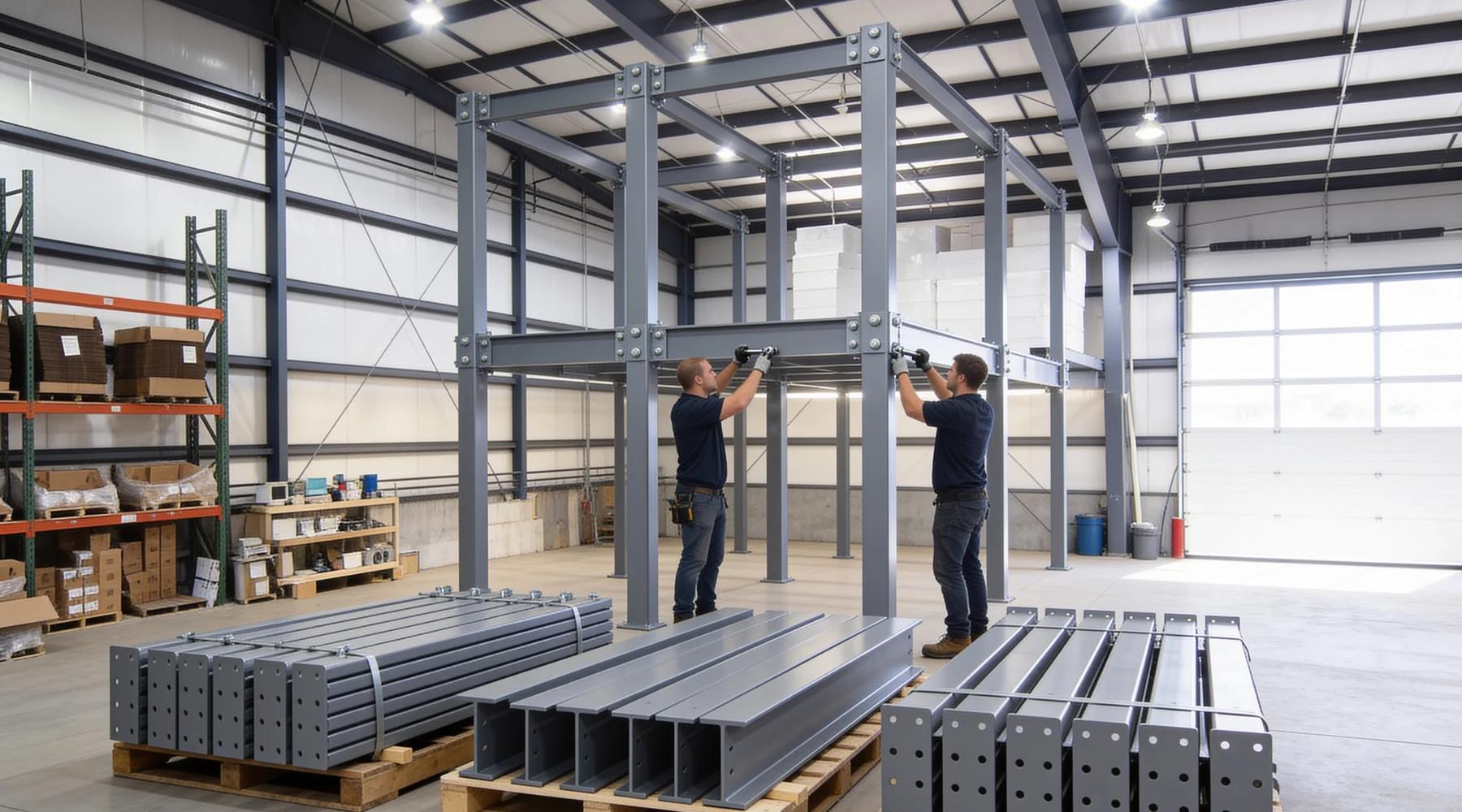
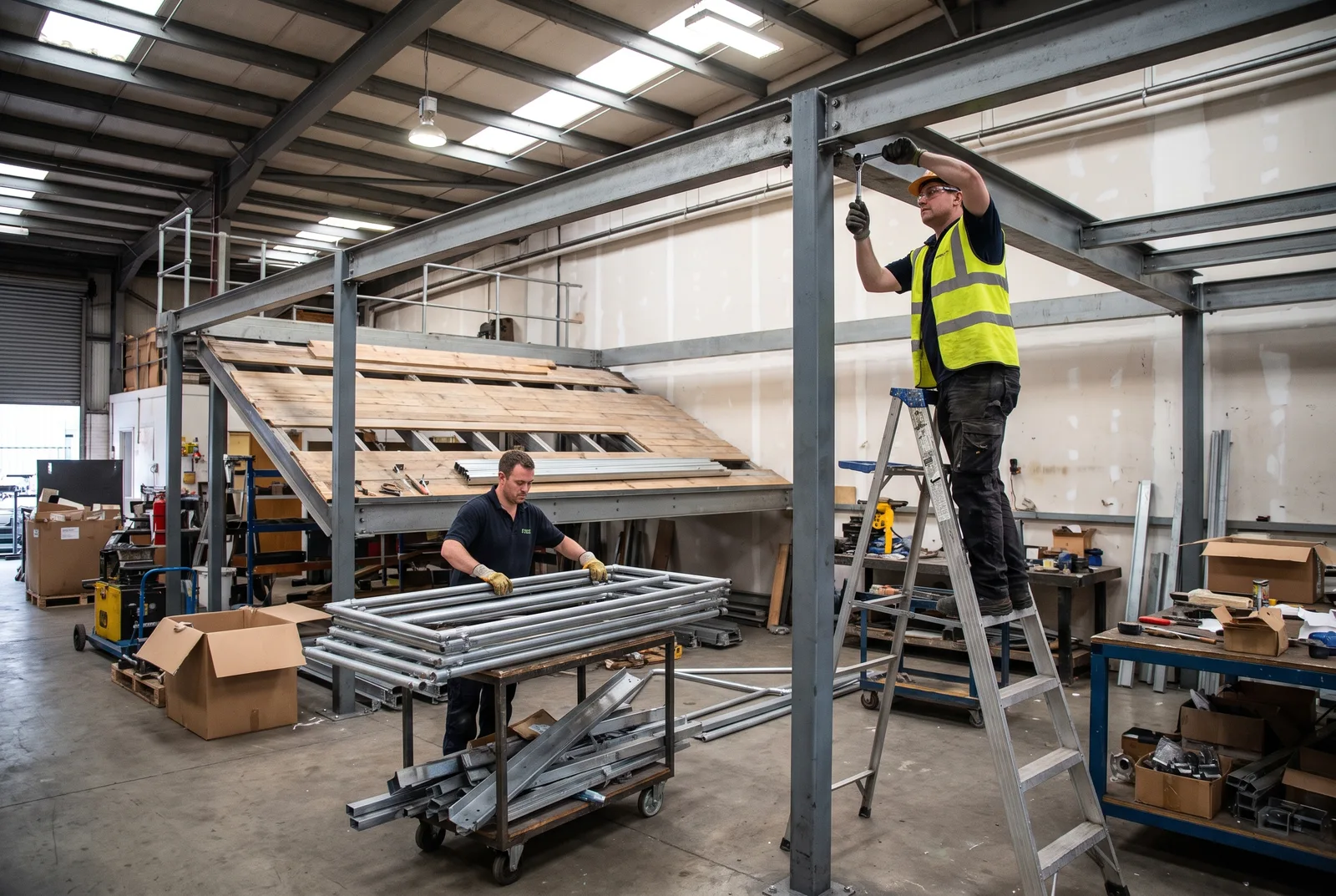
"Modular" is the most-used and least-defined word in the mezzanine catalog. Here's the real definition, from the manufacturers' own published pages: pre-engineered off-site, pre-drilled, delivered as components, and bolted together with no on-site welding — which is what makes two-day installs, weekend reconfigurations, and future relocations possible. This guide covers what modular buys you, the kit end of the market, and where custom still wins.
What makes a mezzanine "modular"?
Three published traits: prefabricated components, bolted assembly, and a design meant to change later. Panel Built's definition: engineered off-site to your layout from prefabricated components — a faster, cleaner alternative to construction. Porta-King's: everything arrives prefabricated and pre-drilled, hardware pre-welded at the factory, "no welding" on site. Our publisher Cogan's spec says the quiet part: "made-to-order from standard components" — modular systems are custom layouts assembled from a cataloged parts library, which is exactly why they're fast.
The result shows up in published assembly times: an 18 × 48 ft Porta-King mezzanine — 864 sq ft — completed by a two-man crew in 2 days, and micro-kits that self-assemble in 4–6 hours with two people.
What does the kit end of the market look like?
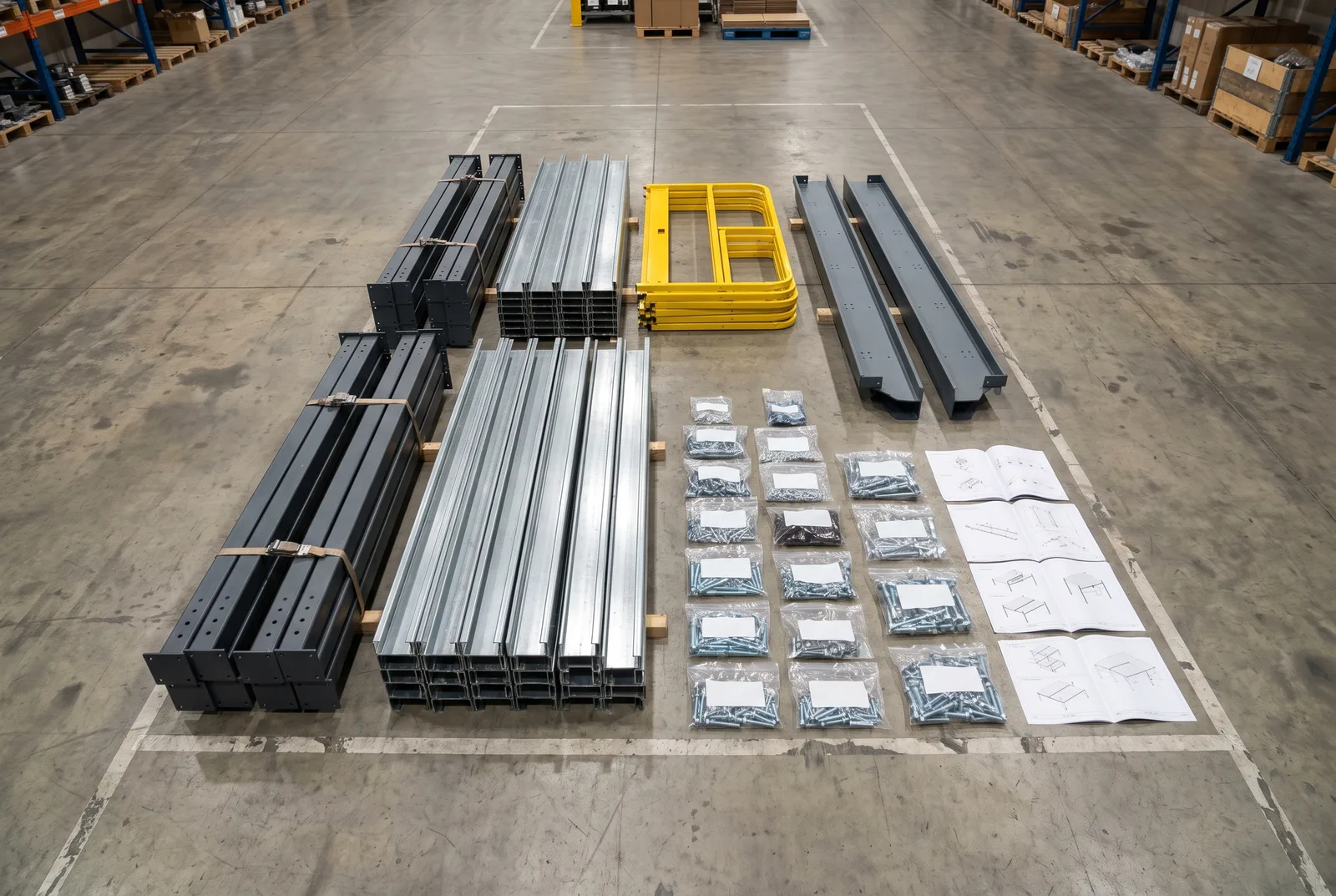
Real products with list prices, starting around $5,200. The online-kit segment — largely European systems sold into North America — is genuinely modular retail: the Tecrostar TS 8 lists at $5,163, telescopically adjustable from 26 to 78 sq ft and 62 to 91 inches of height, rated 123 lb/sq ft at minimum extension (dropping to 41 at full stretch — physics is undefeated), powder-coated steel with a plywood floor. These are mini-platform solutions for back rooms and small workshops, not industrial decks: note the capacity versus the 125 psf IBC minimum for storage mezzanines.
For industrial-scale speed, the lever is the stock program: Cogan's Ready Made inventory ships in approximately one week, and Porta-King runs an Express Ship program — against the multi-week fabrication cycle of made-to-order steel. An Australian comparison of the two paths puts kits at 3–7 day installs versus ~6–12 weeks end-to-end for custom (their pricing is in AUD — the ratio travels better than the numbers). US pricing anchor: the standard installed benchmark of $60–70/sq ft (2023 baseline) within the $50–150 range.
When does modular win — and when does custom?
Modular wins on speed, disruption, and future flexibility; custom wins on irregular spaces and extreme loads. The published trade-off (Compacked; Panel Built):
- Choose modular/pre-engineered for standard rectangular decks, standard load classes, active facilities where install days matter, leased buildings where the structure may move, and phased growth (add bays later from the same component system).
- Choose custom structural for irregular footprints that must hug obstructions, long clear spans and heavy point loads, and integrations (conveyors through decks, pick modules) where the structure is engineered around the equipment.
Most of the market is actually the hybrid middle: custom-engineered layouts assembled from modular component systems — which is why the structural steel underneath matters more than the label.
The relocation question — modular's signature advantage
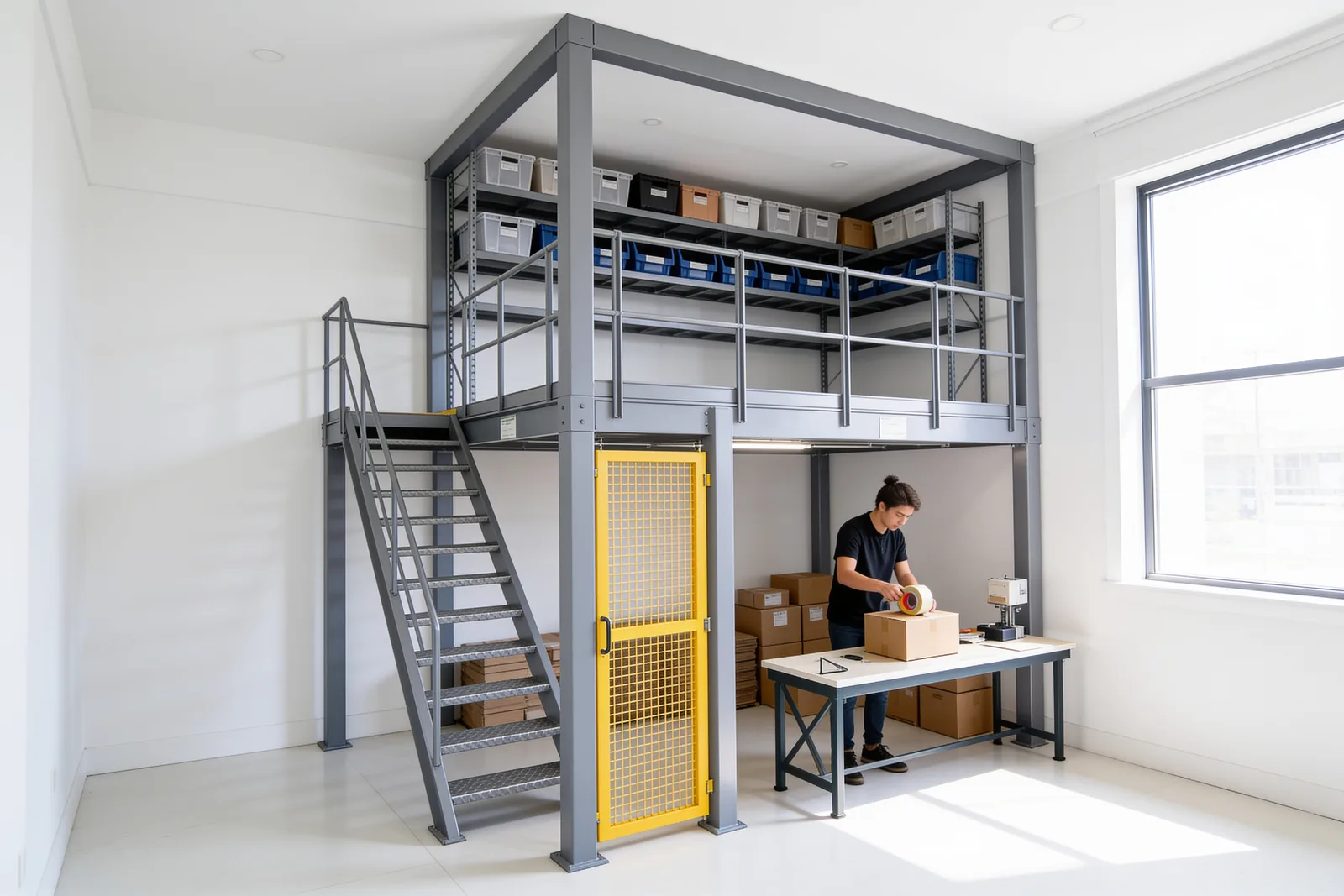
Bolt-together units are the most relocatable mezzanines made — with honest caveats. Speedrack West's published relocation guidance: modular self-supporting mezzanines relocate most easily precisely because nothing is integrated into the building; concrete structures don't relocate at all. The caveats worth taking seriously: disassembly + freight + reassembly can approach the cost of a new unit; the destination needs its own code, seismic, and slab review; and every component should be labeled during teardown. This is the same math that governs buying a used mezzanine — modular makes moving possible, not free.
And modular changes nothing about compliance: it's still a structural addition needing permits and engineered drawings in most jurisdictions, with the one-third rule applying regardless of how the steel arrives.
What to read next
- New vs used mezzanines — the relocation math from the buyer's side
- Mezzanine kits: what's in the box, and what happens when you erect it yourself — the bill of materials, and the code rules that follow self-erection
- Prefabricated mezzanines: what moves into the shop — the fabrication trade-off behind "modular," and where the catalog runs out
- Steel mezzanines: the material and framing systems — what's actually in the kit
- The mezzanine installation timeline — where modular saves its weeks
Put this guide into practice
Frequently asked questions
- What is a modular mezzanine?
- A pre-engineered elevated platform built from prefabricated, pre-drilled components that bolt together on site with no welding — engineered off-site to your layout, assembled like a kit, and designed to be reconfigured or relocated later.
- How fast can a modular mezzanine be installed?
- Published examples: an 18-by-48-foot Porta-King unit was assembled by a two-man crew in two days, small online kits self-assemble in 4–6 hours with two people, and kit installs generally run days rather than the weeks of conventional construction.
- Can a modular mezzanine be moved later?
- Yes — modular bolt-together units are the most relocatable mezzanine type since they're self-supporting and not integrated into the building. Published caveats: disassembly, freight, and reassembly can approach the cost of a new unit, and the new site needs its own code, seismic, and slab review.
- How much does a mezzanine kit cost?
- Small online kits start around $5,200 for an adjustable unit in the 26–78 square foot range, while full industrial modular systems run to the standard installed benchmark of roughly $60–70 per square foot (2023 baseline) inside the broader $50–150 published range.
- Do modular mezzanines still need permits?
- Usually yes — modular describes how it's built, not how it's regulated. It's still a structural addition requiring engineered drawings in most jurisdictions, and decks over one-third of the room's floor area trigger the same IBC provisions as any mezzanine.
Continue planning your mezzanine
All Complete Guide guides →
Complete Guide
Warehouse Mezzanine Floors: Storage, Layout & Costs
Plan a warehouse mezzanine floor for storage, picking, packing or offices. Compare layouts, material flow, project examples and the scope of supplier quotes.
Complete Guide
What Is a Mezzanine Floor? Meaning, Types & Uses
What is a mezzanine floor? Learn its meaning, industrial types and warehouse uses, then compare flooring, material lifts and the questions to ask before buying.
Engineering
Free-standing vs rack-supported vs structural mezzanines: a buyer's decision framework
The three structural types of industrial mezzanine — free-standing, rack-supported, and structural — solve different problems. Here's how to pick the right one based on use case, flexibility, cost, and code path.