
Pallet Rack Mezzanines: Rack-Supported Platform Guide
Understand pallet rack mezzanines and mezzanine racking: platform construction, existing-rack review, code considerations and how to compare supplier proposals.
Editorial
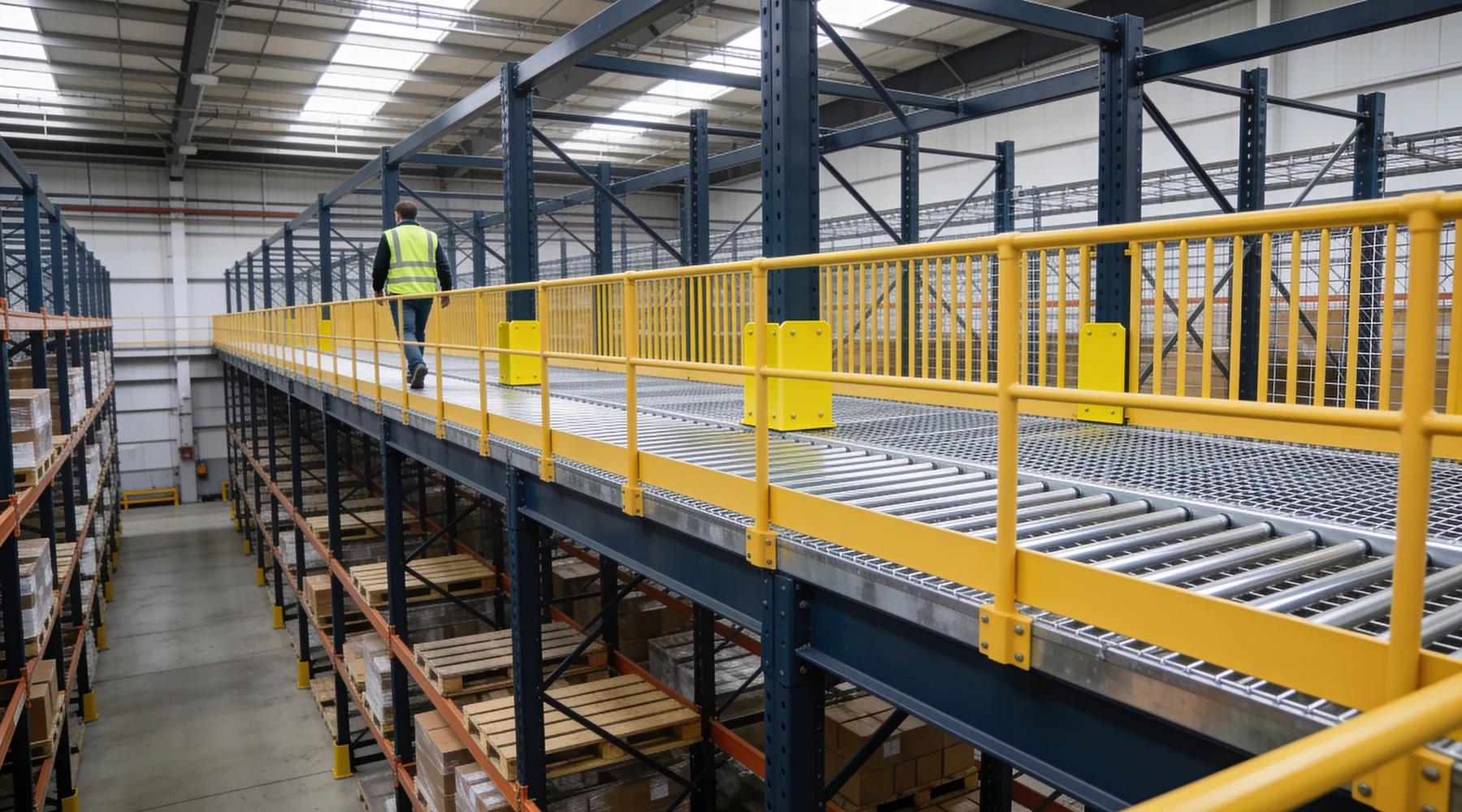
A pallet rack mezzanine, also called a rack-supported mezzanine, uses a designed rack structure to support an elevated platform. It connects the floor layout with the storage layout below. This guide covers mezzanine racking, existing-rack review, construction and the questions to resolve when comparing it with a free-standing system.
This is the complete guide: how these structures work, what published sources say they cost, which rules actually govern them, and the honest decision logic against free-standing steel.
What is a pallet rack mezzanine?
It's a mezzanine built out of racking. As used-equipment dealer QMH defines it, a rack-supported mezzanine "uses the uprights and frames of a pallet racking or shelving system as the structural columns for the mezzanine above" — where a free-standing mezzanine is supported entirely by its own structural columns, independent of any racking.
The Rack Manufacturers Institute (RMI) puts it even more plainly: "Essentially, it's like a mezzanine, but made out of pallet racking. It's constructed from rack uprights and beams with flooring added to the higher levels". Some suppliers call the walkway variants catwalk systems — same structural idea: framing members bolt to the upright columns, and product stores both above and below the platform.
How does mezzanine racking support the floor?
Deck joists and stringers bolt directly to rack uprights; pallet storage continues underneath in the same structure. Per Cisco-Eagle's system description, the mezzanine framing creates the elevated deck while the bays below keep working as ordinary pallet positions — that continuity is the whole economic argument.
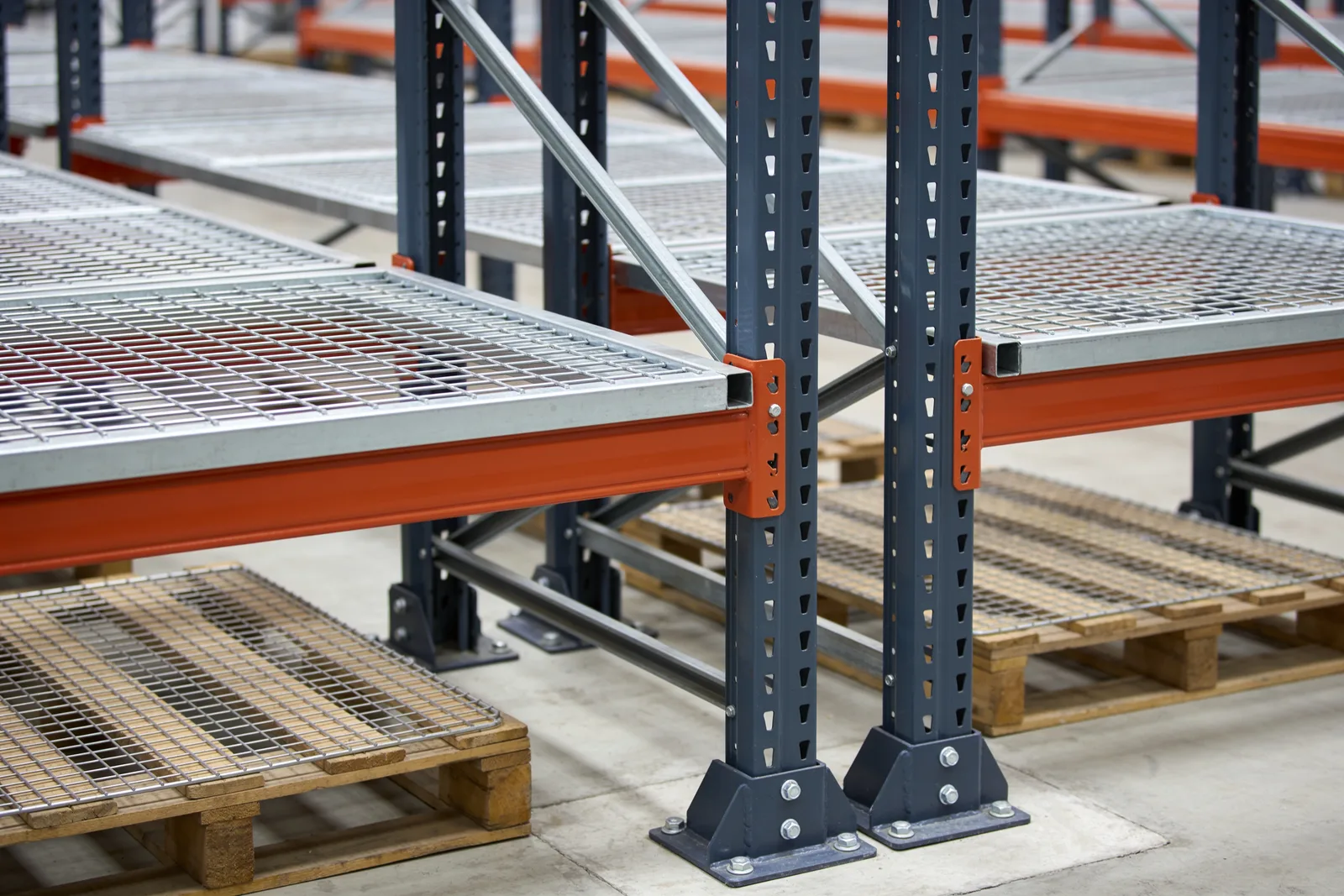
Decking follows the same logic as any mezzanine deck, with pick-module-specific trade-offs: bar grating where light and sprinkler penetration matter, resin board or plywood where carts roll, steel plank where abuse is high (Cisco-Eagle).
Can you add a mezzanine floor to existing pallet racking?
Existing racking needs an engineering review before it is repurposed to support an elevated platform. RMI recommends that a qualified rack design engineer review proposed reconfigurations, including the original design information, the proposed changes and the condition of the structure. See its rack-inspection and reconfiguration guidance.
Prepare the rack drawings and load plaques, identify the components, and describe the proposed floor, stairs and handling activity. Record damage and undocumented alterations for the reviewer. A rack that stores pallets in its present configuration is not automatically approved for an additional platform.
This is also why a used rack package should be evaluated before purchase. RMI's used-rack guidance emphasizes design documentation, compatibility and review of prior modifications. Use our pallet rack inspection guide to organize the condition check and the rack-supported mezzanine code guide to identify the design questions.
What does a pallet rack mezzanine cost?
Compare rack-supported and free-standing proposals with the same storage and platform scope. Published figures are contextual estimates, not a guarantee that one arrangement will cost less on a particular site:
| Source | Figure |
|---|---|
| QMH (2025) | $20–45/sqft installed for either type, excluding tenant improvements and permits; rack-supported "typically costs less per square foot" when installed with new racking |
| Speedrack West | $50–150/sqft range, ~$70 average; obtain a separate project-specific fire-protection allowance |
| Rapid Inventory | Standard systems $30–60/sqft; used structures $15–30/sqft |
The platform, racking and foundation assumptions need to be reviewed together. Existing equipment should be assessed under the RMI reconfiguration guidance, rather than assuming its present rating covers the proposed platform. Use the cost calculator to explore disclosed planning assumptions and the buying guide to compare proposal scope.
What code governs a rack-supported mezzanine? (This is where it gets interesting)
Two rulebooks apply at once — the IBC for the building questions, and ANSI MH16.1 for the rack structure itself. This dual path is the least-understood thing about rack-supported mezzanines:
- The IBC side. RMI is unambiguous: "requirements for their construction fall under the International Building Code" regardless of whether you call the structure a mezzanine, pick module, or rack-supported platform. The familiar mezzanine provisions apply: aggregate area not greater than one-third of the room, and a compliant mezzanine is "a portion of the story below" — no added building area, no added story count.
- The rack side. IBC §2209.1 sends the structure itself to the rack standard: "The design, testing and utilization of steel storage racks... shall be in accordance with RMI ANSI/MH 16.1". MH16.1's scope explicitly includes "pick modules... and rack-supported systems such as mezzanines and rack-supported platforms", and RMI requires compliance with MH16.1 section 12.3 plus ANSI MH32.1 for stairs, ladders, and open-edge guards.
The guarding numbers under MH16.1/MH32.1 will look familiar from OSHA's rules: top rail at least 42 inches resisting a 200-lb load, an intermediate rail, 4-inch bottom protection, with vertical guarding required at edges more than 30 inches up (RMI).
Permitting works like any mezzanine permit: PE-stamped drawings and calculations, with plan review typically 4–8 weeks and 10–16 weeks kickoff-to-occupancy — find your state's rules in our permit guides.
What about seismic design?
Seismic requirements follow the rack, and they reach far beyond California. IBC directs that where ASCE 7 requires it, seismic design of steel storage racks follows ASCE 7 §15.5.3. Seismic rack rules now reach "the New Madrid fault zone in Missouri, parts of Utah, South Carolina, and even areas of New York", and many cities enforce them through permits and engineered drawings — with anchoring, base plates, bracing, and beam-to-upright connections as the design focus areas (ECSECO).
How much weight can a pallet rack mezzanine hold?
Properly engineered, the same classes as free-standing steel — with one extra condition. The racking must carry both the stored product AND the full platform load above; when engineered for that combination, "rack-supported mezzanines can achieve mezzanine floor capacities equivalent to free-standing systems". Typical published tiers (Apex Warehouse Systems): 60–90 PSF for limited-access conveyor levels, 125 PSF for light storage — the typical pick module deck rating — and 250 PSF for heavy storage. Our load guide and load calculator cover how those classes map to real uses.
What's a pick module — and how is it different?
A rack-supported platform is elevated floor space; a pick module is an order-picking machine. In RMI's distinction, pick modules store pallets up high while "employees break down pallets into smaller quantities by picking directly inside the racks", with conveyors routing picks to shipping. Our dedicated pick module guide goes deeper on the anatomy, carton flow, decking, and the MH16.1/MH32.1 standards behind them.
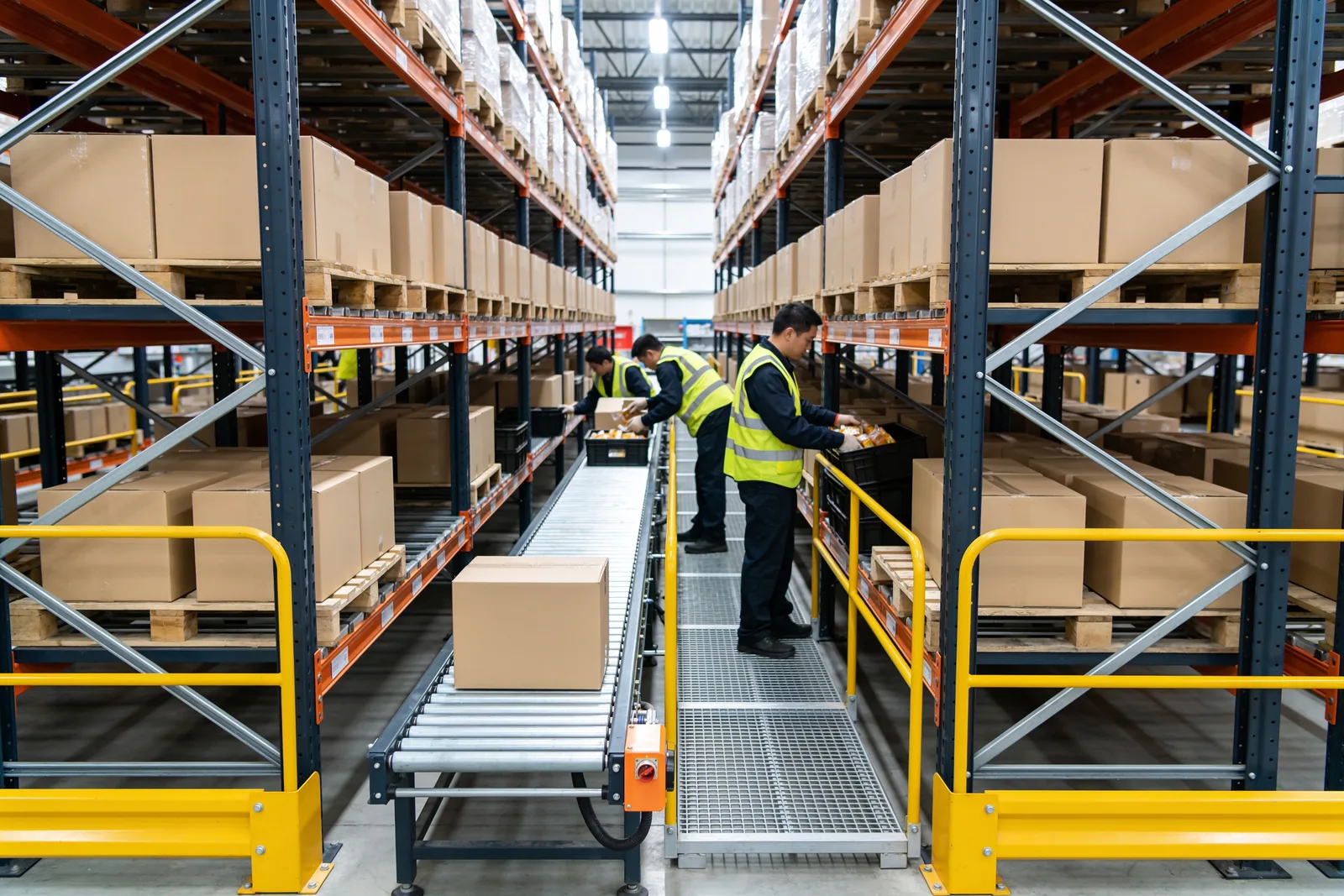
The published performance numbers explain why e-commerce runs on them: engineered modules run one to four levels and are "capable of fulfilling over one hundred thousand orders per day" (UNARCO); Frazier's published figures credit pick modules with cutting travel time up to 50% in an activity where picking consumes an average 63% of distribution time. A documented example: an Interlake Mecalux rack-supported pick module in Mobile, Alabama organizing more than 9,100 SKUs on standard roll-formed uprights, erected in about a month of field work. Product moves between levels by spiral conveyor, incline conveyor, or VRC lifts (Cisco-Eagle).
When should you choose rack-supported over free-standing?
Choose rack-supported when new racking is going in anyway and density is the goal; choose free-standing when the future is uncertain. The published decision logic:
- Rack-supported wins when you're "installing new racking simultaneously and want to maximize the storage-per-square-foot efficiency" — pallet storage continues below, no separate structure to buy, usually no new footings (Trimet).
- Free-standing wins when the area below must stay clear for traffic or equipment, or when operations may change within 5–10 years (QMH). The trade-off is structural: with rack-supported, the platform and racking are one integrated system, so "changing or expanding it later is a challenge" — every layout change needs engineering sign-off, more columns land on the floor than with a free-standing platform, and cross-aisle expansion is notably difficult (Trimet).
The full framework — including the structural third option — is in our free-standing vs rack-supported vs structural comparison.
Who makes rack-supported mezzanines and pick modules?
The major North American names publishing rack-supported capabilities: UNARCO (roll-formed and structural rack, 1–4 level engineered pick modules), Steel King (custom pick modules combining rack with conveyor and flow components), Frazier Industrial (100% structural steel modules), and Interlake Mecalux (rack-supported mezzanine pick modules). For the broader manufacturer landscape including free-standing specialists, see our honest manufacturer comparison.
What to read next
- Pick modules: how multi-level order-picking structures work — the fulfillment variant, its anatomy and the standards behind it
- Free-standing vs rack-supported vs structural mezzanines — the full three-way decision framework
- ANSI MH16.1 vs the IBC: which code governs a rack-supported mezzanine? — the two-code path, section by section
- Shelving-supported mezzanines: the load path that decides whether yours works — the lighter-duty cousin, governed by ANSI MH28.2 rather than MH16.1
- Pallet rack inspection: the RMI rules and the duty that attaches — what the owner owes this structure after it's built, and who has to certify a repair
Put this guide into practice
Frequently asked questions
- What is a pallet rack mezzanine?
- A pallet rack mezzanine — also called a rack-supported mezzanine — is an elevated work or storage platform whose structure is the pallet racking itself: deck joists and flooring bolt directly to the rack uprights, and pallet positions continue below the platform in the same racking.
- How much does a pallet rack mezzanine cost?
- Compare itemized proposals for the same platform, storage, access and installation scope. Published ranges are contextual estimates. Rack-supported construction is not a guaranteed saving on every site, and fire protection and foundation work need project-specific review.
- What is the difference between a pick module and a rack-supported platform?
- Both are built from pallet racking. A rack-supported platform is essentially a mezzanine made of rack — elevated floor space for storage or work. A pick module is a multi-level order-picking machine: workers pick directly from rack positions into totes or cartons, with conveyors carrying picks away.
- Do you need a permit for a rack-supported mezzanine?
- Yes — the Rack Manufacturers Institute states that construction requirements for rack-supported platforms and pick modules fall under the International Building Code regardless of what they're called, and building departments require PE-stamped structural drawings and calculations, just as for any mezzanine.
- Is a rack-supported mezzanine better than a free-standing one?
- It is usually cheaper and denser for pure pallet-storage operations installed together with new racking. Free-standing wins on flexibility: the space below stays open, the racking below can change without structural consequences, and future reconfiguration doesn't require re-engineering the platform.
- Can existing pallet racking support a mezzanine floor?
- Existing racks need an engineering review before being repurposed to support an elevated platform. Provide the original design information, load plaques, proposed configuration and condition records to a qualified rack design engineer.
Last substantive revision —
Continue planning your mezzanine
All Complete Guide guides →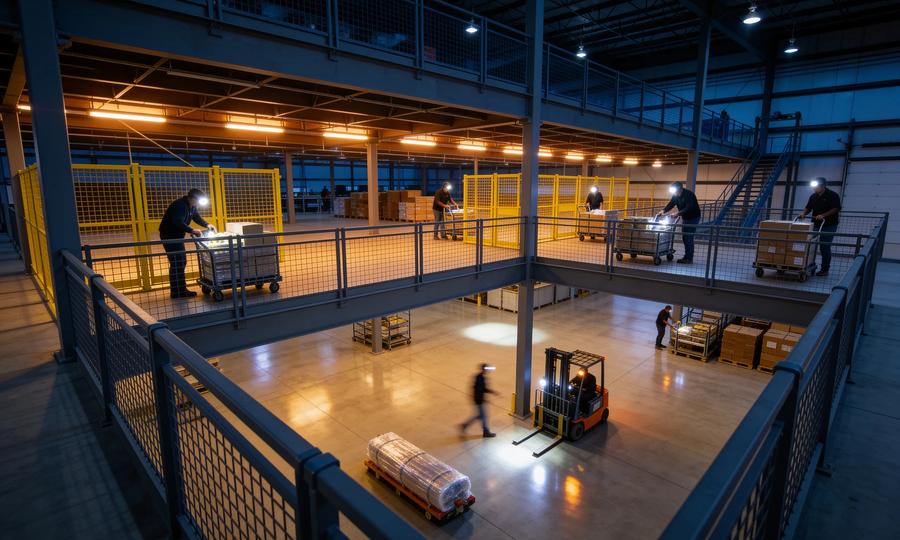
Complete Guide
Warehouse Mezzanine Floors: Storage, Layout & Costs
Plan a warehouse mezzanine floor for storage, picking, packing or offices. Compare layouts, material flow, project examples and the scope of supplier quotes.
Engineering
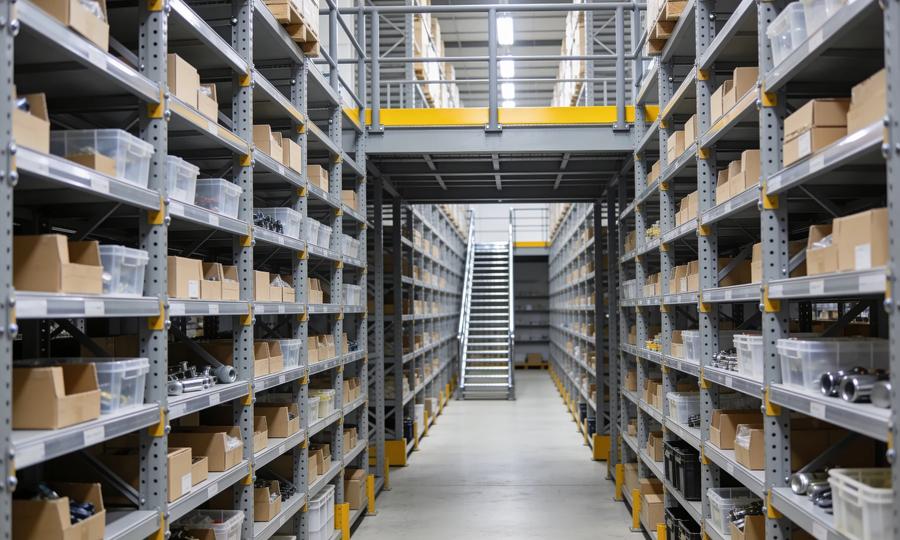
Shelving-supported mezzanines: the load path that decides whether yours works
A shelving-supported mezzanine is a shelving system carrying a floor. The catwalk load adds to the shelf loads on the same post — here is the arithmetic and the standard.
Complete Guide
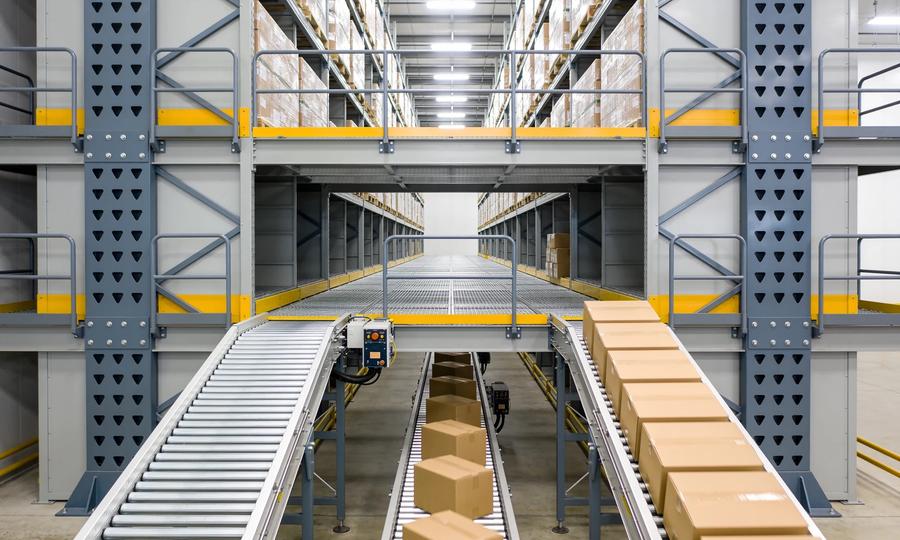
Pick modules: how multi-level order-picking structures actually work
A pick module is a rack-supported structure where workers pick directly inside the racking. How its levels, carton flow lanes, and conveyors actually work.