

Returns processing mezzanines: receipt, inspection and disposition
Plan a returns-processing mezzanine with clear stock status, inspection holds, disposition records and routes that keep unapproved items out of available inventory.
Editorial
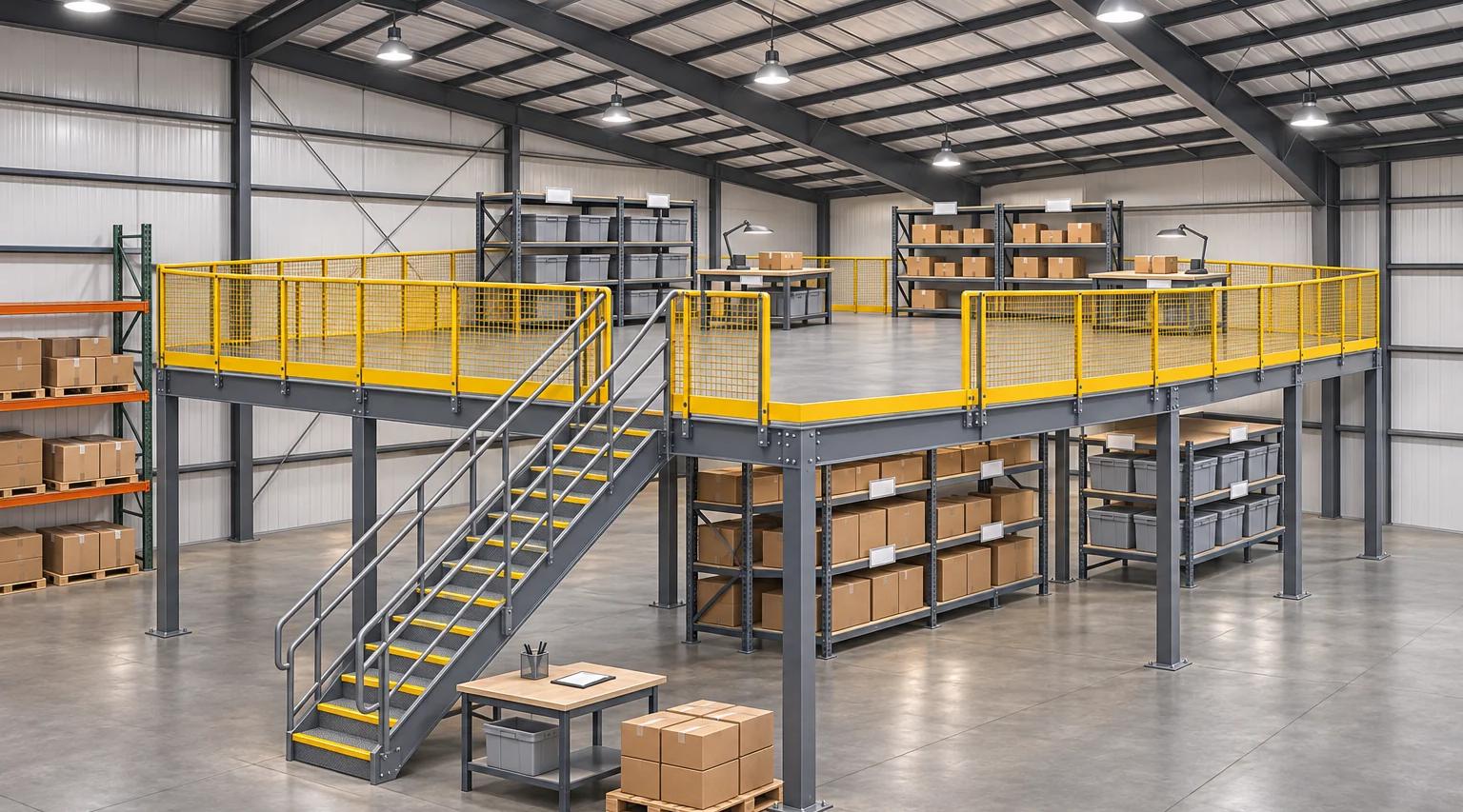
A returns-processing mezzanine needs a controlled path from receipt to an authorized next destination. The key planning task is keeping each item's identity, physical location and status connected while it waits, is inspected and moves onward. Additional floor area alone does not establish that control.
This guide owns the returns workflow and its decision record. The fulfillment-center guide covers the wider operation; the distribution-center guide covers receiving and distribution. Neither a customer's refund nor an empty shelf automatically makes a returned item ready for sale.
All three images are AI-generated concept illustrations, not project photographs or approved layouts. This Cogan-affiliated editorial guide claims no named technical review. Confirm the proposed work, products, equipment and building requirements with the responsible operating team and qualified designers.
What must be decided before returns move upstairs?
Define which products and activities the proposed area will accept, and which require another route. Begin with representative return records: item identity, package condition, reported reason, actual handling unit and expected assessment. Include incomplete or unidentified returns rather than planning only for tidy, authorized cartons.
Write an acceptance and escalation rule for the area. An unreadable label might require an identification hold; a product with an unresolved safety concern requires the site's appropriate assessment procedure. A general inspection bench is not permission to test, repair, charge or dispose of every product that arrives.
Compare the complete route before choosing a level. If an item will leave for a supplier without work on the deck, moving it upstairs and immediately down again may add a transfer without helping the process. Use the floor-plan guide to show proposed destinations, work areas and circulation together.
How do return reasons differ from disposition decisions?
Record why the item came back separately from what the business authorizes next. A report such as “wrong size” or “does not work” is useful intake information. It is not a completed condition assessment, a stock-release instruction or a repair procedure.
Microsoft's Dynamics 365 documentation makes this distinction through return-reason and disposition codes. Its examples include returning an item to inventory, repair and return to the customer, or scrapping and replacement. These are software-specific examples, not a requirement to use Dynamics or identical codes.
For the proposed operation, define the evidence and authorized role behind each decision. Keep the customer transaction, inventory availability and physical movement visible as separate checks. A completed credit should not be used as the sole signal that an item may enter a saleable picking location.
Which locations and records should the layout include?
Give every waiting state a named location, an owner and a release condition. Use the following worksheet as a starting point for a site-specific procedure. The labels are planning examples, not a universal WMS configuration or prescribed containment system.
| Proposed status | Physical provision to review | Record before onward movement |
|---|---|---|
| Received, identity pending | Identifiable intake location separate from available stock | Return reference, contents received and unresolved identity |
| Awaiting inspection | Defined holding positions and access to the bench | Item and quantity, arrival time, assigned assessment |
| Decision on hold | Controlled location suited to the actual goods | Hold reason, responsible role and next review action |
| Approved for stock | Identifiable release position before put-away | Decision, authorized person, quantity and destination |
| Approved for another route | Separate collection positions for the agreed destinations | Supplier, repair or other authorized route and handover record |
Do not assume a painted rectangle or a colored tote provides every control required. Select identification, access restrictions and any physical containment from the actual product risks and operating procedure. The illustrations' blank labels are placeholders; they do not demonstrate a functioning tracking system.
Record both the logical status and the physical location. If the item is moved to make room at a bench, its new position should remain traceable. Specify who reconciles an item found in the wrong location and what prevents an unresolved return from being selected for an outbound order.
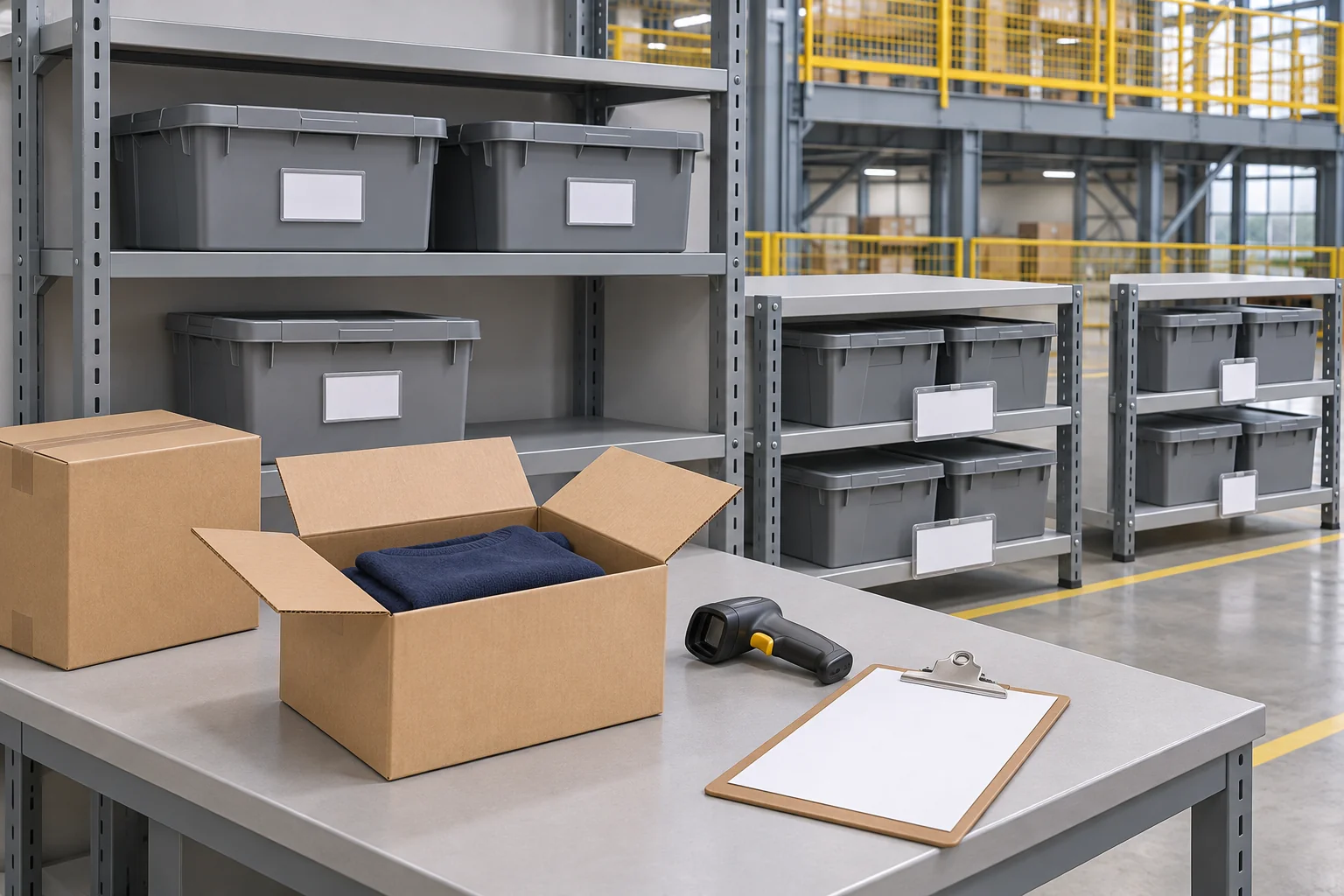
Concept inspection station. Blank labels and paperwork represent information to define, not verified stock records or a product-safety assessment.
What happens when one carton needs several outcomes?
Keep item quantities and decisions separate when a shared package no longer represents a shared status. Microsoft documents splitting a quarantine order when items in the same item-number batch require different disposition codes in its returned-item inspection workflow. Other systems may implement this differently.
Consider a hypothetical carton containing three shirts: one passes the agreed inspection, one needs further review and one has an identity mismatch. Record each outcome against the return. Move the approved shirt only through the authorized stock-release step; keep the other items identifiable in their respective holds. This is an illustrative process check, not a customer case or measured result.
Reconcile the original received quantity with the quantities still held and those moved onward. Include accessories or packaging that must remain with a particular item. A label on the original carton is insufficient once its contents have been split across locations.
How should inspection connect with the rest of the warehouse?
Plan the inbound and onward routes together, including waiting and empty-container movements. CCOHS materials-flow guidance recommends reducing unnecessary handling and carrying distances and keeping materials near their point of use. Apply this as a comparison method, not a promise of faster returns.
Trace a representative container from receipt to holding, bench, decision and destination. If a material lift is proposed, review the complete load and transfer procedure with its supplier. If a conveyor is proposed, identify the condition and packaging of goods at that interface. Loose returned items may not have the same handling form as sealed outbound cartons.
Include people, trolleys, waste packaging and empty totes in the route review. CCOHS storage-layout guidance considers space for equipment and personnel and access heights that work for different users. This Canadian ergonomic guidance does not establish a universal aisle width or approve the mezzanine layout.
What needs checking before an item returns to available stock?
Define the required checks, retain their results and identify who authorizes release. Make the checklist specific to the product and business process: identity, quantity, completeness, condition, required assessment and any unresolved restriction. Do not substitute appearance or intact packaging for the applicable decision criteria.
For consumer products within its US scope, the CPSC's resale guidance directs sellers to check recalls and states that offering recalled products for sale is unlawful. A routine “restock” selection cannot replace that review. Follow the applicable recall instructions and product-specific requirements; this article supplies no general repair or resale clearance.
Document how approved items reach their intended stock location and how availability is updated. Test an exception as well as a normal return: an unknown item, a changed decision or a quantity discrepancy. Keep unresolved cases visible to an owner instead of treating the holding area as permanent storage.
Size the waiting space before adding more benches
A returns layout needs room for decisions that take longer than the physical inspection. Use actual arrival patterns and records of time spent awaiting identification, assessment, approval and collection. Compare busy periods with normal periods, and count the containers in each status rather than relying only on a total returns percentage.
Review the proposed maximum stock, benches, shelves and equipment with the designers. Within its US scope, OSHA 1910.22 requires walking-working surfaces to support their maximum intended load and addresses safe access and condition. The load-capacity guide helps organize that discussion; a workflow diagram does not establish a floor rating.
OSHA 1910.176 also addresses clear passageways, secure storage and hazardous accumulations in applicable US workplaces. Plan an approved overflow response before routine holding positions fill. Review task visibility through the lighting brief and record unresolved decisions in the project planning checklist.
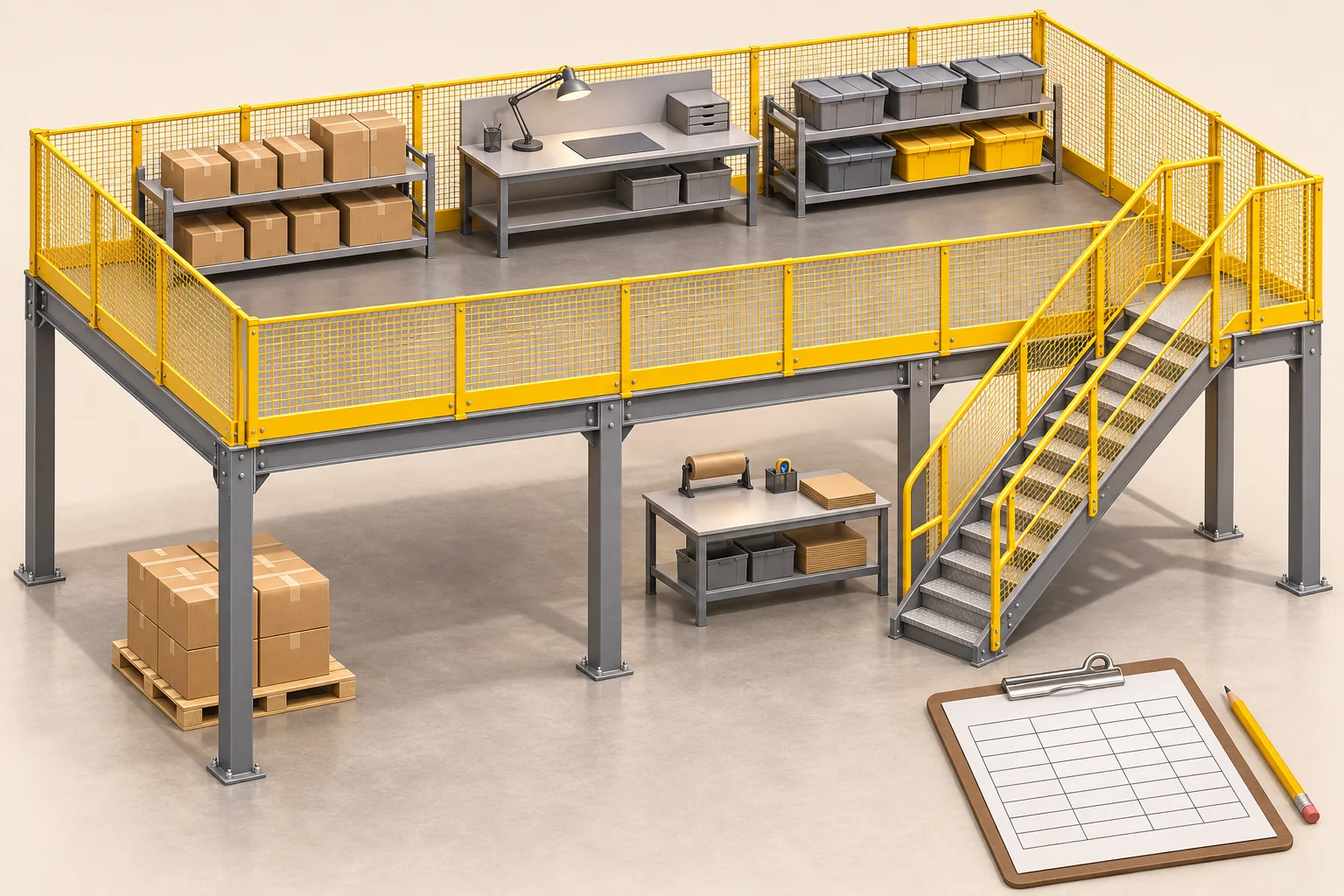
Illustrative arrangement for discussing status locations. Transfer equipment, holding limits and operational controls require project-specific review.
Track time in each status, unresolved quantities, misroutes and completion of authorized handovers. Those observations can reveal whether the constraint is a workstation, missing information or a delayed decision. Compare results under stated operating conditions before claiming that a mezzanine improved performance.
What to read next
- Fulfillment-center mezzanines — connect returns with the wider order operation.
- Distribution-center mezzanines — review receiving and onward distribution.
- Garment-storage mezzanines — distinguish hanging, folded and carton handling.
Put this guide into practice
Frequently asked questions
- What is a returns-processing mezzanine?
- It is an elevated work area proposed for activities such as identifying returned goods, inspection, controlled holding and routing items to their authorized next destination. Its suitability depends on the products, handling routes, work activities and reviewed building and structural requirements.
- Should every returned item go upstairs?
- No. Compare the complete route and the work actually required. Some items may need direct transfer to a supplier, a different assessment area or another approved destination. Do not add an upper-level transfer simply because space is available.
- What is the difference between a return reason and disposition?
- The return reason describes why the customer sent the item back. Disposition records the decision about its next action, such as an authorized return to stock or repair. A customer's reason alone does not establish the item's condition or permission to restock it.
- Can inspected and uninspected items share a tote?
- Plan identifiable containers and locations that preserve each item's status and prevent unapproved release. Where items from one return need different outcomes, keep the quantities and records distinct. Do not rely on a shared outer-carton label to describe every item inside.
- How much mezzanine space should returns receive?
- Use actual receiving patterns, time in each status, container dimensions, workstations and transfer requirements to prepare a layout brief. This guide gives no universal percentage or area allowance. Review peak holding locations, access and loads with the responsible designers.
Continue planning your mezzanine
All Complete Guide guides →
Complete Guide
Warehouse Mezzanine Floors: Storage, Layout & Costs
Plan a warehouse mezzanine floor for storage, picking, packing or offices. Compare layouts, material flow, project examples and the scope of supplier quotes.
Complete Guide
What Is a Mezzanine Floor? Meaning, Types & Uses
What is a mezzanine floor? Learn its meaning, industrial types and warehouse uses, then compare flooring, material lifts and the questions to ask before buying.
Engineering
Free-standing vs rack-supported vs structural mezzanines: a buyer's decision framework
The three structural types of industrial mezzanine — free-standing, rack-supported, and structural — solve different problems. Here's how to pick the right one based on use case, flexibility, cost, and code path.